
CAPÍTULO 3 – HISPANOS EN LOS ESTADOS UNIDOS
1. INTRODUCCIÓN
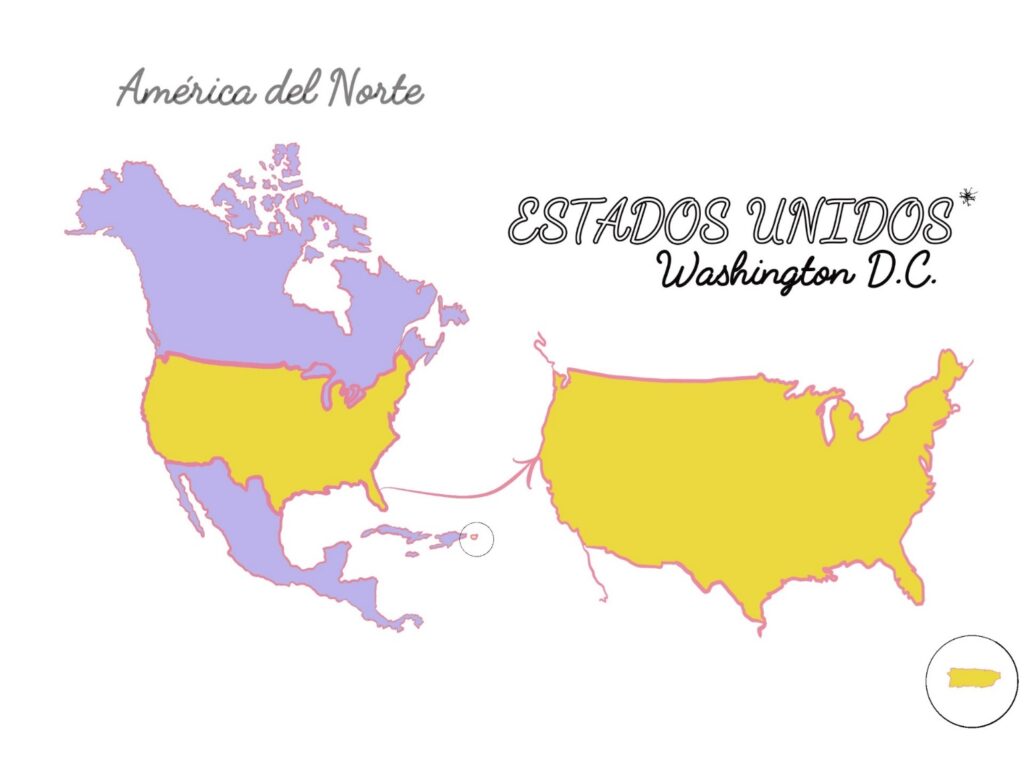
- Localiza los lugares estadounidenses con mayor población de hispanos en el mapa: Nueva York, Los Ángeles, Miami, Puerto Rico, Chicago, Houston, Dallas, San Francisco, Phoenix y San Antonio.
- Lee las frases de abajo y busca el significado de las palabras en la caja. Después, mira el video “Se habla USA: Brandon Lanners” en Univision. Completa la actividad con el vocabulario y responde a la última pregunta.Se desempeñó / Anglosajones / Le cuesta menos / Agradece / Idioma / Originario de / Muestran / Intercambioa.a. Brandon Lanners es ___________________ Chicago, IL, y de padres ___________________.
- Brandon tomó un año para hacer un __________________ académico en Quito, Ecuador. Descubrió que ser bilingüe le abriría muchas puertas. En su trabajo, todo era en español.
- Él ______________________ como encargado del Programa de Intercambios en la Universidad de Texas en San Antonio.
- Su esposa Azucena __________________ que él aprendió el ____________ por su cultura y su familia.
- A ella _______________ que sus hijos hablen español y que aprendan la cultura. Es importante para ellos que ellos hablen inglés y español por la cultura y las oportunidades.
- Ellos le ______________ a sus hijos las películas, los libros, los amigos, México y las oportunidades de trabajo.
- ¿Consideras que tu historia es similar a la de Brandon? ¿Qué tienes en común con su historia? ¿Qué es diferente?
2. LUGARES HISPANOS QUE VISITAR EN LOS EE. UU.
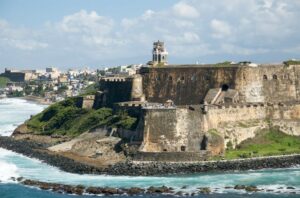
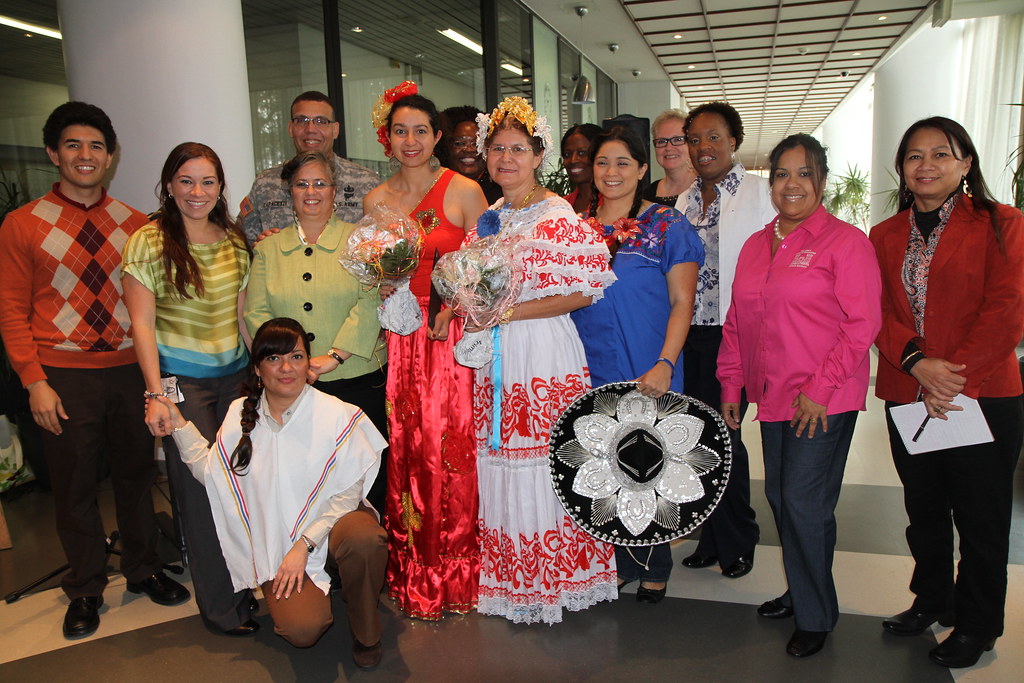
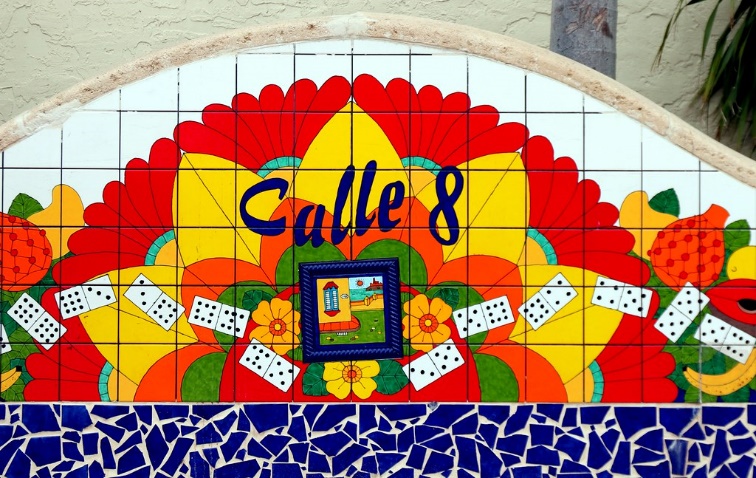
En los EE. UU. no hay una lengua oficial a nivel federal, pero el inglés y el español son las lenguas más habladas. En América del Norte, además de México, puedes visitar algunos lugares con herencia hispana como California, Texas, Nueva York, Florida y Chicago. La población hispana más grande es de origen mexicano con 35 millones de personas según el censo de 2020 y la ciudad con más hispanos es Los Ángeles. Los hispanos en EE. UU. contribuyeron $3.2 billones al PIB americano; si fueran un país, estarían en el 5º puesto en la economía mundial. El lugar hispano por excelencia es el territorio e isla de Puerto Rico, en el que el español es lengua oficial. En Puerto Rico se encuentra el Bosque Nacional El Yunque; lleno de vegetación y animales tropicales, es un lugar ideal para hacer senderismo y apreciar la naturaleza única de la isla. En San Juan puedes visitar el Viejo San Juan, donde podrás ver el Castillo de San Felipe del Morro, la entrada original de la ciudad, la basílica y sus calles coloniales. En Florida, debes visitar la ciudad de San Agustín, la ciudad más antigua de los Estados Unidos de origen español. La ciudad está llena de historia y ha sido parte de varios gobiernos como el gobierno español, inglés y estadounidense. En San Agustín puedes pasear por sus calles coloniales y ver el Castillo de San Marcos de arquitectura militar española. En Florida, también puedes ir a Miami y visitar la Calle 8, llena de herencia hispana con restaurantes, tiendas y tradiciones de numerosos países latinoamericanos como Cuba, Colombia, República Dominicana y otros. En los Estados Unidos se celebra el Mes Nacional de la Herencia Hispana con desfiles, eventos especiales, charlas, decoraciones y comida en colegios, universidades y ciudades de todo el país. Esta celebración tiene lugar del 15 de septiembre al 15 de octubre (fechas de las independencias de Costa Rica, El Salvador, Guatemala, Honduras y Nicaragua) y se hace homenaje a la cultura y el legado de hispanos influyentes y trabajadores que han participado en la construcción de los EE. UU. En Nueva York, La Sociedad Hispánica de América (Hispanic Society of America) es un lugar que visitar por la alta calidad de su museo y por su visión de compartir el arte de los países que hablan español y portugués. La Sociedad Hispánica ofrece la oportunidad de hacer investigación con las colecciones de la biblioteca, el museo y con los grabados y fotografías. Además, ofrece charlas, conciertos y programas de educación.
ACTIVIDADES
- Entrevista a un-a compañero-a usando las siguientes preguntas.
- ¿Qué lugares se pueden visitar en Puerto Rico? ¿Cuáles te gustaría ver? ¿Qué más te gustaría explorar en la isla?
- ¿Qué importancia tienen los lugares que puedes visitar en Florida? ¿Cuál te llamó la atención más?
- ¿Qué ocurre durante el Mes de la Herencia Hispana? ¿Cuándo es?
- Visita la página web de la Hispanic Society Museum & Library y escoge una colección que explorar, escribe tus impresiones y elige tus obras favoritas y explica por qué. Puedes presentar en clase o crear un reportaje.
OBJETIVOS
En este capítulo, vas a aprender sobre las ciudades con más hispanos en los EE. UU. y el bilingüismo, la presencia hispana y las razones por las que los hispanos llegan a EE. UU., los mojados y los corridos musicales, Puerto Rico y el Mes de la Herencia Hispana.
CONCEPTOS IMPORTANTES
inmigrante, exiliado, refugiado, Camino Real, La Bestia, legalización, el Mes de la Herencia Hispana, narcocorrido, mojado, frontera
3. EL ESPAÑOL Y LOS HISPANOS EN LOS EE. UU.
Escucha el siguiente podcast para aprender sobre el español en los EE. UU. y responde a las preguntas.
El español en los Estados Unidos: Habla español en Nueva York
- ¿Qué porcentaje se identifica como latino?
- ¿En qué puesto está los EE. UU. en la línea de países que más habla español?
- ¿En dónde está presente el español en Nueva York?
- ¿Cómo ha contribuido España al fortalecimiento del español en los EE. UU.?
- ¿Qué orígenes hay en los EE. UU. relacionados con el español?
- ¿Qué razones hay para la inmigración?
- ¿Cuántos grupos se mencionan de origen hispano? ¿Cuáles son?
- ¡TU TURNO! Crea un podcast sobre tu percepción del español en tu comunidad y en los EE. UU. Explica por qué decidiste aprender español y si has viajado a un país hispano, explica cómo fue esa experiencia o si te gustaría visitar uno.

4. LA VISITA DE DISTINTOS PUEBLOS EN EL TERRITORIO NORTEAMERICANO
En sus orígenes, los Estados Unidos fueron habitados por los nativos americanos que poseían sus propias culturas, lenguas e historias. Hoy en día, el porcentaje de estos pueblos es muy pequeño en comparación con el pasado, lo cual es una desafortunada pérdida resultado de la colonización. Hubo una diseminación de los americanos nativos por los colonos británicos y franceses en la mayoría del territorio de lo que se considera hoy los Estados Unidos. España también tuvo su parte en esa colonización sobre todo en el sur de los EE. UU. con la fundación de ciudades, la influencia del español y su huella histórica.
LAS MISIONES CALIFORNIANAS
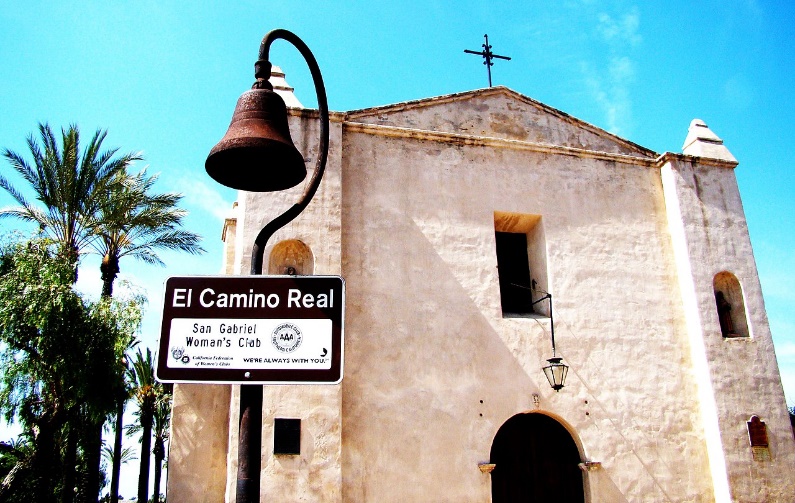
España inició la conquista de las Américas con los propósitos de obtener oro, piedras preciosas y territorios e iniciar la tarea vasta de evangelizar estos pueblos en todo el continente americano norte y sur. Pronto, encontró sus rivales más feroces y de ahí la pérdida de territorios norteamericanos. La mayoría de los territorios hispanos se establecieron en lo que hoy es Florida, Tejas, Nuevo México, Arizona y California. En estos territorios, se establecieron misiones cristianas con el propósito de enseñar a los nativos la religión cristiana y crear asentamientos de carácter europeo. En California, Fray Junípero Serra estableció el Camino Real como una estrategia para expandir las misiones, pero conservar cierta cercanía y conexiones entre los pueblos. El Camino Real comprende 21 misiones; la misión más al norte es San Francisco Solano y la misión más al sur San Diego de Alcalá. En la ruta, todas las ciudades tienen nombres españoles y religiosos para afianzar la presencia y religión españolas. Cada misión se localizó para que estuviera a un día a caballo aproximadamente la una de la otra. Hoy en día, se preservan los nombres con ciudades tan famosas como San Francisco, San Diego, Los Ángeles, Sacramento, etcétera.
LA INMIGRACIÓN EN LA ACTUALIDAD
Según el censo de 2020, casi un 19% de la población en los Estados Unidos es de origen hispano, con un 62.1 millones. Estos números son importantes, sobre todo porque la población joven tendrá un papel importante en la fuerza laboral del futuro. Otros estados con gran influencia hispana son Nueva York. Por ejemplo, el barrio Washington Heights inspiró a Lin-Manuel Miranda en la creación del musical In the Heights. En Chicago, existe influencia hispana, sobre todo de origen mexicano, pero la influencia se puede ver en barrios, en tiendas y en actividades culturales en los museos.
Los Estados Unidos recibe cada día miles de inmigrantes de todo el mundo. Entre esos países está sobre todo China, India y México. De los países hispanos también llegan hispanos de todos los países, aunque hay grupos más predominantes que han llegado a los Estados Unidos por razones políticas y económicas. México es el país que más emigra por compartir historia con los EE. UU. y por su cercanía demográficamente. El Salvador, Guatemala, Honduras, Nicaragua y Venezuela también han emigrado masivamente por razones políticas y por crisis económicas y de seguridad. Cuando una persona sale de un país para buscar una mejor vida en otro país, esto es ser inmigrante. Sin embargo, los refugiados salen de su país por razones de miedo, inseguridad y violencia extrema para buscar seguridad y una vida mejor en otro país. Los refugiados viajan a menudo con la familia o en grupos, pero a veces también solos y en algunos casos menores de edad. Los cubanos cruzan el Caribe para llegar a Florida; dejan su país por oponerse a las limitaciones de la dictadura comunista. Los cubanos son exiliados porque han dejado su país y no saben si podrán regresar algún día. Al oponerse al gobierno actual, nada les garantiza que puedan regresar a su país a menos que algo cambie en su gobierno. Otros grupos altamente cualificados llegan a los Estados Unidos para estudiar y para suplir demanda laboral en otros sectores. Otros inmigrantes cruzan a los EE. UU. a través del tren La Bestia, caminando por el desierto o cruzando el río, entre otros. Lamentablemente, muchos de ellos mueren, son heridos, mutilados, estafados, violados o traficados en ese viaje.
En ciudades como Los Ángeles, se puede ver la influencia hispana en la comida, la arquitectura, la historia, la influencia del español, los murales y mucho más. Aunque los hispanos y personas birraciales han aumentado en los últimos años en Los Ángeles, esto todavía no se ve reflejado en la industria del entretenimiento de Hollywood que continúa representando sobre todo a actores anglosajones.
DESPUÉS DE LEER
Selecciona la palabra que mejor complete la oración.
- Un refugiado – inmigrante – exiliado sale de su país y por motivos políticos no sabe cuándo regresará a su país.
- El camino español – real – militar conecta varias ciudades en el estado de California.
- La ruta contiene 10 – 21 – 30 ciudades conectadas a un día a caballo.
- La mayoría de los exiliados cubanos – mexicanos – chinos no saben cuándo podrán regresar a su país.
- Los nativos ingleses – franceses – americanos ocuparon el territorio norteamericano antes de la colonización.
- La colonización española – inglesa – mexicana ocurrió en el sur de los Estados Unidos.
ACTIVIDADES
Para expandir lo aprendido, continúa buscando más información en internet. No olvides citar los recursos y páginas web que utilizaste y nunca uses como referencia páginas web personales como blogs.
- Busca en internet la ruta del Camino Real y escribe los nombres originales de todas las misiones y sus nombres actuales.
- ¿Ha habido polémica con Fray Junípero Serra? Investiga y explica.
- Busca información en internet sobre St. Augustine, Florida (la ciudad más antigua de los EE. UU.) y crea un PowerPoint (PPT) para presentar en clase. Explica un poco la historia, los lugares más emblemáticos históricamente y la presencia hispana en la ciudad.
- Lee el texto abajo y busca en un diccionario las palabras que no conozcas. Después, mira el siguiente video sobre La Bestia y completa los espacios en blanco con las palabras en la caja para completar la transcripción resumida del video.
tenía ganas
escalofrío
superpoblado
coma
rueda
mutilados
enfrentar techo
rescateregresar
inconforme
cirugías
Andrés Castro salió de Honduras ___________ con la vida que tenía. Junto con un grupo de amigos, Andrés, de 28 años estaba listo para ____________ el desafío. Andrés le tenía más miedo a La Bestia que a la deportación. Este sería su primer viaje. En un momento del viaje, Andrés tenía dos opciones, ____________ o continuar con el camino: la suerte estaba echada. Así que se subió al tren. Una semana después, los hechos se registraron en las noticias mexicanas, cuando una ____________ de la pesada máquina le cortó en dos la pierna en un accidente muy grave. Los paramédicos de protección civil trasladaron a Andrés al hospital regional donde estaba en ____________ y grave. Andrés tuvo que pasar por varias ____________ para salvarle la vida. Sus heridas no detuvieron la deportación, la aceleraron. De regreso en San Pedro Sula, Honduras, el hospital Rivas tiene muchos pacientes, el hospital está sin ventilación, ____________, funciona sólo un elevador. A Andrés le quedó poco de su pierna derecha y extraña su talón izquierdo. Cuando tuvo el accidente, sintió un ____________ helado por el cuerpo, lo primero que pensó fue en su familia. A su hermana le dolió mucho lo que le había pasado a Andrés. Al menos, en el hospital tiene un ____________ y la familia duerme en los pasillos, pero no saben a dónde van a ir cuando le den de alta. Su amigo Eric estaba muy preocupado por él y cuando hablan por teléfono, Andrés lo felicita porque Eric puede ayudar a su familia ahora. Andrés ____________ de morir al principio, pero se dio cuenta de que estaba vivo y está feliz por su hermana, por el ____________ de los médicos en México, y por su madre. Según el reporte, aproximadamente 713 hondureños y más de unos 1.500 de otros países, quedan ____________ en accidentes con La Bestia.
5. LOS MOJADOS Y LOS CORRIDOS MUSICALES
Se llama “mojados” a todos aquellos que intentan cruzar la frontera ilegalmente nadando en el río Grande. Es un término polémico porque connota cierta vergüenza y humillación, pero también connota una experiencia única en el viaje al sueño americano. Desafortunadamente, muchos no logran pasar y mueren ahogados. Este término solo puede ser usado entre ellos, y aun así existe polémica dependiendo de la generación. Finalmente, sería inapropiado referirse o llamar a alguien “mojado” sin haber pasado por esa experiencia o sin ser latino.
Sin embargo, el término existe y la experiencia peligrosa de cruzar río Grande también. Hay varias canciones que hablan de la experiencia de los mojados.
ACTIVIDADES
- Busca el significado de las palabras subrayadas. Usa wordreference.com pues hay palabras que tienen varios significados.
- Después, escucha la canción de Ricardo Arjona, “Mojado”, en YouTube. Después de escuchar la canción, escribe una interpretación para cada párrafo en la caja de la derecha o en tu cuaderno de clase. Comenta las metáforas en la letra de la canción y los sentimientos que expresa.
“Mojado”
Empacó un par de camisas, un sombrero
Su vocación de aventurero
Seis consejos, siete fotos, mil recuerdos
Empacó sus ganas de quedarse
Su condición de transformarse
En el hombre que soñó y no ha logrado
Dijo adiós con una mueca disfrazada de sonrisa
Y le suplicó a su Dios crucificado en la repisa
El resguardo de los suyos
Y perforó la frontera como pudo
CORO
Si la luna suave se desliza por cualquier cornisa sin permiso alguno
Por qué el mojado precisa comprobar con visas que no es de Neptuno
El mojado tiene ganas de secarse
El mojado está mojado por las lágrimas que brota la nostalgia
El mojado, el indocumentado
Carga el bulto que el legal no cargaría ni obligado
El suplicio de un papel lo ha convertido en fugitivo
Y no es de aquí porque su nombre no aparece en los archivos
Ni es de allá porque se fue
Mojado, sabe a mentira tu verdad
Sabe a tristeza la ansiedad
De ver un freeway y soñar
Con la vereda que conduce hasta tú casa
Mojado, mojado de tanto llorar sabiendo que en algún lugar
Le espera un beso haciendo pausa desde el día en que te marchaste
Si la visa universal se extiende el día en que nacemos
Y caduca en la muerte, por qué te persiguen, mojado
Si el cónsul de los cielos ya te dio permiso.
LOS CORRIDOS MUSICALES
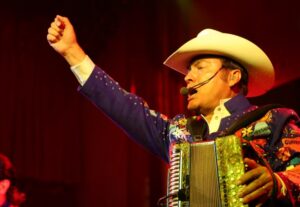
Los corridos musicales son un tipo de música folclórica mexicana que celebra las acciones épicas de un personaje real o mítico. El corrido nació a principios del siglo XIX y se volvió muy popular con la revolución mexicana. Comenzó a evolucionar para pasar a narrar y dar homenaje a los inmigrantes ilegales que cruzan la frontera. En estas canciones se narran las historias de los inmigrantes y las luchas diarias en estos peligrosos viajes. Se habla sobre las familias, la legalización, la muerte, el hambre, el miedo, etcétera. Hay otro tipo de corrido llamado “narcocorrido” que se caracteriza por narrar historias relacionadas con el narcotráfico. Estos corridos han sido criticados porque hablan de un trabajo violento e ilegal, y en algunos lugares están prohibidos. Aun así, son bastante populares y existen numerosas canciones. Los Tigres del Norte es una banda mexicana conocidísima por sus corridos mexicanos; sus canciones tocan sentimientos profundos en los que han cruzado la frontera, han dejado sus familias y han sufrido en el trayecto.
ACTIVIDADES
Escucha corridos musicales de Los Tigres del Norte en YouTube. Escoge la canción que más te llamó la atención y escribe una reflexión sobre la letra de la canción que escuchaste. (Puedes usar el texto de arriba para ayudarte a entender la letra.) Explica la historia de la canción, quiénes eran los protagonistas, qué emociones encuentras en la historia y cómo es el principio y el final de la canción. Comparte con tus compañeros-as de clase tus impresiones.
LA HISTORIA DE RODRIGO BAÑUELOS: UN MATEMÁTICO HISPANO EN LOS EE. UU.
A continuación, vas a conocer la historia de Rodrigo Bañuelos por medio del siguiente artículo. Sigue las instrucciones de abajo para completar las actividades y aprender sobre este sorprendente académico y profesor en la Universidad de Purdue.
- Lee el artículo con cuidado y decide si estas frases son ciertas o falsas. Corrige las frases falsas.
- Hay muchos matemáticos latinoamericanos en los EE. UU.
- Él es un experto en lógica y física.
- Bañuelos recibió el premio Blackwell-Tapia en UCLA.
- Bañuelos llegó a los EE. UU. a los 15 y sabía leer en inglés y en español.
- Se graduó sin dificultades con el idioma inglés.
- Juan Lara fue un mentor esencial en su vida.
- Los latinos reciben muchas oportunidades para destacar en las ciencias.
- Es profesor de matemáticas en la Universidad de Florida.
- Las matemáticas puras tratan más de ideas que de aplicaciones.
- Hay muchos matemáticos latinoamericanos en los EE. UU.
- Si tuvieras la oportunidad de ayudar a otros a tener éxito, ¿qué harías? Piensa en la historia de Bañuelos desde que llegó a los Estados Unidos. ¿Cómo puedes involucrarte para conocer a los hispanos en tu comunidad? Crea una lluvia de ideas y discute oportunidades e iniciativas originales con tus compañeros-as.
6. COMPOSICIÓN
Después de aprender sobre la inmigración en los Estados Unidos, escribe una composición a modo de reflexión sobre la historia de Andrés Castro y las historias de los inmigrantes y refugiados y la cultura relacionada con la inmigración. Piensa en un título y un tema de comentario. Reflexiona sobre qué circunstancias puede causar que una persona tome un riesgo tan grande como hizo Andrés y cómo es la vida en los Estados Unidos para un refugiado o inmigrante ilegal como la historia de Rodrigo Bañuelos. Comenta los riesgos y repercusiones del “sueño americano” y cuál es la responsabilidad social de las comunidades, familias y gobiernos para ayudar a los desfavorecidos inmigrantes y fortalecer sus habilidades.

Escribe unas 400 palabras aproximadamente. Para que tu escritura sea profesional:
- Evita la repetición de palabras como “importante” y “muy”. Usa otros sinónimos.
- Usa conectores del discurso en tus oraciones para crear una fluidez más natural de tus pensamientos.
- Organiza tus ideas siguiendo una estructura: título, introducción al tema, desarrollo de las ideas y conclusión.
Conectores del discurso
|
ESPAÑOL |
INGLÉS |
ESPAÑOL |
INGLÉS |
|---|---|---|---|
|
Sin embargo |
However |
Asimismo |
In addition to |
|
En primer lugar |
First |
En segundo lugar |
Second |
|
En tercer lugar |
Third |
Como conclusión |
In conclusion |
|
También |
Also |
Finalmente |
Finally (to conclude) |
|
Además |
Also / in addition to |
A pesar de |
In spite of |
|
Por ejemplo |
For instance |
Por cierto |
By the way |
|
Indudablemente |
Undoubtedly |
Para que |
In order to |
Haz una lluvia de ideas antes de escribir, usa el espacio de abajo para ayudarte a pensar.
7. PUERTO RICO
Puerto Rico, territorio de los EE. UU., es una isla pequeña en el Caribe con un clima tropical, llena de colores, festividades e historia. Cristóbal Colón llegó a la isla en 1493 y durante 4 siglos, la isla se adaptó a una cultura hispana con rasgos distintivos como el español y el catolicismo hoy presentes en el bilingüismo en la isla y en las diferentes celebraciones relacionadas con la religión cristiana. Desafortunadamente, la colonización disipó la cultura indígena taína originaria de Puerto Rico y de otras islas caribeñas dejando una herencia genética taína muy pequeña, pero todavía presente hoy en sus habitantes. En 1898, España perdió muchos territorios esparcidos por el mundo incluyendo Puerto Rico y otros territorios como Filipinas y Cuba. EE. UU. se embarcó en una guerra contra España, y como consecuencia de este conflicto, la isla de Puerto Rico fue cedida a los Estados Unidos. Durante el conflicto, las tropas americanas entraron e invadieron la isla de Puerto Rico, provocando que España perdiera su último territorio en las Américas.
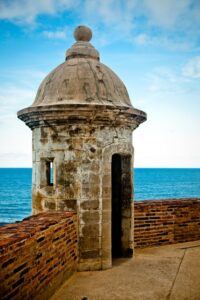
Desde entonces, el puesto de Puerto Rico ha sido difícil de entender. Al contrario de Cuba o Filipinas, países con autogobierno, Puerto Rico no se convirtió en un país, sino que pasó a ser un territorio de los Estados Unidos. Así, los puertorriqueños son ciudadanos estadounidenses, tienen derecho a votar en las elecciones de los EE. UU. (aunque no desde la isla) y deben pagar impuestos federales. No obstante, algunos puertorriqueños piensan que Puerto Rico debería ser su propio país y obtener la libertad de los EE. UU. para tomar sus propias decisiones. Otros piensan que es mejor para la economía de Puerto Rico permanecer como un territorio de los EE. UU. y así obtener su respaldo y beneficios especialmente dado la vulnerabilidad de ser una isla (Estado Libre Asociado). Y otros piensan que los EE. UU. debe declarar la isla como un estado más de los EE. UU. con todas los beneficios y responsabilidades. Puerto Rico, sin embargo, tiene lazos culturales muy cercanos con los países hispanos, sobre todo los del Caribe. Parte de esto se debe a su pasado taíno, la cercanía con otras islas como Cuba y República Dominicana y el hecho de que el español es la lengua más hablada que el inglés, a pesar de que las dos son lenguas oficiales en la isla. Puerto Rico goza cierta independencia en algunos ámbitos —por ejemplo, al tener su propia representación en los juegos olímpicos, entre otros.
ACTIVIDADES
- Lee el texto primero. Después, corrige las siguientes frases para que sean correctas.
- Cristóbal Colón llegó a Puerto Rico en 1898.
- Puerto Rico exige una visa para los estadounidenses.
- Cuba es un territorio de España.
- Los incas eran los indígenas de Puerto Rico.
- Puerto Rico es un país en el Caribe.
- Puerto Rico no tiene influencia hispana.
- Crea una lluvia de ideas usando la pizarra de tu clase o tu cuaderno; piensa en las ventajas y desventajas de que Puerto Rico sea un país, continúe como un Estado Libre Asociado o sea un estado independiente. Piensa en cómo cada decisión afectaría a la gente de Puerto Rico y a los EE. UU. Discute con tus compañeros-as diferentes ideas.
- Encuesta. ¿Piensas que Puerto Rico debería ser un país, un estado libre asociado o un estado? Explica.
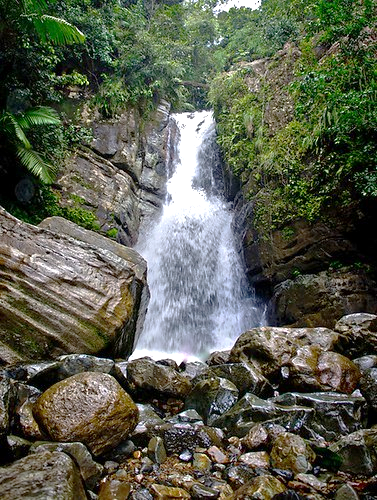
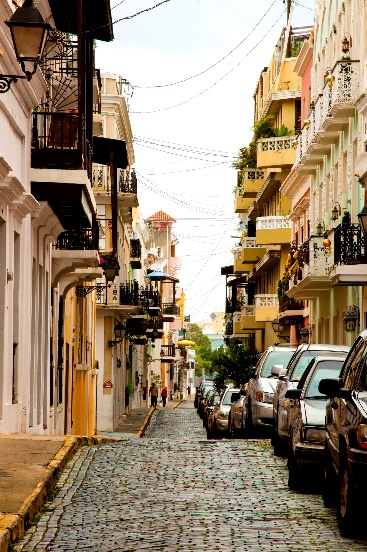
- Busca más información sobre 1 de las imágenes de abajo. Presenta tu reporte a la clase o comparte con un-a compañero-a.

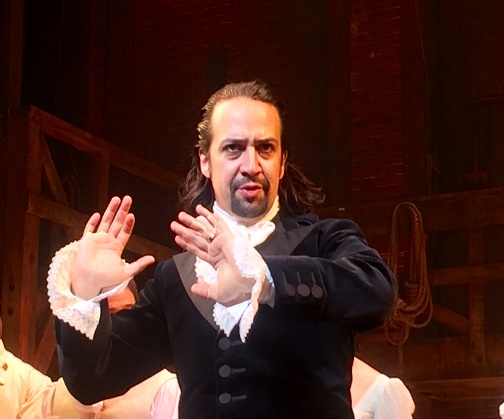
8. MES NACIONAL DE LA HERENCIA HISPANA

Los Estados Unidos es un país formado por grupos llegados de distintos lugares del mundo, muchos de ellos bajo circunstancias únicas como los que han huido debido a persecuciones religiosas como los judíos en Alemania y Austria, los que emigraron la hambruna de Irlanda, los que salieron exiliados de la guerra civil española, los que huyeron del fascismo y de la pobreza en Italia, los que huyen del comunismo chino o cubano y casos excepcionales como los que llegaron esclavizados de África, entre muchos más casos. Los Estados Unidos es un país que ha albergado a muchas culturas y se ha enriquecido con esa diversidad. Por eso, la constitución estadounidense comienza con la famosísima frase, “We the people of the United States” (Nosotros la gente de los Estados Unidos). Como parte de esa herencia fundamental del pueblo estadounidense, se celebra un mes dedicado específicamente a la herencia hispana para dar homenaje a las historias, personas y logros de los hispanos a lo largo de la historia americana. Esta es una forma de reconocer el legado cultural de los hispanos, y es una celebración que se aplica también a otros grupos étnicos.
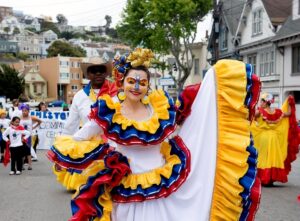
Se celebra del 15 de septiembre al 15 de octubre cada año, en ese orden porque durante ese mes se celebra la independencia de varios países hispanos: Costa Rica (15 de sept.), El Salvador (15 de sept.), Guatemala (15 de sept.), Honduras (15 de sept.), Nicaragua (15 de sept.), México (16 de sept.) y Chile (18 sept.). Hay una gran variedad de opciones para celebrar la cultura de los hispanos. Se organizan lecturas de libros en español, se reconoce a personajes importantes del mundo hispano, se proyectan películas hispanas y se crean lecciones especiales en las aulas de escuelas y universidades. También, hay desfiles en varias ciudades, eventos organizados en los museos, venta de comidas de diferentes países, bailes tradicionales, fiestas, música y mucho más.
ACTIVIDADES
Celebrando el día de la herencia hispana en tu clase de español. Hagan una lluvia de ideas para organizar una fiesta de celebración sobre el Mes de la Herencia Hispana. Dividan diferentes funciones para:
- Dar homenaje a un personaje famoso (mira la lista al final de este capítulo o usa un personaje de tu interés).
- Describir un plato tradicional de un país hispano (mofongo, tacos, paella, ropa vieja, etc.).
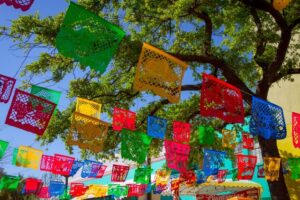
- Hacer una manualidad en clase con papel picado.
- Aprender un baile hispano (salsa, bachata, flamenco, etc.).
- ¡Piensa en otras ideas!
9. REPASO DE GRAMÁTICA: COMPARACIONES
COMPARACIONES DE IGUALDAD: Para establecer la igualdad entre dos cosas, personas o acciones.
- Tanto/tanta/tantos/tantas + como: Aquí dos elementos son igualmente grandes, pequeños, numerosos, etcétera. Por ejemplo, “Juan tiene tantos libros como María.”
- Tan + adjetivo/adverbio + como: Se usa para comparar la igualdad en términos de cualidades o características. Por ejemplo, “María es tan inteligente como Juan.”
- Igual/igual de + adjetivo/adverbio + que: Similar a la estructura anterior, se utiliza para expresar la igualdad en cualidades o características. Por ejemplo, “Pedro es igual de alto que Luis.”
COMPARACIONES DE DESIGUALDAD: Se utilizan cuando dos cosas, personas o acciones no son iguales.
- Más/menos + adjetivo/adverbio + que: Cuando una persona o cosa tiene más o menos de una cualidad en comparación con otra. Por ejemplo, “María es más alta que Ana.”
- Más/menos + sustantivo + que: Cuando se compara la cantidad de un sustantivo entre dos elementos. Por ejemplo, “Juan tiene más libros que Pedro.”
- Mayor/menor + que: Se usa para comparar edades o la importancia. Por ejemplo, “Carlos es mayor que Luis.”
- Mejor/peor + que: Compara la calidad de dos cosas o personas. Por ejemplo, “Mi coche es mejor que el suyo.”
Si deseas aprender más en detalle.
ACTIVIDADES
Observa tu clase y escribe comparaciones de igualdad y desigualdad usando las fórmulas anteriores.
10. REPASO DEL CONTENIDO
Escoge la opción correcta para las siguientes preguntas o enunciados sobre lo que aprendimos de los hispanos en los EE. UU.
- ¿Cuál es la población hispana más grande en los EE. UU.?
- Mexicanos
- Puertorriqueños
- Cubanos
- Dominicanos
- ¿En qué ciudad de los EE. UU. se encuentra la mayor concentración de hispanos?
- Nueva York
- San Antonio
- Los Ángeles
- Miami
- ¿Cuál es la contribución económica de los hispanos al PIB de los EE. UU.?
- 1.5 billones
- 2.5 billones
- 3 billones
- 3.2 billones
- ¿Qué ciudad en Florida es considerada la más antigua de los Estados Unidos con un origen español?
- Miami
- San Agustín
- Tampa
- Orlando
- ¿Qué museo y biblioteca en Nueva York es conocido por su colección dedicada al arte hispano?
- MoMA (Museum of Modern Art)
- The Metropolitan Museum of Art
- The Hispanic Society of America
- Qué ciudad es conocida por la Calle 8, un centro de la herencia hispana con restaurantes y tiendas?
- Los Ángeles
- San Juan
- Miami
- Houston
- Nueva York es una ciudad:
- Hispana
- Plurilingüe y multicultural
- Industrial
- Llena de naturaleza
- ¿Cuál fue uno de los propósitos de las misiones cristianas establecidas por España en el suroeste de los Estados Unidos?
- Crear bases militares
- Preservar la cultura nativa
- Expandir la influencia española y enseñar la religión cristiana
- Según el censo de 2020, ¿cuál es el porcentaje aproximado de la población estadounidense de origen hispano?
- 10%
- 19%
- 30%
- 50%
- ¿Qué barrio de Nueva York inspiró a Lin-Manuel Miranda para el musical In the Heights?
- Queens
- Bronx
- Washington Heights
- Harlem
- ¿Qué país hispano emigra hacia los Estados Unidos debido a su cercanía geográfica y razones históricas?
- Cuba
- Colombia
- Argentina
- República Dominicana
- ¿Cuál es uno de los métodos peligrosos mencionados que los inmigrantes usan para cruzar hacia los Estados Unidos?
- Avión
- La Bestia
- Bicicleta
- Ferry
- ¿Cuál es el nombre del fraile español que estableció El Camino Real y las misiones en California?
- Hernán Cortés
- Fray Junípero Serra
- Bartolomé de las Casas
- Francisco Pizarro
- ¿Qué término polémico se utiliza para referirse a aquellos que cruzan ilegalmente la frontera nadando en el río Grande?
- “Indocumentados”
- “Migrantes”
- “Mojados”
- “Refugiados”
- ¿Cuál es el propósito principal de los corridos musicales?
- Celebrar la música pop
- Promover la música latina
- Celebrar las acciones heroicas de personajes reales o míticos
- ¿Qué evento histórico mexicano contribuyó significativamente a la popularidad de los corridos?
- La independencia de México
- La revolución mexicana
- La conquista de México
- El 5 de mayo
- ¿Qué tipo de corrido se caracteriza por narrar historias relacionadas con el narcotráfico?
- Corrido tradicional
- Corrido revolucionario
- Corrido social
- Narcocorrido
- ¿Qué estatus político tiene actualmente Puerto Rico en relación con los Estados Unidos?
- Estado de los Estados Unidos
- País independiente
- Territorio de los Estados Unidos
- Ciudad
11. OTROS TEMAS PARA EXPANDIR: PROYECTOS Y TAREAS ALTERNATIVAS
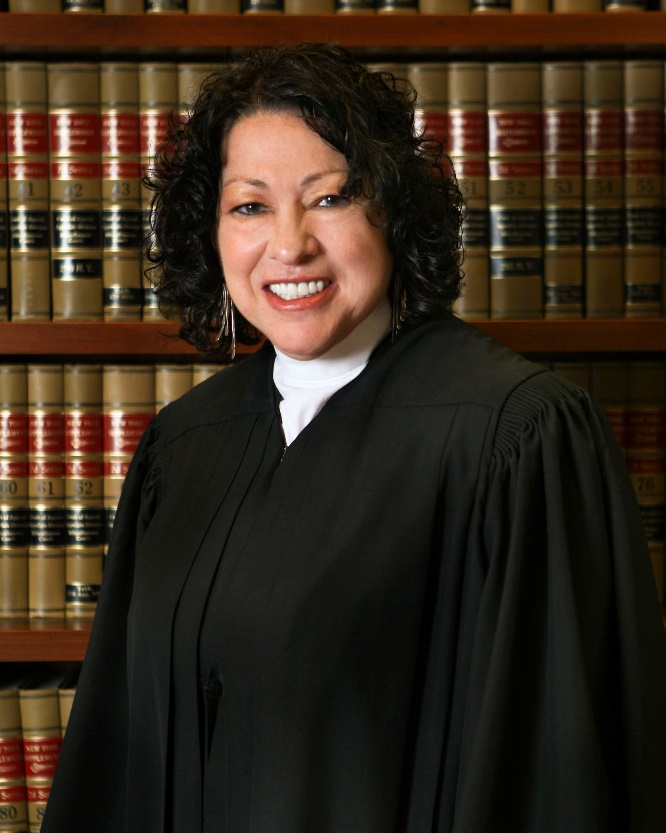
Para expandir puedes buscar más información sobre estos temas y presentar o escribir una composición en clase.
TEMAS: Los hispanos en trabajos de construcción; la Guerra Mexicano-Americana; el barrio Spanish Harlem; los chicanos; barrios hispanos de Chicago, Nueva York, Miami, San Antonio, Los Ángeles, etcétera; Telemundo, Univision, el musical In the Heights de Lin-Manuel Miranda
LUGARES EMBLEMÁTICOS: Spanish Harlem Nueva York, Hispanic New York Project, MOLAA (Museum of Latino American Art), Museo Mexicano de arte en Chicago
PELÍCULAS: In the Heights (2021) de Jon M. Chu, Los tigres del norte at Folsom Prison (2019) de Tom Donahue, Sin nombre (2009) de Cary Joji Fukunaga
FESTIVALES: Hispanic heritage festival en Miami, Hispanic day parade, quinceañera, el grito en Los Ángeles, el desfile del día de la hispanidad en Nueva York, el festival de la Villita en Chicago, el festival de la monarca en Chicago
PERSONAJES FAMOSOS: Sonia Sotomayor, Dolores Huerta, Alexandria Ocasio Cortez, Ana Navarro, Jorge Tetl Argueta, Sabine Reyes Ulibarrí, Ynés Mexía, Luis Walter Álvarez, Baruj Benacerraf, Franklin Ramón Chang Díaz, César Millán, Lin-Manuel Miranda, Sofía Vergara, Eva Longoria, Oscar Isaac, Gabriel Iglesias, Carolina Herrera, Jorge Ramos, Antona Novello, Juan Ponce de León
MÚSICA: The Spanish Harlem Orchestra, Selena, Camila Cabello, Celia Cruz, Gloria Estefan, Selena Gomez, Jose Feliciano, Bad Bunny
ESCRITORES: Sandra Cisneros, Francisco X. Alarcón, Juan Felipe Herrera, Rudolfo Anaya, Pat Mora, Ana Castillo, Lorna Dee Cervantes, Danzy Senna
OBRAS CONSULTADAS
Ávila-Claudio, Ronald. “Cómo Puerto Rico pasó de ser un milagro económico a convertirse en el territorio con la mayor deuda pública en la historia de Estados Unidos.” BBC News Mundo, 19 enero 2022, https://www.bbc.com/mundo/noticias-59904712
García de la Concha, Víctor. “El Español En La Escena Lingüística Internacional.” Política Exterior, vol. 27, no. 155, 2013, pp. 108–116.
Kropp, Phoebe S. “The Road: El Camino Real and Mission Nostalgia.” California Vieja: Culture and Memory in a Modern American Place, 1st ed., University of California Press, 2006.
Montes-Alcalá, Cecilia, et al. “Español en el Sureste de EE. UU.: El Papel de las Actitudes Lingüísticas en el Mantenimiento o Pérdida de la Lengua.” Revista Internacional de Lingüística Iberoamericana, vol. 12, no. 1.23, 2014, pp. 77–92.
Palomar S., Aytana. “¿Qué es el Mes de la Herencia Hispana y Por qué se Celebra en EE.UU.?” National Geographic, 15 sept 2023, https://historia.nationalgeographic.com.es/a/que-es-mes-herencia-hispana-y-por-que-se-celebra-eeuu_20186
Saavedra, Yvette J. “The Spanish Colonial Project: Franciscans, Missions, and Land Use in Alta California.” Pasadena Before the Roses: Race, Identity, and Land Use in Southern California, 1771–1890, University of Arizona Press, 2018, pp. 17–41.
Tobar, Héctor. “El papel de los hispanos en el futuro de Estados Unidos.” National Geographic, Vol. 43, no. 2, agosto 2018, pp. 86–103.
Verde, Juan. “Hispanos En Estados Unidos: Ciudadanos Sin Adjetivos.” Política Exterior, vol. 26, no. 150, 2012, pp. 28–32.
Atribuciones de los Imagens
- America Central y Norte © Ángela Pacheco González is licensed under a CC BY (Atribución) license
- San Juan Puerto Rico © dameetch is licensed under a CC BY (Atribución) license
- District celebrates Hispanic Heritage Month © USACE Europe District is licensed under a CC BY (Atribución) license
- Se habla español © Ángela Pacheco González is licensed under a CC BY (Atribución) license
- Road to LA – El Camino Real Bell in Front of San Gabriel Mission © ramalama_22 is licensed under a CC BY (Atribución) license
- Los Tigres del Norte en la Sala Apolo © alterna2 is licensed under a CC BY (Atribución) license
- Justice Sonia Sotomayor © Cknight70 is licensed under a CC BY (Atribución) license
- Old San Juan, Puerto Rico © breezy421 is licensed under a CC BY (Atribución) license
- Puerto Rico (El Yunque) © R9 Studios FL (Thanks to all the fans!!!) is licensed under a CC BY (Atribución) license
- Coqui, Puerto Rico © dejav1988 is licensed under a CC BY-SA (Atribución CompartirIgual) license
- File:Calle San Sebastián 01 (San Juan).jpg © https://www.flickr.com/people/vxla/ is licensed under a CC BY (Atribución) license
- Lin-Manuel Miranda in Hamilton © Steve Jurvetson is licensed under a CC BY (Atribución) license
- We the people ~.jpg © Navyatha123 is licensed under a CC BY-SA (Atribución CompartirIgual) license
- National Hispanic Heritage Month © US Department of State is licensed under a Dominio público license
- Papel Picado Banners © StuSeeger is licensed under a CC BY (Atribución) license
- File:Sonia Sotomayor 7 in robe, 2009.jpg © Stacey Ilyse is licensed under a CC BY (Atribución) license
- Calle Ocho © Prayitno / Thank you for (12 millions +) view is licensed under a CC BY (Atribución) license

.jpg)
