<?xml version="1.0" encoding="UTF-8"?>
<!DOCTYPE html PUBLIC "-//W3C//DTD XHTML 1.1//EN" "http://www.w3.org/TR/xhtml11/DTD/xhtml11.dtd">
<html xmlns="http://www.w3.org/1999/xhtml" xml:lang="en">
<head>
<meta content="text/html; charset=UTF-8" http-equiv="content-type" />
<meta http-equiv="Content-Language" content="en" />
<meta name="generator" content="Pressbooks 5.33.0" />
<meta name="pb-authors" content="Dr. Richard Stern, editor" />
<meta name="pb-contributors" content="Very Rev. Denis Robinson, OSB" />
<meta name="pb-contributors" content="Dr. Richard Stern" />
<meta name="pb-contributors" content="Sr. Dianne Bergant, CSA, PhD" />
<meta name="pb-contributors" content="Dr. Thomas G. Long" />
<meta name="pb-contributors" content="Deborah Organ" />
<meta name="pb-contributors" content="Dr. Paul Scott Wilson" />
<meta name="pb-contributors" content="Fr. Andrew Carl Wisdom, OP" />
<meta name="pb-contributors" content="Dr. Charles L. Campbell" />
<meta name="pb-title" content="That the Word May be Proclaimed: Selections from the Marten Lectures — Volume 2" />
<meta name="pb-language" content="en" />
<meta name="pb-cover-image" content="https://pressbooks.palni.org/martenlecturesvol2/wp-content/uploads/sites/17/2021/11/Marten-Lecture-Cover-Vol-2.jpg" />
<meta name="pb-subtitle" content="Saint Meinrad Studies in Pastoral Ministry No. 4" />
<meta name="pb-series-title" content="Saint Meinrad Studies in Pastoral Ministry" />
<meta name="pb-series-number" content="4" />
<meta name="pb-print-isbn" content="978-0-87029-680-2" />
<meta name="pb-copyright-year" content="2015" />
<meta name="pb-copyright-holder" content="Saint Meinrad Seminary and School of Theology" />
<meta name="pb-book-license" content="cc-by-nc-nd" />
<meta name="pb-publisher" content="Originally printed at Abbey Press; Ebook hosted by PALNI Press" />
<meta name="pb-ebook-isbn" content="978-1-956390-05-6" />
<meta name="pb-primary-subject" content="QRVS3" />
<title>That the Word May be Proclaimed: Selections from the Marten Lectures — Volume 2</title>
</head>
<body lang='en' >
<div id="half-title-page"><h1 class="title">That the Word May be Proclaimed: Selections from the Marten Lectures — Volume 2</h1></div><div id="title-page">
			<h1 class="title">That the Word May be Proclaimed: Selections from the Marten Lectures — Volume 2</h1>
		<h2 class="subtitle">Saint Meinrad Studies in Pastoral Ministry No. 4</h2>
					<p class="author">Dr. Richard Stern, editor</p>
							<p class="author">Very Rev. Denis Robinson, OSB; Dr. Richard Stern; Sr. Dianne Bergant, CSA, PhD; Dr. Thomas G. Long; Deborah Organ; Dr. Paul Scott Wilson; Fr. Andrew Carl Wisdom, OP; and Dr. Charles L. Campbell</p>
						<p class="publisher">Originally printed at Abbey Press; Ebook hosted by PALNI Press</p>
		<p class="publisher-city"></p>
	</div>
<div id="copyright-page">
	<div class="ugc">
					
<div class="license-attribution"><p><img src="https://pressbooks.palni.org/martenlecturesvol2/wp-content/themes/pressbooks-book/packages/buckram/assets/images/cc-by-nc-nd.svg" alt="Icon for the Creative Commons Attribution-NonCommercial-NoDerivatives 4.0 International License" /></p><p>That the Word May be Proclaimed: Selections from the Marten Lectures — Volume 2 by Saint Meinrad Seminary and School of Theology is licensed under a <a rel="license" href="https://creativecommons.org/licenses/by-nc-nd/4.0/">Creative Commons Attribution-NonCommercial-NoDerivatives 4.0 International License</a>, except where otherwise noted.</p></div>

									</div>
</div>
<div id="toc">
	<h1>Contents</h1>
	<ul>
					<li class="front-matter series">
	<a href="#front-matter-saint-meinrad-pastoral-studies-series">
		<span class="toc-chapter-title">Saint Meinrad Pastoral Studies Series</span>
							<span class="chapter-author">Very Rev. Denis Robinson, OSB</span>
					</a>
	</li>

					<li class="front-matter preface">
	<a href="#front-matter-preface">
		<span class="toc-chapter-title">Preface</span>
							<span class="chapter-author">Dr. Richard Stern</span>
					</a>
	</li>

					<li class="front-matter series">
	<a href="#front-matter-marten-lecture-series">
		<span class="toc-chapter-title">Marten Lecture Series</span>
							</a>
	</li>

					<li class="front-matter acknowledgements">
	<a href="#front-matter-marten-endowment-a-gift-for-preaching">
		<span class="toc-chapter-title">Marten Endowment: A Gift for Preaching</span>
							</a>
	</li>

					<li class="part">
	<a href="#part-main-body">
					Main Body
			</a>
</li>

					<li class="chapter standard">
	<a href="#chapter-lectionary-preaching">
		<span class="toc-chapter-title">Lectionary Preaching</span>
							<span class="chapter-author">Sr. Dianne Bergant, CSA, PhD</span>
					</a>
	</li>

					<li class="chapter standard">
	<a href="#chapter-unleashing-the-power-of-scripture">
		<span class="toc-chapter-title">Unleashing the Power of Scripture</span>
							<span class="chapter-author">Dr. Thomas G. Long</span>
					</a>
	</li>

					<li class="chapter standard">
	<a href="#chapter-preaching-between-worlds">
		<span class="toc-chapter-title">Preaching Between Worlds: Theology and Method</span>
							<span class="chapter-author">Deborah Organ</span>
					</a>
	</li>

					<li class="chapter standard">
	<a href="#chapter-lighting-a-fire-preaching-as-teaching-and-proclamation">
		<span class="toc-chapter-title">Lighting a Fire: Preaching as Teaching and Proclamation</span>
							<span class="chapter-author">Dr. Paul Scott Wilson</span>
					</a>
	</li>

					<li class="chapter standard">
	<a href="#chapter-communicating-in-a-world-of-landlines-iphones-and-tweets">
		<span class="toc-chapter-title">Communicating in a World of Landlines, iPhones and Tweets: Preaching Across Generations</span>
							<span class="chapter-author">Fr. Andrew Carl Wisdom, OP</span>
					</a>
	</li>

					<li class="chapter standard">
	<a href="#chapter-preaching-and-apocalyptic-imagination">
		<span class="toc-chapter-title">Preaching and Apocalyptic Imagination</span>
							<span class="chapter-author">Dr. Charles L. Campbell</span>
					</a>
	</li>

			</ul>
</div>
<div class="front-matter series " id="front-matter-saint-meinrad-pastoral-studies-series" title="Saint Meinrad Pastoral Studies Series">
	<div class="front-matter-title-wrap">
		<p class="front-matter-number">1</p>
		<h1 class="front-matter-title">Saint Meinrad Pastoral Studies Series</h1>
					<p class="chapter-author">Very Rev. Denis Robinson, OSB</p>
			</div>
	<div class="ugc front-matter-ugc">
				 <p>For 150 years, Saint Meinrad Seminary and School of Theology has striven to provide the highest quality education and formation for priests, permanent deacons and lay ministers for the life of the Church. This work has gone on because Saint Meinrad has always been convinced that the Church deserves the brightest, holiest and most ardent ministers for service to God’s people.</p> <p>Today more than ever, in a rapidly changing and expanding Church environment, the work of formation needs to find new and creative ways of raising up these ministers. The Saint Meinrad Pastoral Studies Series is intended to provide creative responses to critical pastoral issues in the life of today’s Church.</p> <p>The series features articles and reflections by Saint Meinrad faculty, staff and visiting lecturers on topics that touch the very heart of the Church’s work in the 21st century. The series aims to reach those who are laboring diligently in these same ministries. Through these pages, we hope to provide some stimulus for critical thinking on important issues, as well as a source of intellectual and spiritual renewal for those dedicated to parish and diocesan life.</p> 
	</div>


	</div>
<div class="front-matter preface " id="front-matter-preface" title="Preface">
	<div class="front-matter-title-wrap">
		<p class="front-matter-number">2</p>
		<h1 class="front-matter-title">Preface</h1>
					<p class="chapter-author">Dr. Richard Stern</p>
			</div>
	<div class="ugc front-matter-ugc">
				 <p>This book, the second of a two-volume set, is a collection of six of the more than 20 lectures presented by scholars in the annual John S. and Virginia Marten Homiletics Lecture Series at Saint Meinrad Seminary and School of Theology.</p> <p>In 1986, John S. and Virginia Marten of Indianapolis, Indiana, made a generous grant to Saint Meinrad to endow a homiletics program. Shortly after I arrived to teach homiletics in the summer of 1990, Dr. Thomas Walters, then the academic dean, and I thought it would be a great idea to have an annual homiletics lecture. The idea was well received by the administration and the Marten family.</p> <p>Along with the annual lecture, the Marten endowment has also made possible a first-rate homiletics/liturgics classroom in a renovation project in the late 1990s, which remains the envy of many larger seminaries. The Marten Lecture series has now been in&nbsp;place for over 20 years. The list of lecturers and lecture titles is included in this book; the series is ongoing.</p> <p>I think this is a marvelous and diverse collection of works. It has been my privilege and pleasure to personally invite each of these lecturers to speak at Saint Meinrad. I am grateful to each lecturer who has made his or her way to rural southern Indiana to the campus of Saint Meinrad Seminary and School of Theology.</p> <p>This collection is not intended to offer the very latest in homiletic theory by these men and women. Rather, it is a sort of pulse-taking or snapshot of what has been going on in the homiletics world over the last 20 years. These scholars are still very&nbsp;active in their various disciplines and continue to push the envelope in both the theory and practice of preaching.&nbsp; Nevertheless, as I reviewed all of them, I was struck by how important each of them still is. I have personally benefited from the work of all the lecturers before, during and after their short time at Saint Meinrad as Marten Lecturers. Their work is important. That is why they were invited to bring their insights to Saint Meinrad.</p> <p>In some small way, I hope the lecture series has been a way for these presenters to move forward in their thinking and research, at the same time they have provided a stimulus to those listeners who are now preachers to expand their own homiletic horizons. With that said, all the lectures contained within maintain their status as valuable and ongoing contributions to the important work of proclaiming God’s Word for the people of God.</p> <p>As I have read through each of these several times, I am struck first by the diversity of topics that have been addressed. At the same time, however, I recognize a common spirit that runs through each of the lectures. That spirit includes a great faith in the power of the Word and of the word. There is also a deep and common respect for the hearer as well.</p> <p>As <em>Fulfilled in Your Hearing</em> notes, preaching is the&nbsp;responsibility of the whole Church. This does not mean that everyone can be a preacher, but that hearers and homilists are all responsible for and are empowered for the work of bringing the Word to fruition. As a hearer, I must do my best to listen for God’s Word to me as an individual, but also to us as a Church.</p> <p>There is finally, then, a consistent resistance to the individualization of religious practice. Church is more than a&nbsp;collection of individuals. It is a communal enterprise. While there are several Christian “neighborhoods” or faith traditions represented in these lecturers, they share this common spirit.</p> <p>This selection is intended to be representative of the series as a whole. Topics have been wide ranging, as is the case with homiletics theory and practice in general. Some of the lectures did not translate well from their original oral/aural presentation to the written page.</p> <p>In one case, the presenter, Fr. Robert Waznak, SS, has claimed his opportunity to preach directly to and with the saints. I suspect he has set them straight on at least a couple of matters. In a couple of cases, we could not locate the presenter in time or did not receive the requisite permission in time for the preparation and publication of the volume. Ultimately, space limitations dictated the impossibility of including all the lectures.</p> <p>I would be remiss in the extreme if I did not express my gratitude to the Marten family of Indianapolis, who made that initial grant to Saint Meinrad Seminary and School of Theology to endow our homiletics programs. Virginia and the late John S. Marten made the original challenge grant in 1986. Since then, the Marten family has continued to be interested in and involved in the work of our school, as well as in the work of Saint Meinrad Archabbey as a whole.</p> <p>In preparing the lectures for inclusion in this volume, we transcribed some of the lectures from the videos of the lectures. In other cases, lecturers provided us with manuscripts of their work. In a few cases, I have made slight edits to make the lectures fit the written nature of the volume.</p> <p>I have endeavored to make only the smallest of corrections, without altering in any way the intention of the authors. What I am unable to communicate in this printed form is the grace and enthusiasm each lecturer brought to his or her presentation. I am grateful for the spirit they brought to the task.</p> <p>With thanks to the Marten family, the Marten Lecturers, to Fr. Denis Robinson, OSB, our president-rector, who suggested the idea of this collection, to the monks, faculty, staff and students, and to all who have thus far benefited from the lectures, I hope the series will have a long and fruitful future. It is held the first Tuesday evening of October, with a workshop held the next day.</p> 
	</div>


	</div>
<div class="front-matter series " id="front-matter-marten-lecture-series" title="Marten Lecture Series">
	<div class="front-matter-title-wrap">
		<p class="front-matter-number">3</p>
		<h1 class="front-matter-title">Marten Lecture Series</h1>
								</div>
	<div class="ugc front-matter-ugc">
				 <p>1991 John A. Melloh, SM, “Preaching: Proclamation or Persuasion?”</p> <p>1992 Thomas H. Troeger, “Tapping Hidden Streams: Receiving the Spirit through the Discipline of the Imagination”</p> <p>1993 Walter Brueggemann, “Preaching from the Psalms”</p> <p>1994 Mary Catherine Hilkert, OP, “Naming Grace: Preaching and the Sacramental Imagination”</p> <p>1995 David Buttrick, “Preaching into a New Century”</p> <p>1996 Jude Siciliano, OP, “Preaching: Proclaiming a Just Word”</p> <p>1997 Raymond F. Collins, “Preaching the Epistles”</p> <p>1998 Robert Waznak, SS, “The World in the Biblical Text: New Imaginings for the Preacher”</p> <p>1999 John S. McClure, “Collaborative Preaching: God’s&nbsp; Empowering Word”</p> <p>2000 James A. Wallace, CSsR, “Preaching to the Hungers of the Heart”</p> <p>2001 Maurice Nutt, CSsR, “Just Like Fire in My Bones”</p> <p>2002 Frances Trampiets, SC, “Shaping the Faith of Those Shaped by the Media”</p> <p>2003 Stephen V. DeLeers, “Conceiving Everything Anew: Preaching the Gospel in a ‘Whatever’ World”</p> <p>2004 Frank Matera, “Preaching in a Different Key: Preaching the Gospel According to Paul”</p> <p>2005 Dianne Bergant, CSA, “Lectionary Preaching”</p> <p>2006 Thomas Long, “Unleashing the Power of Scripture”</p> <p>2007 Richard Fragomeni, “Toward the New Evangelization: Preaching Parish Missions for the Life of the Church”</p> <p>2008 Deborah Organ, “Preaching Between Worlds: Theology and Method”</p> <p>2009 Paul Scott Wilson, “Lighting a Fire: Preaching as Teaching and Proclamation”</p> <p>2010 Andrew Carl Wisdom, OP, “Communicating in a World of Landlines and iPhones: Preaching Across the Generations”</p> <p>2011 Rein Boss, “About Whom Does the Prophet Say This?”</p> <p>2012 Lucy Lind Hogan, “To Teach, Delight, and Move: Preaching and Rhetoric in a New Age of Evangelism”</p> <p>2013 Dr. Charles Campbell, “Preaching and Apocalyptic Imagination”</p> <p>2014 Fr. Donald Senior, CP, “The Word of God and the Mission of Preaching”</p> 
	</div>


	</div>
<div class="front-matter acknowledgements " id="front-matter-marten-endowment-a-gift-for-preaching" title="Marten Endowment: A Gift for Preaching">
	<div class="front-matter-title-wrap">
		<p class="front-matter-number">4</p>
		<h1 class="front-matter-title">Marten Endowment: A Gift for Preaching</h1>
								</div>
	<div class="ugc front-matter-ugc">
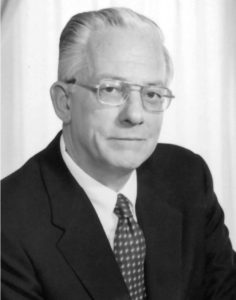
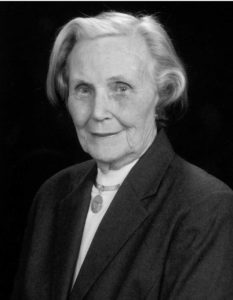
				 <p>The homiletics program at Saint Meinrad Seminary and School of Theology has long focused on excellence in proclaiming the Word of God.</p> <p>For decades, major support for the homiletics program has come from Virginia Marten and her late husband, John, of Indianapolis.</p> <p>The John S. and Virginia Marten Homiletics Endowment has supported a fulltime homiletics professor, classrooms and preaching chapels, curriculum resources, professional development, and the annual Marten Homiletics Lecture and Workshop.</p> <p>The Martens’ dedication and support have ensured that seminarians and permanent deacon candidates develop the strong skills in communications and homiletics that will be essential throughout their ministry.</p> <p>Thousands of alumni have benefitted from the vision of homiletic excellence that is shared by Saint Meinrad and the Marten family. We continue to be most grateful for their generosity.</p> <div class="wp-caption alignleft" id="attachment_32" aria-describedby="caption-attachment-32" style="width: 236px"><img class="size-medium wp-image-32" src="http://pressbooks.palni.org/martenlecturesvol1/wp-content/uploads/sites/16/2021/11/JohnSMarten-236x300.jpg" alt="Image of John S. Marten" width="236" height="300" title="" /><div class="wp-caption-text" id="caption-attachment-32">John S. Marten</div></div> <div class="wp-caption alignleft" id="attachment_31" aria-describedby="caption-attachment-31" style="width: 233px"><img class="size-medium wp-image-31" src="http://pressbooks.palni.org/martenlecturesvol1/wp-content/uploads/sites/16/2021/11/virginia-marten-233x300.jpg" alt="Image of Virginia S. Marten" width="233" height="300" title="" /><div class="wp-caption-text" id="caption-attachment-31">Virginia S. Marten</div></div> 
	</div>


	</div>
<div class="part-wrapper" id="part-main-body-wrapper">
    <div class="chapter standard introduction " id="chapter-lectionary-preaching" title="Lectionary Preaching">
	<div class="chapter-title-wrap">
		<p class="chapter-number">1</p>
		<h1 class="chapter-title">Lectionary Preaching</h1>
					<p class="chapter-author">Sr. Dianne Bergant, CSA, PhD</p>
			</div>
	<div class="ugc chapter-ugc">
				 <p>Let me explain how I got into this [lectionary preaching]. Several years ago, I was approached by the Liturgical Press. They asked me if I would redo – I think they said update, I can’t remember the exact verb – Reginald Fuller’s <em>Preaching the Lectionary</em>. So I said to them, “Now, do you want me to update it or do you want me to start from scratch?” And they said, “Start from scratch.”</p> <p>It just so happened that the year before that, a colleague of mine, Richard Fragomeni, who is a priest of Albany, and I team taught a course, “Hermeneutics for Bible and Preaching.” Richard introduced me to a method of analyzing the biblical material. You’re not going to get any preaching method from me tonight, but I will talk about the content of the preaching.</p> <p>But he introduced me to a method that he learned from his mentor, David Powers, OMI, from Catholic University, and another student at the time that Richard was going to school with. Leas was his first name, and he was, hopefully, going to be the one that was going to develop this and sort of promote it; but he became a bishop and didn’t have any time to do those kinds of things.</p> <p>So, Richard and I worked on this particular project, and it ended up being three volumes. I’m not pushing you to buy it, but it’s nice if you do. But if you take a look at the book, it’s my name with Richard Fragomeni. And it’s with Richard Fragomeni, not because he wrote it – every one of those words is mine. I wrote every word there, but he’s the one who taught me the method, and he is the one with whom we discussed the theological themes.</p> <p>So, what I’m going to talk about is that particular method, but I want to talk about a couple of themes first. I’m going to talk a little bit about liturgical preaching; and you must realize that I speak now, though I do preach, even though homiletics is not my area of expertise. So, what I have to say is by one who is very much committed to biblical ministry, not just biblical exegesis and biblical analysis, but biblical ministry; and preaching is biblical ministry.</p> <p>I want to talk briefly about how I understand liturgical preaching, and then also I want to speak briefly about the difference between biblical preaching and liturgical preaching, because I do not believe that they are exactly the same. There is an overlapping, of course, but there is a significant difference.</p> <p>First of all, liturgical preaching can be understood in various ways, I believe. Certainly, when we are in the specific liturgical seasons, preaching frequently flows out of development of systematic themes that are associated with that season. For example, Advent is the time for preparation for the coming of Christ; and Lent, of course, is the time of penance for sin. Those are systematic themes. I want to say they are not liturgical themes, not if you look at the readings of the liturgy.</p> <p>If you look carefully at the readings, let’s say for Advent, it is not until we get to the fourth Sunday of Advent that there is any mention of the coming of Christ. What the other readings have to say, or concentrate on, is the coming of salvation and restoration. They are restoration themes. Now, clearly, we understand within the season that the moment that initiated or inaugurated our restoration was the birth of Jesus, and then the life of Jesus, which then culminates in the death and resurrection.</p> <p>When we preach systematic theological themes, it’s not the same as lectionary or biblical preaching; and I’m not prepared to say it’s not liturgical preaching, because we certainly are bringing in themes that are associated with that liturgy, but the association&nbsp;comes from systematic theology. It does not come from the lectionary.</p> <p>The same thing with Lent. If you look carefully at Lent, there are very, very few readings in Lent that really capitalize on our sinfulness and our need to do penance. The readings of Lent really look at the graciousness and mercy of God; it’s an entirely different kind of a focus. Now, that does not deny, of course, that we are sinners, because you don’t need the mercy of God if you’re not a sinner.</p> <p>So, it’s not the denial of sin, but it’s an entirely different focus. The focus is on the goodness and the graciousness of God and not on human frailty. So, if we’re doing liturgical reading, liturgical preaching based on the lectionary readings, be very careful that you do not bring in another theological theme that may not be in the reading.</p> <p>Now, again, I want to say that I am not in any way saying that’s not liturgical preaching, and I’m not certainly saying that’s not good preaching; but I want to concentrate on liturgical preaching that flows out of what the liturgy provides for us; and that includes – ideally includes – the lections, the prayers, the collects, the preface, all of that.</p> <p>Now, on one hand, and I do not say this with any kind of disrespect: it’s kind of a liturgical smorgasbord. If you look at just one Sunday, if you look at the readings, you look at the collects, the prayers, you look at the preface; and if it is the major season, you may even have a sequence.</p> <p>The themes do not all weave together neatly; and anyone who has tried to do that realizes you really stretch the readings, if not your own creativity, trying to weave together themes that have nothing to do with each other. And I use the word “smorgasbord”&nbsp;because try to go to a smorgasbord and eat everything. That, sometimes, is what happens when we try to preach every single theme. You get the same kind of bloated feeling.</p> <p>But I want to say smorgasbord in the best sense. Look at all the richness. But I can’t eat it all, I can’t even taste it all, and I don’t have to, because it’s not going to go away. I can concentrate on these themes or that theme this time, and those themes another time.</p> <p>We are past the time when all we have to do is pull out the drawer, pick out the homily and read it, because I’ve done that last year or I did it three years ago. The readings haven’t changed, the people haven’t been changed, I haven’t changed. They’ll forget about it, and I just read it. I think we’re beyond that, though maybe once in a while, you wonder, don’t you?</p> <p>When I talk about liturgical preaching, I am going to be talking not about the systematic themes, but, really, the lections. Again, I’m not going to talk about the prayers or the sequence or the prefaces. I want to really talk about the lections, which brings&nbsp;me then into making a distinction between biblical preaching and lectionary preaching.</p> <p>I’m not going to quibble about the terms, but I want to make a distinction. And I make this distinction realizing that, frequently, liturgists and biblical theologians are not in agreement on this; and in this particular question, I lean toward the liturgists’ position on just what it is we are reading and using in our preaching. Are we using biblical passages, even though they open up and say, “This is the Word of the Lord”?</p> <p>I’m sure you know this is not the Word of the Lord. This proclaiming is the Word of the Lord. And you can’t get up at a podium, you can’t get up in an ambo at the end of the liturgy and&nbsp;say, “This is the Word of the Lord.” I mean, what are people going to think? And yet, maybe, in fact, it’s the proclamation! That’s the Word of the Lord.</p> <p>I am reminded of something that we used to have at our retirement in my community. I’m a Sister of St. Agnes from Wisconsin and, in our retirement home – they don’t do it anymore – but the reader would get up and say, “The first reading is on page seven.” And, of course, the presumption is they couldn’t hear the proclamation; and so, they would follow, and it is understandable in a situation like that.</p> <p>But it is not understandable when we have people who can hear. And part of the problem, of course, is we have people that can’t proclaim, can’t even read sometimes, much less proclaim. So, as wonderful as missalettes are, they also have limitations. They don’t help us to realize this is a proclamation.</p> <p>Again, a little aside. I once thought it would be wonderful to explain, to do a kind of exegesis of, not the readings, but of the congregation. Instead of reading the readings and then preach, do a kind of exegesis – out loud, of course – of the group; and talk about who we are and what we need, and what problems do we face today, you and I, in the world in which we live, in the church in which we are. And after however period of time is acceptable for a homily, after we do that, then you do the readings.</p> <p>And if you’ve done it well, you don’t have to explain the readings, because they open up within the context. Now, of course, you have to know what the readings are, so you know, in your mind, at least, to make the connections. But then, the readings are proclaimed, and people’s interior has been opened up to hear the Word of the Lord in the context in which they find themselves.&nbsp;But, what’s the difference between a lection and a biblical reading? The difference is re-contextualization.</p> <p>I’m sure that you have heard many people say, and maybe you have said it yourself, that it’s unfortunate that some lectionary readings cut out certain verses; and I want to go back to the Bible and find those verses, so I can complete the reading. Well, there’s a reason why these verses have been cut out.</p> <p>Now, you and I may not know the reason, but those who make the selections know the reason. And I want to say, the reason that certain verses in some readings have been eliminated is because the liturgists did not want us to concentrate on the themes that are in those verses; they want us to concentrate on the themes that are in the verses that have remained. Now that, in itself, changes a reading.</p> <p>So, biblical readings have various contexts. I’m sure we’re all aware of the fact that the Bible is, first of all, literature; and, therefore, a reading has its own literary context. And the literary context of Mark 13 is Mark 12 and Mark 14. And, clearly, within that literary context, the meaning of 13 unfolds. Ideally, we can discover the meaning of Mark 13 by itself, okay? But, then, we put it in its context, or we see it in its context, and both what precedes and what follows throws more light on the meaning that we have discovered. So, it has the literary context.</p> <p>But, in the lectionary, we are taking it out of its literary context, its original context, and we are putting it in a new context. And the new context – if it’s Mark 13 – the new context, then, is the first reading, the psalm response and the second reading. That’s the new context. And from a liturgical point of view, the meaning found in the first reading, the psalm response and the second reading throws light on the meaning of Mark 13.</p> <p>That is not to say that the readings interpret each other. It is, rather, that the theology that we glean after we examine each one of the readings separately – the light and the knowledge that we glean from each reading – in a certain sense, as Richard Fragomeni always says, they play with each other. The <em>meanings</em> play with each other, not the readings. The meanings play with each other. So you have to do an excavation. You have to do an exegesis of the readings, and then you discover, as with the smorgasbord, what do we have here?</p> <p>And then, also, as a smorgasbord, what will look good on the plate? If I only have three kinds of meat, that’s not going to be the best kind of a diet. So, you have a little bit of this theme, and a little bit of that theme, and a little bit of that theme, because it fits together. Now, that’s the difference. A biblical passage, strictly speaking, is the passage within its biblical context; but when you take it out of its context and you put it in another context, then it’s a liturgical passage, and that’s why we call them lections.</p> <p>Now, again, we use the terms interchangeably. And I certainly wouldn’t put any money down on one way or another how to use the language, so long as we understand what we’re doing. As I said, not all the biblical people agree with that. I know excellent exegetes who believe that the only way you can really understand Mark 13 is within its biblical context, and I don’t happen to agree with that. And, again, you don’t have to take sides on that, but I think it’s important to understand that there are different ways of understanding and it’s not so much a question of what is right or wrong. It’s a question of different ways of understanding. That’s all.</p> <p>So then, when I talk about liturgical preaching, I am talking about looking at the lections and allowing the theology of the lections to, first of all, come out and then see: what do we have in&nbsp;this theology? And, once again, there’s so much theology. There are so many themes. Sometimes, a theme will become very prominent. And the reason it will become prominent is because of another context; and that is the historical context within which we are preaching.</p> <p>Now, we could take the same readings – let’s say, the readings for Sunday – and we could all discover what the readings for Sunday are. We could agree upon the theology and, then, we could talk about it among ourselves; and our context in this room is a very, very sophisticated context. It is a highly, theologically sophisticated context that you will not find in your average parish. I’m telling you nothing that you don’t know.</p> <p>So, that context changes. What you would say to theologians – whether they are learning theologians or professional theologians – you will not say in a parish. What you will say to children, you will not say to adolescents. You will have the same theology but, somehow or other, you will have to do the hermeneutical move and bring that theology alive to a new context.</p> <p>So, in preaching, there are so many contexts that we must be aware of. I want to say, first of all, it is the context of the season. Not the context of the day, but the context of the season. Now, I want to limit what I’m saying to Sunday preaching: the context of the season.</p> <p>How do you discover the theology of the season? I believe that one way of discovering the theology of the season is to look at all of the readings of the season and try to see: is there any kind of commonality? Now, that’s not terribly hard to do with Advent. You only have four Sundays. And it’s not hard to do for Lent, and it’s not hard to do for Easter.</p> <p>It’s a killer for Ordinary Time. Except, in a certain sense, Ordinary Time gets short shrift, because it’s just Ordinary Time. And I want to say, as I have said so often in much of my writing, that’s where we live. We live in Ordinary Time. Once in a while, we have a peak. We have a Christmas or a major feast. Or in our own lives, something happens to us: final vows or ordination or whatever, or marriage. So we have a peak moment, and maybe where there’s great preparation for that moment; and then, afterwards, we revel in the glory of that moment. And then we’re back to Ordinary Time.</p> <p>And Ordinary Time is where we really live. Now, this may be very superficial, but in the work that I’ve done, I have come to the conclusion that the primary theme of the Sundays of Ordinary Time, in every one of the three years, is discipleship. And that makes sense. I mean, how didn’t I know that before I had to go through all those readings to discover it?</p> <p>But it is discipleship: the call to discipleship, what it means to be a disciple, the cost of discipleship, the parables of the Kingdom, which all have to do with discipleship, whether we are in Matthew here or Mark or Luke. So, in a very real sense, then, when I said, “Well, we do liturgical preaching,” we discover: what’s the major context? What’s the broad context?</p> <p>And, let’s say, for Ordinary Time – because that’s where we are now – it is a discipleship. Then, if I have some sense of discipleship toward the last Sundays, where we are now, we’re moving toward a more somber understanding of discipleship. So, we’ll come across</p> <p>in Matthew’s Gospel the parables about how to be a disciple when the end is coming. And so you will see eschatological parables in these last Sundays before the end of the liturgical year. But it’s still all discipleship. But let’s say that that’s it.</p> <p>So, that’s my thinking; that’s the broad context within which I’m thinking. It is discipleship, and it’s discipleship that’s not summertime discipleship. It’s autumn discipleship: northern hemisphere, autumn discipleship. The harvest is over, all right? Or, at least, we’re in the time of harvest. That’s the mentality.</p> <p>Then, with that kind of mentality, I would look at the readings for a particular Sunday and discover – looking at each one of the readings – what’s the theology in these readings? Or, to put it another way, what’s the theology for this particular Sunday? Realizing that that theology, understood within the context, is a very serious, sometimes sobering discipleship. Not that any kind of sobering puts a mantle of somberness on, but you realize we’re beyond lightheartedness.</p> <p>It’s not just the thrill of being called a disciple. It’s the realization: scrutiny is coming. We’re going to have to give an account of our stewardship, to use that expression. And that’s the thinking; therefore, we look to see it within these readings.</p> <p>Again, a little aside. We really have done almost nothing with the psalm response; and sometimes we change it because we like the music that we’re going to use instead. And the psalm response ideally, of course, is to be a response to the first reading. I mean, that’s what the liturgists have arranged. It is a response to the first reading; and if you look carefully, the psalms are sometimes psalms of praise.</p> <p>Toward the end, now, we’ve got some laments. Very little of our psalms praise toward the end of the liturgical year, because the readings don’t lend themselves to praise. But it’s some kind of serious accountability. So we have laments, and we have psalms of hope and trust. And, again, it’s ideally to be a response to the first reading.</p> <p>However, there are also, I think, some often very appropriate prayers simply to be prayers for that day, because, in a very real sense, they capture some of the major theology that we find, not only in the first reading, but in other readings as well. So we look, then, at the theology of these readings.</p> <p>As an Old Testament biblical theologian, I am not at all happy with a very strong, traditional way of understanding the relationship between the two testaments. It’s not just because I’m an Old Testament scholar. I’ve been in the Catholic-Jewish Scholars’ Dialogue in Chicago for the last 18 years. One becomes very, very sensitive to any suggestion of Supersessionism when you are dealing with Jewish scholars.</p> <p>Supersessionism, of course, meaning that, now that we’ve got Jesus, we don’t need the Old Testament. Or now that we’ve got the New Testament, we don’t need the Old Testament. Or Christianity now has displaced Judaism. I do not deny that there is – I won’t call it Supersessionism – but there certainly is in Paul’s teaching a notion we are the new Israel.</p> <p>I want to say, however, in the world in which we live today – a world in which, by the way, we are now commemorating the 40th anniversary of <em>Nostra Aetate</em>, which is the Vatican document that would talk about a sea change that really shifted Christianity’s understanding of its relationship with other world religions – one can only say that some traditional teaching about the superiority of Christianity is very troublesome, and I say that as a loyal Catholic.</p> <p>I am not prepared to say that it doesn’t make any difference what religion you believe in or you practice. I’m not saying that, but I’m saying that some of the very, very strong promise fulfillment ideology is very troublesome. And it’s troublesome, not so much because of the theology – though that’s bad enough – but&nbsp;the consequences of living out that theology, and the notion that “now that we have New Testament, we don’t need Old Testament” was condemned as a heresy in the Early Church. And yet, we still have people who feel that way, without realizing that they think they are so faithful; they don’t even know they’re heretics. But most of us don’t when we are, right?</p> <p>I want to say that it’s rather troublesome. I say that because I am well aware that one of the principles of arranging the readings – we find this in the preface, I believe, of the Roman Missal – one of the principles was the principle of promise and fulfillment. In a certain sense, the first reading presents the promise, and the Gospel presents the fulfillment. That’s very troublesome theology in the world in which we live today.</p> <p>More than that, for a woman Catholic, it is troublesome from a theological point of view, because the first Testament is our Bible. It’s a Christian Bible. I think it is incorrect to talk about the Jewish Scriptures and the Christian Scriptures, as if the Old Testament is not Christian Scriptures. It doesn’t just belong to the Jewish people.</p> <p>In fact, they have a different Bible than we do. They have a different Tanakh. They have a different Old Testament. It’s not arranged the same way. I’m not just talking about the fact that we have some books and some passages in certain books that they don’t have. It’s not even arranged the same way. Our first Testament ends with Malachi. Their Tanakh, their Bible – that’s not even the word they use – but their Scriptures, their Tanakh, ends with II Chronicles.</p> <p>And the arrangement is theological in design. So if you look very carefully, their Tanakh – and that’s Torah, Nevi’im, Ketuvim: the Law, the Prophets and the Writings – their Tanakh ends with&nbsp;the last part of II Chronicles. We have the story of Cyrus commissioning the Jews to go back home and rebuild the Temple. That’s how their Bible ends, and that has inspired them to this day to go back and rebuild the Temple.</p> <p>Now many of them were satisfied when they went back in ’48; but for many very, very religious Jews, that biblical passage commissions them to ultimately rebuild the Temple. It ends theologically with an exhortation that has motivated them for thousands of years. The Christian Old Testament ends with Malachi, “I will send my messenger ahead.” And it begins with Mark, with the messenger coming. It’s arranged so that we can see the connection.</p> <p>Again, we have to remember that promise-fulfillment, which we find in the Scriptures. We find that in the Old Testament: the promise-fulfillment. It’s always retro, a reading back into; but we find that in the exilic prophets. The prophets are not looking to the future. Their prophetic work basically looks to the past and is reinterpreting. That’s particularly in the Deuteronomistic, in the historical writings.</p> <p>You do find that sense that God made promises, and the promises will be fulfilled, so the Christian community simply appropriated that notion and saw themselves and their writings – because of Jesus and His claims, which we believe are true claims, but not everybody does – that He is the fulfillment of the ancient promises.</p> <p>That notion of promise-fulfillment is well grounded in our tradition. But over the centuries, we have used that in despicable ways to marginalize people, to persecute people, and to put them to death, to dismiss their religious claims. It’s only recently that some – not only theologians but the teaching magisterium of the Church&nbsp;as well – that the official magisterium of the Church acknowledges something that Paul says: that the promises made to the people of Israel have not been abrogated.</p> <p>But we still have that in our lectionary. And if we have that in our lectionary, I think sometimes we have that in our preaching. And that is not helpful, because while it may not suggest anti Semitism, it certainly does sometimes suggest anti-Judaism. And anti-Judaism is not too far from anti-Semitism.</p> <p>That kind of understanding of the relationship between the First Reading and the Gospel reading is not helpful at all. In fact, at times, it could be very dangerous. So I want to acknowledge that that theme is very much a part of our religious tradition. But there are other things that are part of our religious tradition. Over the centuries, we have learned at least to soften and interpret them in ways that are not harmful to other people.</p> <p>Some of these themes developed in a kind of survivalist mentality. Well, we’re not in a survivalist mentality anymore, and sometimes it reverts. What do we do with that, then? My suggestion is don’t make it promise and fulfillment. Don’t preach that using the two readings, for the reasons that I’ve given.</p> <p>So we’re still talking about contexts. First, you have the general context of the season. Then, you have the context of the Sunday. The Sunday, as I said, has the three readings and psalm response. Very often, the themes of the psalm response appear in&nbsp;the First Reading and sometimes in the other readings as well. So, when dealing with the theological themes, it really comes to life in the context of the people before us, in the context of the living community now.</p> <p>I always tell my students that finding out what the passages mean is not hard. You can learn how to do exegesis. And if you&nbsp;don’t do exegesis, you can get commentaries that do exegesis. That’s not the hard part. The hard part is the hermeneutics. The hard part, once you discover what the texts say, is what are you going to do with it? How do you take that theology and bring it to life or allow that theology to come alive in the minds and hearts of the people to whom you’re speaking? That’s the challenge.</p> <p>Something that is very, very prominent in theology today, which was not in the past, is a kind of exegesis or an analysis of the community. I’m not sure if you are acquainted with the theorist Gadamer, where Gadamer talks about three worlds. You’ve got the fictive world within the text, you’ve got the world behind the text and you have the world in front of the text.</p> <p>Let me just briefly summarize this. When you think about a story, a story creates a world. Otherwise, why do people cry at movies? It’s because you’re drawn into the world. Or why do you laugh? Or why do you cheer when you’re a spectator? But you’re not. A good story pulls you in, into that world.</p> <p>Now, it’s called fictive world, and fictive not meaning fiction in the bad sense, but it comes from fiction in the best sense. Fiction, meaning it may not be historically accurate. Narrative exegesis reminds us of this. So, you’ve got the world within the text, and that’s the world – let’s say it’s a Gospel story of Jesus – it’s the world of Jesus preaching or Jesus healing. That’s the world within the text. And somehow or other, it is within that world that we have a message for us.</p> <p>You and I are the heirs of historical-critical method; and within the Roman Catholic Church, that’s a new venture. For many of you, it’s always been that way, because of your age; but in the history of the Church, we only were using historical-critical method from about ’42 or ’43, legally. There were exegetes who did&nbsp;it before, but it was frowned upon until Pius XII, in <em>Divino Afflante Spiritu</em>, said that we should investigate using historical-critical methods. That’s only over 60 years, which is nothing in the history of the Church.</p> <p>Historical-critical began with Protestants at the time of the Reformation. They accused the Church, rightly, that they were making the texts say anything they wanted it to say. That’s not what the original authors intended. And so they wanted to find out what the original authors intended. That’s the beginning of the historical-critical method. It is so much a part of the Catholic Church’s investigation of the Scriptures today that we may not always appreciate the fact that it’s relatively new.</p> <p>Well, we’re not behind. We caught up with it real fast. So, we’ve got the historical-critical, which means that we’re looking at another world, not the world within the text but the world behind the text, the world of the author. They’re not necessarily the same&nbsp;world, any more than Rowling lives in the world of Harry Potter. She’s created a wonderful world, but the world of Harry Potter is a fictive world. Now, from her world – the world behind the text, the world of the author – she picked certain details and put them together in a very, very engaging way. But if her world is the world of Harry Potter, she’s got problems. So, you can see that.</p> <p>It’s like that with the Gospels. Unfortunately, people ask historical questions about the fictive world, historical questions about Harry Potter. In no way am I suggesting that the Gospel is like Harry Potter, all right? I’m just using that as an example. So they ask historical questions about Harry Potter. It’s about the <em>author</em> of Harry Potter. Historical questions belong to the author. Literary questions belong to the story.</p> <p>So, you’ve got the world within the text, which is where the message is, and you’ve got the world behind the text. And, frequently, what happens in our proficiency with historical-critical work, we can reconstruct basically the world behind the text; and that’s what you get in a homily.</p> <p>You get all the historical details about Matthew’s community and what they were going through, all of which is very interesting; but it’s the world behind the text. And the message is not there, and revelation is not there. Somehow or other, revelation takes place with the message of the world within the text. Then it’s the world in front of the text, which is us.</p> <p>So, we do a great exegesis of the world behind the text. I’m saying that what we’ve got to do is learn to do an exegesis of the world in front of the text, the social world in front of the text, not just the social world behind the text, not just the literary forms behind the text – all of which is important.</p> <p>All of that is important. And I say that as a trained historical critic. But if that’s all we do, we are in history. Interestingly, many of the new insights that we learn from historical criticism we must also apply to the world out in front of the text, which means our world. In other words, what literary forms do we use when we communicate with each other?</p> <p>I’m smart enough to know I should never stand in front of the students. I don’t know what literary forms they use. I absolutely have no idea how they’re going to hear what I’m saying. I mean, I could be obscene. I have no idea because I don’t know how they would hear what I’m saying. I know my literary forms, all right. I know the kinds of literary forms within certain circles, but I would be very, very loathe, very, very slow to preach or to teach to people&nbsp;of another culture in their culture, without knowing what some of their literary forms are.</p> <p>I’m teaching a course, “Contemporary Issues of Biblical Theology.” One of my students is Indonesian. The primary issue that we started with just yesterday is “the integrity of creation,” so it’s eco-theology we started out with. I was asking, “What did you find interesting or challenging about the book that you were supposed to read?”</p> <p>It was a collection of essays on eco-theology done by some women, Roman Catholic women from a committee, a continuing seminar of the Catholic Biblical Association. They had collected these essays. They’ve got in those essays not only eco-theology, but they’ve also got a feminist approach to it.</p> <p>And he was saying that, “You know, in my culture, we like things to be in balance.” And he said, “You know, sometimes, I read some of these women, and they throw things off balance.” I think there was one other Anglo woman in the class besides myself, and he said they throw things off balance. And my response to him was, “You realize, of course, that they will say that what you consider balance is off-balance; and that what they’re trying to do is re-create the balance.” And he was going on about this and not accepting what I was saying.</p> <p>Then, it dawned on me that I wasn’t understanding what he was saying. He was talking. For an Anglo to be saying that was one thing; but the way he was trying to describe that balance, it’s not just a question of having everything neat. It’s having everything balanced that was so very much a part of his mindset. And I was correcting him from an Anglo, a linear point of view.</p> <p>So, when we talk about the literary forms of the ancient world, we should know more than the literary forms, in other words, the ways of thinking, the ways of perception of the people that we are preaching to. That is so difficult, because where do you find a mono-cultural community? But we have to at least realize that they may be different than ours.</p> <p>So you’ve got different literary forms, you’ve got different language, you have different social realities. You don’t talk to people of Asian background in the same way that you talk to people of African background. And I’m not talking about Asian American and African-American. You don’t talk to people of one age, generational age, in the same way you talk to people of another age.</p> <p>That’s the challenge of hermeneutics. That’s the other context. And that is the context for preaching and teaching. But I want to say for preaching, because this is what this talk is about, it is imperative that we be extremely sensitive to those.</p> <p>Those of us who are part of the dominant culture – and I put myself there, because, of course, I am, despite the fact that I am a woman in what is relatively a man’s world in Church. But I am still part of the dominant culture. We presume, “They’re here. By God, they better learn. You’re in America; be an American.” You know, when in Rome, do as the Romans. Well, when in America, do as the Americans.</p> <p>But we can’t have that kind of mentality. The reason is not simply because we are open and generous; but the reason is because we have the privilege of bringing the Word of God to the people of God, so they can hear it. Not so that they hear it my way, but so they can hear it their way. And, therefore, it’s imperative that we have some sense of what that context is. That also demands that&nbsp;we have an understanding of our own social location. I am convinced that most of us don’t. Now that may sound strange, but I think we take our social location for granted.</p> <p>Anthropologists tell us that there are basically four cultural or ethnological institutions: gender, economic, political and then religious. Now, we all know what gender we belong to. That’s not too hard at this point; we all know what we are. But are we really conscious of how we perceive that in society?</p> <p>I speak up for myself. Obviously, I’m a woman, and I’m an articulate woman, and that’s not always very popular in certain circles. I have one sibling. I have a sister who is two-and-a-half years my senior, so I never grew up in a house where a boy was. And it’s not uncommon in my generation that the boys in a family were favorites, because the girls are going to get married, anyway. And so, the boys were favorites.</p> <p>I never had that experience. I came from a family where my father made sure that we spoke our mind at the table, the supper table. And then, I went to the community, and I didn’t realize until I got in the community: that’s not a very popular mentality. [<em>Audience laughs.</em>] You can laugh about the community; but then I go into a man’s world. Theology was a man’s world.</p> <p>So, I’m articulate, and I don’t realize that I’m offensive. I don’t think I’m offensive. I don’t realize I’m offensive. Now, I say that about myself, and that’s just gender. And I think every one of us has got to understand: what are the implications of the way we perceive our gender in a bi-gender church?</p> <p>You’ve got gender, you’ve got age, you have class. I can remember a colleague of mine came from upper class. I come from working class. My father was a truck mechanic. We never wanted anything, but I come from working class. And she came from upper&nbsp;class, I mean upper class. Her mother – her father died when she was very young – her mother had one of those buttons underneath the table. When she pushed the button, the servant came in. That’s upper class.</p> <p>She once said, “You know, we always dressed for dinner.” And I thought to myself, “So did we.” But I knew she meant something different. We can laugh at that, but when I talk about poverty, I didn’t lose anything. When she took the vow of poverty, she lost a lot. So, I think when we talk about our relation – we know who we are.</p> <p>We know what our economic standing is. We know what our politics are. But we may never really be reflective about how that functions as a minister. And that’s very important, because if we don’t know our social location, we will not be sensitive to the social location of others. And all of that is very much a part of this magnificent venture that we call preaching.</p> <p>So, to pull it all together: we talk about liturgical preaching, then, it is really taking the riches of the lections and analyzing them using whatever critical methods we can. By that, I mean literary methods. What’s really going on in that story? And from an historical point of view, can history throw more light on what is going on in that story, in that parable, in that oracle, or in that psalm? That’s the first step: understanding that, and understanding that within the context of the season.</p> <p>I’m sure you know that there are a few readings that are found both in Advent and Lent. They function differently in these two seasons. They better function differently, but it’s the same reading with the same theology. Something opens up in one season, and something else opens up in another. And, of course, then they&nbsp;open up with different adjoining texts, or related texts, because of the Sunday in which we find them.</p> <p>Then we take all of that, and with skill and imagination, we open it up in such a way that it hits them in the mind and the heart.</p> <p>And that’s the Word of the Lord.</p> 
	</div>


	</div>
<div class="chapter standard " id="chapter-unleashing-the-power-of-scripture" title="Unleashing the Power of Scripture">
	<div class="chapter-title-wrap">
		<p class="chapter-number">2</p>
		<h1 class="chapter-title">Unleashing the Power of Scripture</h1>
					<p class="chapter-author">Dr. Thomas G. Long</p>
			</div>
	<div class="ugc chapter-ugc">
				 <p>There is a story that the old-timers around Princeton, New Jersey, absolutely love to tell. It’s a story about the day in the 1940s when a fashionable New York society matron drove down from Manhattan to Princeton in her touring car. She pulled up to the entrance of the Princeton Inn, which in those days was the most luxurious hotel in town. She got out of her car, fished around in her purse until she found a quarter.</p> <p>She pressed it into the hand of the little man at the door of the hotel and said, “Take my luggage in immediately,” and breezed regally into the lobby of the hotel, leaving the little man at the door of the hotel, who just happened to be Albert Einstein, on his way to the lab, looking quizzically at the quarter in his hand. According to the story, he finally shrugged, picked up her luggage and took it into the hotel.</p> <p>It was just a case of mistaken identity, misjudged appearances. She took one look at the shriveled-up little old guy and assumed that he was the bellhop, rather than the most distinguished scientist of our time. What concerns me tonight, though, is another case of mistaken identity. Another case of misjudged appearances and, this time, it’s the case of mistaken identity and misjudged appearances of the biblical text in the pulpits across this land.</p> <p>All of us, whether we are Roman Catholic or Protestant, have a high doctrine of Scripture – we know what we’re supposed to do in preaching. In fact, in the Bishops’ paper <em>Fulfilled in Your Hearing</em>, it identifies the three essential ingredients of the sermon: the preacher, the assembly and the Scripture. And the Scripture is where the preacher and the assembly meet.</p> <p>We know what we’re supposed to do. We’re supposed to get down into the marrow of a biblical text until it blesses us. And&nbsp;then stand up there and tell the truth, the whole truth and nothing but the truth, so help us God, about what the text has said.</p> <p>But we’re busy. And it gets to be late in the game, and so what we do is we take one look at the biblical text. We treat it as if it were a senile dinner companion, who always says the same old things over and over again, and we tip it a quarter and say, “Take my homily into the church.”</p> <p>I want to say that I know that we are not actually called to preach the Bible. We are called to preach the Gospel. But our access to the Gospel is through a hermeneutical encounter with the biblical text. And in doing so, we recapitulate the epistemology of the Church. We come to know, as the Church comes to know, and then bear witness to that in our preaching.</p> <p>Now, in some of the old-fashioned homiletical textbooks, it used to be said that you ought to spend an hour in the study with the text for every minute that you spend with a homily in the pulpit. I don’t know who came up with that formula, but I’m sure he was loved by both of his members. Most of us don’t have that kind of time, but some sort of time has to be woven into the fabric of the weave, and there is simply no way to avoid it.</p> <p>Responsible preaching is hard work done under pressure. And one of the reasons that it’s hard work is that genuinely getting to know a biblical text is a lot like genuinely getting to know another human being. It takes time. One has to be patient. One has to press a kind of inquiry. One has to listen with prayer and love to a biblical text.</p> <p>What I would like to advocate tonight is what might be called an encounter model of biblical interpretation for preaching. If you’re interested in biblical hermeneutics, where this would fall would be somewhere in the range of reader response criticism of&nbsp;biblical materials. That is to say, preachers ought to put themselves in the position of actually engaging the biblical text, to the extent that something actually happens in the encounter with the biblical&nbsp;text. The text has a force, an impact, and the sermon becomes an attempt to regenerate that impact on the part of the hearers.</p> <p>Now, if we pursue an encounter model of biblical&nbsp;interpretation, I think it helps to overcome several deceptive practices in biblical preaching. Let me name some of them. The first of them is avoiding the biblical text altogether. Avoiding the biblical text altogether.</p> <p>I had a student the other day who began his homily in my preaching class, “Before I preach,” he said, “I’d like to say something about the text.” No, I’d like for you to say something about the text as you preach, that’s what I would like. Now sometimes we avoid the biblical text by reading it or having it read, and then that’s the last time that the assembly ever hears anything about it. It’s simply ignored in the homily itself.</p> <p>More often, the avoiding of the biblical text is much more subtle than that. The text appears in the homily, but it doesn’t exert any force over the homily. One test is: Could you have preached this homily without having engaged that particular biblical text? Now I don’t know whether this has had an impact in the Roman Catholic world, but certainly in the Protestant world.</p> <p>One very potent example of avoiding the biblical text can be seen in Rick Warren’s popular book, <em>The Purpose Driven Life</em>. The book quotes Scripture over 1,300 times, but as far as I can tell, none of those texts has anything to do with what is said in the book. In fact, Warren’s technique is to use 15 different translations and to pick the translation that most suits what he already wishes to say in the book.</p> <p>Well, <em>mea culpa</em>, I have done that in sermons myself. I just don’t have as many Bibles as Rick Warren has. But I, too, have manipulated the text in such a way to avoid it.</p> <p>The second deceptive practice that this encounter model hopefully overcomes is the tendency simply to say the obvious from the text. Simply to say the obvious from the text. There are certain biblical texts that we have encountered so often in the liturgy, we think we already know what they have to say and, therefore, we do not have to encounter them, since we already have in our hands the meanings that they wish to convey.</p> <p>For example, you preach on the parable of the Prodigal Son, and you always talk about the repentance of the younger brother. Or the self-righteousness of the older brother. It just may be that that text has a surprising and different word for us, but if we don’t actually look at it again, we simply say the obvious out of the text.</p> <p>I used to have a colleague. The only thing that he knew about me is that I am a fan of the Atlanta Braves. That’s the only thing he knew about me. And when I would encounter him in the hallway, you could almost see the gears whirring in his head, “Here comes Tom. What do I know? Fan of Atlanta Braves.” And then he would say, “Hello, Tom. How ’bout those Braves?” Every time. In other words, he never really knew me.</p> <p>We do the same with biblical texts. Another example of that is the passage in the 17th chapter of Luke, about the 10 lepers. You ever preached on the 10 lepers? Nine of whom keep on going after Jesus heals them, but one of whom, a Samaritan, returns to fall in the posture of worship, then says, “Thank you, thank you, thank you.” And the sermon that you usually hear on that text is a sermon that basically is a sermon about religious etiquette. Whenever something good happens to you, you should say, “Thank you.” Especially to God.</p> <p><span style="text-align: initial;font-size: 1em">But if you actually look at that text, there may be a surprise hidden at the core of it. Right before that text, there is a saying of Jesus, addressed to the disciples, about the nature of master-servant relationships, in which Jesus says, in effect, “If you have a servant who plows your field and fixes your meals and does everything that a servant should do, do you say thank you to the servant?” And the implied answer is, “No.”</span></p> <p>In first-century master-servant relationships, you don’t say thank you to a servant who has simply done what a servant ought to have done. Well, that’s a very interesting thing to put right before a story about nine lepers who are healed and who don’t come back.</p> <p>It’s not that they violate some rule of religious etiquette. It’s that, astoundingly enough, nothing has happened to them for which the appropriate attitude is gratitude, because God, in their theology, is their servant, who has only done what a servant ought to have done. “It’s God’s job to heal me.”</p> <p>And gratitude does not evoke when a servant has only done what a servant ought. Only somebody outside the system, like a Samaritan, would understand that they are the recipient of a merit of grace. Be surprised by the text.</p> <p>We had an unfortunate thing happen recently in Atlanta. One of our more prominent preachers preaches fantastic sermons and then produces photocopies of them the next week, available for the congregation. A member of his congregation liked one of the sermons particularly well; in fact, it seemed extraordinarily good, and so she Googled it. And there it was, written by somebody else several years ago, on the Internet. So she took a number of his sermons and Googled them, only to discover they all had been stolen off the Internet.</p> <p>He was confronted by the officers of the Church. He apologized. He asked for forgiveness. The congregation and the officers forgave him, and that was the end of it. Well, not quite. A member of the congregation wrote a letter to a man named Randy Cohen; he writes as The Ethicist in the <em>New York Times</em> magazine; and she said, “We have just discovered that our minister has been stealing his sermons off the Internet. What do you think about that?”</p> <p>Randy Cohen made all the requisite remarks about how you shouldn’t present somebody else’s work as your own and plagiarism is wrong, and he certainly shouldn’t have published them in Xerox® form in the narthex of the church. But then he went on to say, you know, being a priest or a minister is a very difficult job these days. And not everybody has the ability to write a sermon. And wouldn’t it be better if priests would simply take other people’s sermons and read them, if they admitted that they belonged to somebody else?</p> <p>I don’t know why that frosted me so much, but I finally began to think about it, and I realized that the one thing that you have to offer your congregation in the pulpit is an act of hermeneutics, because you are the only person in the world who has one foot in your congregation’s context and one foot in the biblical text. And only you can say what happens when you bring text and context together.</p> <p>Walter Brueggemann can’t say it for you. Barbara Brown Taylor can’t say it for you. You are the only person who can commit hermeneutics for your congregation, and you owe your congregation, your assembly, a fresh act of interpretation.</p> <p>The last deceptive practice that I think an encounter model of preaching overcomes is what might be called “playing parlor games” with the text; playing parlor games with the text.</p> <p>Playing parlor games with the text consists of sermons that sound chock-full of biblical information, but lack any biblical encounter. Here’s how they sound: “Our text for today involves the triumphal entry of our Lord into Jerusalem. You notice that when he rode on the beast of burden, this is taken from the ninth chapter of Zechariah, and fulfills Nathan’s prophecy, as does the psalm that is being sung by the crowds; it’s the Hallel song found in Psalm 118.” Blah, blah, blah.</p> <p>What we’re trying to do, in an encounter model of preaching, is to generate the next generation of acoustical impact of the text. Here’s a way to think about it: A biblical text, as we find it in the Scripture, consists of a stone, thrown into a pond, and it makes a splash. In its original context, it created an acoustical event. Now, you don’t stand historically or sociologically in the same place as where the text hit the pond. You stand in another place in the pond. But the ripples of that original acoustical impact make their way in your direction. And your sermon is a new acoustical impact, created by the ripples of the original acoustical impact.</p> <p>Now, what are the implications of taking this sort of acoustical encounter model of a text? Well, the first implication of it is that this intentionally blurs the distinction between orality and literacy in biblical materials. We get the Scripture in written form, but it is intended to be received in oral form. All Scripture was intended to be read out loud. And its impact is an impact in the ear.</p> <p>In the fourth chapter of Philippians, when Paul says, “I urge Euodia and Syntyche, agree in the Lord.” That was not read between leather covers. It was not posted on the bulletin board of the church at Philippi. That was read out loud in worship. “I urge Euodia and I urge Syntyche, get it together.” As one biblical&nbsp;scholar has noted, when that was read out loud at Philippi, two women sank a little lower.</p> <p>Now we don’t know what the argument was between Euodia and Syntyche. Maybe Euodia liked praise music and Syntyche liked traditional music. But something had gotten between them. And notice what the acoustical impact goes on to do: My fellow workers, help these women, for your names are written in the Book of Life. Now what is that? That’s acoustically an echo from the baptismal liturgy. Your names are written in the Book of Life, which is a reminder that this is not the first time that the names Euodia and Syntyche have been said out loud in worship. “I baptize you, Euodia. I baptize you, Syntyche.”</p> <p>Acoustically, they’re not being called out. They’re being called up to their baptismal identity. And it evokes the acoustical memory of baptismal worship. So it intentionally blurs the distinction between orality and literacy. It also overcomes the old-fashioned notion that what you’re supposed to do as a preacher is to figure out what a text used to say and then take that and tell what you think it might mean if you update it.</p> <p>I was taught a form of exegesis that most of you were not taught. I was taught that what a preacher ought to do is to put on a pair of surgically sterile exegetical gloves to go to the biblical text and riffle around in the biblical text with your sterile gloves on, until you have found the theological nugget or idea that lies at the heart of the text, to bring that forward and to drop it on the congregation.</p> <p>What we have discovered, of course, is, these gloves were never really sterile and the biblical text is not an inert container with an idea in it. It’s more like a dance partner. It wants to move us around the dance floor of congregational life. And what we&nbsp;bring to a text makes a difference in the kind of encounter that it can create.</p> <p>This approach also implies that we utilize every wave of biblical interpretation that we have inherited. We do not put down any critical tools in order to do an encounter model of exegesis. Almost 500 years ago, we inherited the first wave that passed over us, and that was historical. We understood that the Bible was not dropped down, dictated by the Spirit; it came up, out of historical circumstances. Inspiration works from the ground up. The fingerprints of those historical circumstances are all over the text and they make a difference in interpretation.</p> <p>For example, we think that the Gospel of Mark was written to a lower socio-economic group. Lower economic group. We think the Gospel of Luke was written to a mixed socio-economic group. And the Gospel of Matthew is to our first suburban, affluent congregation. You can tell that in the text.</p> <p>In all three synoptic gospels, Jesus sends the disciples out two by two, and he says to them, in each case, “Take no money.” But the Greek is not the same. In Mark, it’s “take no copper.” In Luke, it’s “take no silver.” And in Matthew, it’s “take no copper, silver or gold.”</p> <p>In Mark, the disciples are caught walking along the road, arguing about who is the greatest. And Jesus says to them, “If you want to be great, you must become as one who serves.” Now notice the language, “If you want to be great.” What does that imply about them? They are great.</p> <p>In Luke, Jesus also catches the disciples arguing about who is the greatest. In fact, this is at the Last Supper, rather than on the road. They’re arguing about it at the Last Supper. And in Luke, he doesn’t say the same thing as he says in Mark. What he says to&nbsp;them in Luke is, “Those among you who are great must become as those who wait on tables.”</p> <p>Note the difference in language. In Luke’s community, some of them are at the big house, sitting down at table while servants wait on them. But in the Lord’s house, you’re supposed to reverse the economy. You can feel the historical circumstance of the text, and it makes a difference.</p> <p>About a century and a half ago, we got a second wave that passed over us. Not only were texts historical, they were also theological. The biblical writers had different theologies. The theology of Mark was not the same as the theology of Matthew. The theology of Paul is not the same as the theology of James. And if we’re going to get the total witness of Scripture, we’re going to hear it not as a monochromatic kind of witness, but as a kind of chorus. A choir of witnesses.</p> <p>For example, Matthew and John don’t agree theologically about time. And the preacher needs to pay attention to that. Matthew’s understanding of time: The kingdom of heaven is in the future, and we live in a Good Friday world. We are marching to Zion, but we aren’t there yet. Blessed are those who hunger and thirst for righteousness. They will be filled. Future tense.</p> <p>John is different. It’s as if John reaches out and takes Matthew’s future kingdom and pulls it like a canopy over ordinary time. Matthew, where’s the kingdom? “Ahead of us.” John, where’s the kingdom? “Above us.” And in John, like a sewing machine, eternal time keeps penetrating down into the present and creating moments or signs where you can experience, right here and now, the fullness of the thing. That makes a difference in how we read texts in Matthew and texts in John.</p> <p>For example, in the Gospel of John, you may remember the death of Lazarus. Lazarus is dead, and Jesus is late to the funeral. In fact, he’s in a holding pattern outside of Bethany, and he won’t go in. So one of Lazarus’ sisters, Martha, comes out to him, and she says, “If you had been here, our brother would not have died.” To which Jesus says, “Your brother will rise again.” To which Martha says, “I know. I know he will rise again at the last day.” To which Jesus says, “No, no, Martha. That’s the Gospel of Matthew. I am the resurrection and the life.”</p> <p>Now, I’m glad that the preacher encounters, in Matthew and John, these two different views of time. Matthew helps us read the newspaper, and John helps us understand ecstasy. Okay.</p> <p>The third wave has passed over us in the last generation or so. In addition to understanding biblical writers historically and understanding biblical writers theologically, we now have the critical tools of poetry and literary analysis of texts. In other words, the biblical writers were poets and artists who chose just the right language and just the right literary structures to create impact. The preacher needs to attend to that as well.</p> <p>For example, the writer of the Gospel of John uses a certain literary pattern about six or seven times in his Gospel. I call it question/answer/dumb response. Question/answer/ dumb response. Here’s the way it works: Read through the Gospel of John and you will find, on a number of occasions, someone will ask Jesus a question. And it will be a good question. It will be a question at the mundane, routine, ordinary level of life, though.</p> <p>Jesus will answer the question, but he won’t answer it at the level that it’s asked. He will answer it at this level: at the level of Johannine, eternal-life Christology. That means that the answer goes right over the head of the person who’s asking the question,&nbsp;and you can tell this because they say something dumb. Something banal. Something insipid.</p> <p>Fourth chapter of John, the woman at the well. Question: “Why is it that you, a Jew, ask of me, a Samaritan woman, for a drink?” That’s a darn good question. Why would any Jewish male in that period and place risk breaking down religious, racial and gender barriers to say anything to a Samaritan female? Wasn’t done.</p> <p>“Why do you, a Jew, ask of me, a Samaritan woman, for a drink?” Answer: “If you knew who was asking, you would have been free to ask him, and he would have given you the living water.” “Where are you gonna get this water? You haven’t even got a pocket.” That laughter is what John is after. That irony of the Gospel, because that provokes you, acoustically, to say, “He doesn’t mean that. He means <em>that</em>.” And the miracle of the Gospel of John has begun to work.</p> <p>Let me read to you, as kind of pulling together of this, a text that’s not on your handout. But it’s in the 17th chapter of Luke. You probably never have preached on this, because just flatfootedly, it is a kind of foreboding text. Here is how it sounds. This is Luke 17:</p> <p style="padding-left: 40px">Just as it was in the days of Noah, so too it will be in the&nbsp; days of the Son of Man. They were eating and drinking&nbsp; and marrying and being given in marriage until Noah&nbsp; entered the ark and the flood came, and destroyed all of&nbsp; them. Likewise, just as it was in the days of Lot: They&nbsp; were eating and drinking, buying and selling, planting and&nbsp; building, but on the day that Lot left Sodom it rained fire&nbsp; and sulfur from Heaven, and it destroyed all of them. It&nbsp; will be like that on the day that the son of man is revealed.</p> <p>Now a flatfooted interpretation of that text is: The day of the Son of Man is going to be a very bad day. And I can give you two Old Testament examples to back it up.</p> <p>But Robert Tannehill, the New Testament scholar, has suggested that to read it that way misses the acoustical encounter impact of the text. Let me try to reread it in such a way that we can hear some of what it’s trying to do, acoustically.</p> <p>“Just as it was in the days of Noah, so too it will be in the days of the Son of Man. [<em>In a drone</em>] Eating, drinking, marrying, being … .” Why am I saying it that way? In Greek, here are the words: <em>epinon</em>, <em>esthion</em>, <em>epoloun</em>. They rhyme. They rhyme. What was happening in the days of Noah? Eating, drinking, yada, yada, yada.</p> <p>The ordinary, boring rhythms of life and [<em>Bang!</em>] crisis happened in the middle of the grooves. Likewise, as it was in the days of Lot. Feeding, drinking, buying, we’ve heard this list before. We know what happens at the end of it. Buying, selling, planting, building – oh my God, the list is getting longer. We know the crisis comes. But we don’t know when.</p> <p>Notice the posture the text generates. Leaning forward, into the midst of the boring grooves of a soccer mom, three-martini lunch world. Anticipating any minute the shaking of the foundations. That’s the acoustical generation of the text.</p> <p>Now, you’ve got a handout, and I’d thought we’d wind up tonight by taking a look at a few example texts here together. If you don’t have one, if you raise your hand we can get you one.</p> <p>Okay, the first suggestion to the preacher is slow down. Slow down when you read the text. Put the needle of your phonograph down into the grooves, to use an anachronistic example; turn it down in the grooves of the text, and let it track, so that you&nbsp;actually can see some of the impact of the phrases and the words, rather than speeding through the thing.</p> <p>Take a look at Exodus 22, for example. We have here a text that, if we race through it, is not very profitable for preaching. This is a piece of casuistic law. Case law. Case law being, if such and so is the case, then the regulation of the law is this: if you take your neighbor’s cloak in pawn, you shall restore it before the sun goes down. For it may be your neighbor’s only clothing to use as cover; in what else shall that person sleep? And if your neighbor cries out to me, I will listen, for I am compassionate.</p> <p>Now, that doesn’t leave us. We race right through that. A flatfooted reading of that text is: Don’t take interest or usury. Not helpful in our culture. We’re in a different economic world. But slow it down and see what happens to the acoustical impact of this text: “If you take your neighbor’s cloak in pawn.” Now notice where that puts you. That puts you … in charge. You’re in the power position. You’re the one taking, in this particular text; you take. So it puts us in the position of taking, and it sits us right down in the middle of ordinary economic discourse of the day.</p> <p>“If you take your neighbor’s cloak in pawn.” Now, if you take your neighbor’s Visa at Wal-Mart – this is down in the middle of ordinary economic exchange, and you are in the power position in the economic world. “If you take your neighbor’s cloak in pawn, you shall restore it before the sun goes down.” To which you ought to say, “Hell, no.” That’s not the way collateral works. You don’t take it and restore it until the loan is paid off.</p> <p>“For it may be your neighbor’s only clothing to use as cover.” And to which you ought to say, “And that’s the point.” That’s how collateral works. If it’s not valuable, it doesn’t work. “In what else shall that person sleep?” To which you should say, “Not my&nbsp;problem.” To which the text responds, “Well, I the Lord your God am going to make it my problem. Because if your neighbor cries out to me, I will listen. For I am compassionate.” Wow.</p> <p>See what the text is doing acoustically? It’s taking us from Wal Mart to a theophany. It’s taking us from the ordinary realm of economic discourse into an encounter with the compassionate and holy One. That would preach. I think it will preach.</p> <p>Take a look at the text right after it: Deuteronomy 6. This is a script for a family ritual. When your children ask you in time to come, what is the meaning of the decrees and the statutes and the ordinances the Lord our God has commanded you, you shall say to your children, “We were Pharaoh’s slaves in Egypt, but the Lord brought us out of Egypt with a mighty hand. The Lord displayed before our eyes great and awesome signs and wonders against Egypt, against Pharaoh and all its household. He brought us out from there in order to bring us in; to give us the land that He promised on oath to our ancestors. Then the Lord commanded us to observe all these statutes, to fear the Lord our God, for our lasting good, so as to keep us alive as is now the case. If we diligently observe this entire commandment before the Lord our God, as He has commanded us, we will be in the right.”</p> <p>Okay, a script for family ritual. The oldest son has a three-by-five card, and he says his part, “Papa, what is the meaning of the commandments, statutes and ordinances of the Lord our God as commanded you?” Father has his three-by-five card, so he says his part of the script, “Son, we were slaves in Egypt and the Lord brought us out with a mighty hand,” and that’s the way Israel keeps its traditions alive.</p> <p>However, if you read it slowly, says Rabbi Michael Fishbane, who teaches Old Testament at Brown, you will notice that this is&nbsp;no innocent family ritual. Built into the syntax of this, into the acoustical effect of this, is the breakdown that always occurs between generations in the household of faith; between the older and the younger. And if you’re going to hear it right, you have to hear it with a kind of adolescent attitude.</p> <p>Here’s how it sounds: In time to come, when your children say to you, “What is the meaning of the statutes, commandments, and ordinances that God has commanded you?” You shall say to your children, “You impudent ….” No, no, no. You shall say to your children, “We were slaves in Egypt.” Did you notice the shift in pronouns? “What is all this guff that God has commanded you?” You shall say to your children, “We were slaves in Egypt.”</p> <p>Built into the acoustical effect of this text, into the encounter with this text, is the command to older generations to tell the stories of the faith to younger generations in such a way that they not only understand them and get the information from them but know that they were involved in them and participate in them. It’s built into the impact of the text.</p> <p>Slow down. Do a close reading of the text. Second piece of advice: look out for odd pieces of information. Things that don’t belong in the text. Sometimes, when you encounter something that disrupts the hearing process, that’s pay dirt. I was talking to one of you tonight, who said, “Whenever I look at a text and I find something in there that really bothers me, that I don’t understand, I stay with it.” Well, that’s good. Because sometimes that’s planted in the text.</p> <p>Just take a look at Mark 6 on the southeast corner of your sheet there. This has what might be called an “acoustical speed bump” in it. It’s designed to disrupt your smooth driving through the text and make you pay attention to something.</p> <p>See if you can spot it: “The Apostles gathered around Jesus and told him all that they had done and taught. Jesus said to them, ‘Come away, to a desert, all by yourselves, and rest awhile.’ For many were coming and going. They hadn’t even had the leisure to get something to eat. So, they went away in the boat, to a desert, by themselves. Now many saw them going and recognized them, and they hurried there on foot, from all towns, and arrived ahead of them. So as Jesus went ashore, he saw a great crowd. And he had compassion for them because they were like sheep without a shepherd. And he began to teach them many things. When it grew late, his disciples came to him and said, ‘This is a desert. The hour is now very late. Send these people away so that they may go into the surrounding country and villages and buy something for themselves to eat. But Jesus answered them, ‘You give them something to eat.’ They said to him, ‘Are we to go and buy two hundred denarii worth of bread and give it to them to eat?’ And he said to them, ‘How many loaves have you? Go and see.’ When they found out, they said, ‘Five and two fish.’ Then he ordered them to get all the people to sit down in groups on the green grass.”</p> <p>Where are we? Three times, we’ve been told in this text that we are in a desert. Now, Palestinian deserts can turn green on you, but when they do, in Mark, it becomes very interesting theologically, because Mark is not this kind of writer. He never says things like, “Jesus was wearing a brown robe with matching tan sandals as He stood under the azure sky.” That’s not the way he writes: immediately, immediately, and suddenly black and white is turned to Technicolor.</p> <p>Now if you are as competent in the Old Testament as Mark’s hearers were, and suddenly the desert turns green, what’s the acoustical impact? Your mind goes to Isaiah. The desert shall&nbsp;blossom. When will the desert blossom? When Messiah comes. Not only that. He ordered them to get all the people to sit down in groups on the green grass. He made them sit down. He maketh them to lie down. That’s so familiar; I just can’t remember where it’s from. It’s a psalm, isn’t it? How does it start? “The Lord is my shepherd.” Verse 34.</p> <p>He had compassion upon them, because they were like sheep without a shepherd, and he maketh them to lie down in green pastures. Wow. Acoustically, Mark has galvanized two Old Testament images: Messiah and shepherd, in this feeding pasture. That’s the acoustical impact created by odd elements in the text. Look at the upsetting of genre expectations. That is to say, certain literary texts are supposed to go certain ways, and when they don’t go certain ways, then the very fact that they upset your expectations is acoustically impactful.</p> <p>For example, take a look at I Corinthians 1. In a first-century Hellenistic letter, after the address, after the signature and the address and the greeting, the next thing that is supposed to come generically in the letter is philophronesis or, as we would put it, “fluff,” and the way we still have fluff in our letters. “Dear Jane, I remember with great joy the summer our children spent with each other at Myrtle Beach, South Carolina. How wonderful it was to see them frolic in the waves and to enjoy the sunshine and all the family time together. However, you owe me $275.”</p> <p>The fluff is establishing a kind of warmth. Well, in Hellenistic letters, there was fluff, but Paul upsets the generic expectations by turning fluff into Eucharistic prayer. He turns fluff into Eucharistic prayer. Except in Galatians, he puts a Eucharistic prayer at the beginning of his letters, right at that point where you would expect philophronesis.</p> <p>Look at this one in Corinth, in Corinthians, I Corinthians. By the way, you remember what’s happened? They’ve written him to say, “We’ve got a few problems. We’re at each other’s throats. We’re fighting over the Lord’s Supper. We’re fighting over baptism. We’re fighting over Gnosticism. We’re fighting over speaking in tongues. We have sexual immorality in the congregation. And most of the people in the congregation do not believe in the resurrection.” Other than that, they were doing just fine. So he writes back to say, “I’m going to deal with all those problems, but first, let us pray.”</p> <p>Take a look at verse 4.</p> <p>“I give thanks to my God, always, for you.” You’ve got to be kidding me?</p> <p>“Because of the grace of God that’s been given you, in Christ Jesus, for in every way, you’ve been enriched in him …” In speech, speaking in tongues is tearing them apart; in gnosis of every kind, Gnosticism, ripping them to shreds.</p> <p>“… just as the testimony of Christ has been strengthened among you, …” They don’t believe in the resurrection. “… so that you’re not lacking in any spiritual gift, …” I’ll say. Spiritual gifts? They’re burning the place down.</p> <p>“… as you wait for the revealing of our Lord Jesus Christ, he will strengthen you to the end, so that you may be blameless on the day of our Lord Jesus Christ. God is faithful; by Him, you were called in the fellowship of His son, Jesus Christ Our Lord.”</p> <p>In other words, the problem list is the prayer list. And the faithfulness and grace of God is going to be seen in the broken places. In the broken places. It’s in the generic shake-up in the text.</p> <p>One other, and then I’m going to see if you’ve got any questions. This is not on your handout, but listen to this. This is the description of the list of people who were at Pentecost. It sounds like a bus station announcer. “How is it that we hear each of us in our own native language? Parthians, Medes, Elamites, residents of Mesopotamia, Judea, Cappadocia, Pontus, Asia, Phrygia, Pamphylia, Egypt, parts of Libya belonging to Cyrene, visitors from Rome.” All aboard, please.</p> <p>There were Medes at Pentecost? This is the first century. There hadn’t been any Medes in the world for hundreds of years. They were as extinct as mastodons. There were Elamites at Pentecost? They did not wander over from the next county. They wandered over from the Old Testament. To say that there were Medes and Elamites at Pentecost is like saying, “You should have been at St. Ann’s last week. We had visitors from Ohio, Michigan, Florida, a whole vanload of Assyrians, and a cute little Hittite couple.”</p> <p>The acoustical impact of this is everybody who ever lived was at Pentecost. Everybody who ever lived was at Pentecost.</p> <p>Encounter the biblical text to generate the energy of the sermon.</p> 
	</div>


	</div>
<div class="chapter standard " id="chapter-preaching-between-worlds" title="Preaching Between Worlds: Theology and Method">
	<div class="chapter-title-wrap">
		<p class="chapter-number">3</p>
		<h1 class="chapter-title">Preaching Between Worlds: Theology and Method</h1>
					<p class="chapter-author">Deborah Organ</p>
			</div>
	<div class="ugc chapter-ugc">
				 <p>I’d like to tell you about a sunny Sunday morning a really long time ago. It’s better than 20 years now. I was very scared. I was a first-year theology student, and I was standing outside a 100-year old church building in Dorchester, Massachusetts – my first field education parish. I was afraid to go in. I didn’t know what I was going to find in there. I finally opened the very heavy door and walked inside.</p> <p>I saw the people in the community start filing into the pews. It was later that I realized that Napoleon with his newly born twin girls and his little boy lived in Boston and had come from the Dominican Republic maybe five years ago. Ricardo still missed Nicaragua so much that he could taste it, but his two little girls had never known anything but Boston. Ramona was there with a number of her grandchildren and Yolanda was there with her mother who had been born and raised in Puerto Rico. Yolanda had lived her whole life in Boston and was just starting to figure out who she was.</p> <p>That morning when I joined them in the pews, I didn’t yet have a sense that I was stepping into another world, actually other worlds. That Sunday, though, I took that first step and put a foot into a reality that I had not known. And I have to tell you that it changed me. I don’t know what I would have been like if I had not stepped into that church, 22 years ago now.</p> <p>And I can’t imagine what it would have been like to step into subsequent churches in the U.S. and abroad, different communities that have been both a mirror, each of them, so that I could see myself, who I am and who I am becoming, and also a window, each of them, into a different way of life, different ways of thinking, ways of being, ways of hearing and proclaiming the Word, the&nbsp;scriptural Word, ways of being the signs of the Real Presence, the active, living and effective life of that Word in that community.</p> <p>It is out of that experience that I am speaking with you tonight. It’s out of that experience, my years of academic study; it’s out of the pastoral life I am privileged to lead; it’s out of my family life. My spouse Jerry and I have five children. The oldest is 17, and he knows everything. The youngest will be 10 on Thursday. They speak to me from different worlds, too. And it is also out of that context that I speak with you tonight.</p> <p>I’m going to speak about intercultural preaching and its larger context. Intercultural might be a less familiar word to you than, say, multicultural, but if I can just give you a little bit of a visual image. Multicultural looks like a pie that is cut into pieces. Multicultural might be a reality that includes people from different cultures, each one in what looks like a neatly cut piece. If you take or put in one of those pieces, it doesn’t make much difference to the pie.</p> <p>In the diocesan Hispanic ministry team in the Archdiocese of St. Paul and Minneapolis, we have adopted the option of the intercultural parish. Intercultural we take to mean the interaction of people who are different culturally, but who participate in a dynamic rather than a static reality of continuing to become, as people, as community. In other words, someone who is part of an intercultural community, rather than being a piece of the pie, is somebody who gets to be who they are, but does not remain unaffected by the people around them, by the dynamics of cultural interaction that happen around them, that happen in a parish.</p> <p>We’ve adopted intercultural community as a vision for our pastoral work. We’ve got, I think now it’s 24 communities in our&nbsp;archdiocese, where a range of ministry opportunities are provided in Spanish as well as in English. We also have a number of parishes where a range of pastoral services are provided in Spanish, Vietnamese and English. In St. Paul, we have the largest Hmong community in the country right now.</p> <p>So we’re looking toward a vision of intercultural parish: coming together, being who we are but engaging in dynamic relationships so we don’t emerge the same. That’s the foundation for what I’d like to share with you tonight. It’s the reality of particularity as well as the dynamism of identity. People don’t remain the same when they interact.</p> <p>An image to set beside the pie that might not be the perfect one is the symphony. Different instruments, when they play together, sound different. It’s not a perfect image, but it provides a contrast. I’ve had the good fortune, as I mentioned at the beginning, to have lived and interacted with mostly Latino communities for now 22 years or better. As most of you probably know, even within, the Latino community isn’t monolithic either. In the archdiocese, we’ve got people from 20 different countries.</p> <p>Most of the time when you go to one parish community, it will be largely people from one place. For example, people from Holy Rosary, where I am working right now, 90 percent of the parish is Latino. Of those, 65 percent are from Mexico, about 25 or 30 from Ecuador. Then we have people from Puerto Rico, Honduras, and lots of other places, too. Even within that community, there is lots of diversity, a lot of potential engagement.</p> <p>Intercultural preaching! It’s something that we actually do all the time. How many of you have siblings? Most people, right? Are you ever amazed at the fact that some siblings can come from the same parents? As a parent myself, I am amazed at that. When my&nbsp;first son was born, the kid slept through the night at six weeks of age. Seventeen months later, his brother came along; the kid still doesn’t sleep through the night.</p> <p>When we are communicating, we are always doing it between worlds. We communicate through filters and we hear, listen and respond through filters, too. That’s just true all of the time when you engage in relationship; and the higher the stakes, the more important that becomes. The closer the relationship, the more that it matters that communication is possible. The more we learn about the particularity of the person we love, the more we learn about how they hear, how they live, what things mean, what’s their cultural reality, what’s their framework for seeing, for action. What’s their vision?</p> <p>That’s true in a more obvious way when you are dealing with a community, a parish community where you’ve got people from different cultural groups, ethnic heritage, race. Some differences and particularities are more obvious than others. Some we assume but not make allowances for them in preaching; age and generation, for example. Most Sunday homilies that you hear don’t speak very directly to a 15-year-old boy, for example.</p> <p>Believe me, I hear about it. I asked one of my sons the other day – we were talking about the values of our family – he said one of them was going to church, but he said it like, “Going to church ….” Why do you think we have you do that? And he said, “So that we will be bored.” I said, “That’s it! You’ve got it!” He doesn’t feel that most of the preaching connects with him.</p> <p>So age is another way that communities can be diverse. So when we are preaching, we are preaching across worlds all the time, not only when we are engaging worlds that are more obvious, that we may name in various ways like “multicultural,”&nbsp;“intercultural.” The foundation of this is that we are always preaching across worlds.</p> <p>There’s a diocese in Minnesota called St. Cloud, which is doing a clustering process right now. One of the students at St. Paul Seminary, where I formerly taught, was all set to go. They made him a pastor, after his second year after being ordained, of three different places that were coming together into a cluster.</p> <p>The people in those three different congregations looked pretty much the same, kind of a Scandinavian look, you know, northern Minnesota. But he was finding that they weren’t the same at all. There were three different worlds, three different traditions, three different parish cultures. They were coming together, or not, in a lot of key ways in this clustering process.</p> <p>How do we do this? How do we account for difference and particularity in a way that allows communities to celebrate, worship and see God’s Word present and active together? We need to assume, number one, that preaching is reciprocal communication. Anyone who has done it knows that, especially if you do it with eye contact. For example, I am looking at you and I am getting feedback from you. None of you are sleeping yet; I figure that is not a bad sign.</p> <p>You are hearing me, but I don’t know what you are hearing and understanding. I am getting an impression from you. Preaching is conversation – <em>homilia</em> – table conversation. Conversation, not unidirectional. Of course, contemporary communications theory is essentially dialog; it’s transactional. It’s not one-way. It’s reciprocal.</p> <p>What we want from preaching is that the words spoken resonate, resonate with an experience, for there to be connection. After 22 years in a Latino community, one thing I have figured out is that I am always going to be a <em>gringa</em>. It doesn’t matter how long I&nbsp;serve the Latino community. I hope it will be for the rest of my life, but I am always going to be who I am. I am going to be a <em>gringa</em>.</p> <p>That doesn’t mean I cannot be in meaningful relationship and connection with the people in the parish communities I serve. In practical terms for preaching, one of the things that has meant is really sitting down and reflecting with people on the meaning of the Word before preaching, before getting up there. How does this Word speak to you? What does it mean? Listening to that, hearing that, dialoging about that. That is a piece of that. And then after that – and this is the hardest part for some preachers – asking, “What did you hear?”</p> <p>Standing at the door as people are filing out, if you are a priest, “Nice homily, Father.” You’re a deacon, “Nice homily, Deacon.” For a lot of people, that’s all they get. If you want more, a lot of times you have to ask for it. “What did you hear?” “What didn’t you hear?” “What did you hope you would hear?” “What would you have said?”</p> <p>I have to confess to you that, once in a while, I find myself in church listening to the homily and I am thinking, “What would I like to say instead?” I don’t think I am the only one who does that? Find out what that impact might be.</p> <p>Elements in the preaching moment – important ones. I’ve got three that I want to name. One of them is awareness of the preacher’s self. I have to know basically who I am and what I believe if I am going to be able to engage difference, or else I just can’t do it. That’s a becoming. I am not the same as I was last year and, God willing, I’ll be different next year, too. I have to be aware of who I am and what my theological perspective is.</p> <p>They say that every preacher has essentially one core message that they proclaim through the Word in different ways. I have <span style="text-align: initial;font-size: 1em">really come to see that that is true for me and for other preachers I know well also. What is it for you? Because in order to get beyond it, I have to know what it is.</span></p> <p>I need to know the context I am in.</p> <p>You can know the context in a couple of different ways. One, I can know the big context. There are certain things people tend to have in common. Everybody is born. Everybody dies. Most people love. Many experience grief. The big human context. People don’t experience those things in the same way, but they experience them. Having an idea, just knowing them, being in touch with some of those realities in my life helps me go into another context.</p> <p>If, for example, I am a guest – like tonight, for example – I don’t know most of you, I am going to try to connect with you because of certain things I know about you. I know you have some involvement in formation, theological formation. I have chatted with a few of you for a little bit. I have some idea from teaching in another formation setting for seven years in the homiletics program there. I know what some of your concerns might be because of the concerns there.</p> <p>But I don’t know for sure. As an itinerant preacher, sometimes I have to go with what I know about big context and then whoever I can shake hands with. But if I am living with a community, then I get to know you in a completely different way. When you are in a parish, pretty soon you realize that in row eight, the person sitting there lost their spouse three months ago. You will remember that person in row 15; you were in the hospital with her and with a sick child last week. The people who are in the back because their toddler does not quite make it through the whole Mass.</p> <p>You start to realize who those people are. You have an ear for their questions. You have an ear for what they cry out, when they&nbsp;are in anguish. You have an ear for what they might celebrate. You start to know what some of their hopes are. You know who is having trouble with their marriage.</p> <p>You start to know what the anatomy of some of their pain is and then you can preach out of that. That’s one of the elements. It is knowing one’s self, but it is knowing, in large context and in immediate context, the way that I am with people, that I am in dialog with, preaching with, that I am preaching with in <em>that</em> homiletic moment.</p> <p>Then there is the awareness of what our tradition says preaching is. That is the second element. The issue right now is that we have been in a crisis of identity in terms of what we as Church name as what homiletic preaching is. We have the homiletic document <em>Fulfilled in Your Hearing</em> from the bishops, published in 1982, that really points to the importance of scriptural preaching, homiletic preaching as essentially scriptural.</p> <p>A perusal of the Roman documents indicates that that is in there; you can find the roots of <em>Fulfilled in Your Hearing</em> in the Roman documents. But you can find a doctrinal focus that is in there as well. Sometimes there is some tension around that. It is no secret to any of you that there is tension around theological perspective in our tradition and in the American Church.</p> <p>The ecclesial scene has changed a lot since 1982, don’t you think? Some of you were actually pretty young then. There have been a lot of changes. We are in a moment right now where we are exploring homiletics, among other things. We’re trying to define, to look at, we’re reflecting on our ecclesiology, our self-understanding. We’re seeing what fits, and we are not all the same. It’s another piece of the diversity of our life as Church. We’re not all the same, and yet a big piece of theological education is&nbsp;learning: what are the different strains that do fit? What’s inside? How do we talk about that?</p> <p>There is one thing, though, if we look through all the Church documents about homiletic preaching – there are references in lots of different places – we find again and again reflected the importance of taking into account the situation of the community. That’s a fairly common thread. In this identity, place is a real opportunity. It can be painful, too, even in parish communities, continuing to look at what we, as Catholics, say preaching is.</p> <p>We have come a long way in a few decades from before the time the lectionary came out when the homily was seen as optional and not as part of the liturgy itself. We’ve moved a long way toward the homily being an essential part of the liturgy itself. Now we are in the next step. Again, what does that mean?</p> <p>As a theological community, it behooves us to continue that reflection and to continue it in a way that is rooted in the faith communities that we serve. Because to most people sitting out in the pew – some of whom are waiting for a word to pull them back from the edge of disaster, some people just want the Mass to be over – intellectual arguments don’t matter that much. What matters is that the theological community gets to the heart of it.</p> <p>The lived preaching, the presence of God in the Word and alive in the community: how is it that we express that? How do we do that? That’s the task in theology that brings together everything&nbsp;else we are and do. Just think about it. You who are in theological formation, all the study you do in systematics, all the study you do in liturgy, all the other formation you are involved with, the development of your own spiritual life and spiritual formation, the pastoral formation, your human formation. All four pillars really come together in preaching, in the immediate and in the wider&nbsp;context of preaching. So what the homily is to us as a faith community is the second element.</p> <p>The third element is that one of the things that has happened since 1982, when <em>Fulfilled in Your Hearing</em> came out, is that there have been a lot of methodological helps developed to work with preaching and preaching in diverse contexts. For example, Andrew Carl Wisdom, who is a Dominican, wrote a book on preaching to the multi-generational assembly.</p> <p>He says that one way to do that preaching – when you have that 15-year-old boy there, you’ve got the adults, you’ve got the kids – is to divide the assembly into generational groups in terms of what has happened in the Church: pre-Vatican II, Vatican II and post-Vatican II, by age and Church history.</p> <p>He borrows from theologian Joseph Webb the concept of hub symbol as related to faith. There are certain things that are symbols for all the generations, but they may experience those symbols in different ways. He uses the Eucharist as an example in his book. The Eucharist is central, but there might be different understandings.</p> <p>He suggests that in preaching itself you integrate examples and illustrations that would be pitched to the different generational groups, but in the same homily. Offer different ways of looking at the same thing so that different people could pick up on it and hear it. That is one example of the different methodologies that have been developed for preaching itself.</p> <p>Recently, I did a literature review of methodologies for a project I am working on. I did notice one thing: most of them have been written by white men, dominant culture white men from the United States. I am hopeful that that area of literature will continue to expand so that we have voices of immigrants, from&nbsp;people who have been here a long time, from different heritages. We have voices of women writing about this.</p> <p>The intellectual dialog will become even richer for preaching in diverse situations when we have more literature written by people from different perspectives. Then there is possibility for interaction. What we have now is good, but there is room. Maybe some of you will contribute to that in the coming years, so that formation communities can continue to dialog.</p> <p>So, in the preaching moment itself, we have the self-knowledge, knowing the community. We’ve got the Catholic understanding of preaching, and we’ve got methodology. But the fact of the matter is that in order for preaching, intercultural preaching in intercultural communities, to really take root and flourish, pastoral leaders will need to be attentive to a larger context.</p> <p>It’s not just about what happens in the liturgy. In fact, if people are going to engage difference in a way that is mutually fruitful, there has to be a larger context for that to happen in the parish itself. The parish itself offers an opportunity for that to happen that is values based; that is not offered in most other contexts. We really have an opportunity there. I want to say more about that.</p> <p>The reality that’s out there, that I have seen in my years in ministry, is that a lot of places have parallel communities going on. You’ve got one community that is more numerous; they call the shots. They may offer space to another community; they might offer some other resources; but many times the newcomers feel like second-class citizens, like they are renting. Some places even charge for the space. There is certainly not a sense that there is one parish community. It happens a lot, and sometimes people don’t know how to get out of that. It’s like being in a rut; they’re stuck.</p> <p>Maybe you’ll find that at the annual parish festival; the newcomer will have a booth. That’s about as far as it goes. That’s a part of the reality. The parish where I work now, Holy Rosary, took a while for some people from the Mexican community to move over and make room for the Ecuadorians.</p> <p>It was just three weeks ago that they ritualized something that was new ground for them. <em>La Virgin del Cisñe</em>, in southern Ecuador in particular, is a major devotion. The Ecuadorians had long wanted to place an image of <em>La Virgin del Cisñe</em> in the church beside that of Our Lady of Guadalupe that had been up there for at least 10 years. They asked, “Could we do this?” The community said, “Yes.” They were surprised.</p> <p>I had lunch with some of them after the ceremony. They said they couldn’t believe they were able to do this. They were euphoric. They had a procession. They brought her up and put her in a niche in the church with flowers and with the Ecuadorian flag as a backdrop. They felt like they had come home. That was the language that they used. You could look around the church – it was standing room only.</p> <p>There were lots of Ecuadorians; not all of them members of Holy Rosary. They were so excited to see that <em>La Virgin del Cisñe</em> was getting a place. Many were members of the parish. The Mexicans were there supporting them and being with them. It was really lovely to see. That was a new bridge. The Ecuadorians had felt marginalized, a parallel community. Now they are saying, “I wonder if we could work together on a St. Joseph celebration for the spring.” That is a <em>new</em> project they have in mind.</p> <p>Sometimes when engaging difference, we have to deal with fear and resistance. That’s not news to you. If we pretend that it is not there, we are not going to be able to advance. If we don’t give&nbsp;space to naming it without shaming people for feeling it, then we’re not going to be able to move to the next step. Often times the fear that is behind resistance is the fear of losing something.</p> <p>Holy Rosary Parish again. Day before yesterday was the annual festival. I’m the new kid on the block, so I said, “Wow! I bet there’s lots of music and mariachi, different kinds of food.” Pastor said, “Well, we have a chicken dinner.” “Chicken dinner? How come we have a chicken dinner?” He said, “It’s because Lorene has been in charge for the last 20 years and there ain’t no way anything but a chicken dinner is getting past Lorene.” I said, “Is that good?” He said, “Well, we’re working on it.”</p> <p>It’s a process. Lorene is very hesitant to let in something that is not the chicken dinner. The chicken dinner means more than a chicken dinner to her. The chicken dinner means that Holy Rosary is the parish that she has been a part of. The feeling I get is that if she lets go of the chicken dinner, then suddenly she’s let go of the parish. It’s spinning out of control and it’s not here anymore. She’s going to lose something.</p> <p>So we have the chicken dinner and a couple of other staff members had a Mexican food booth, too. We were selling tickets in Spanish. And the people with the chicken dinner were selling tickets like they had done for many years, in English, right next to us. It comes slowly. There is a lot of fear and resistance. We have to deal with that, but it’s hard.</p> <p>I would say leadership in Catholic churches, including clergy, can occasionally be conflict averse. Have you ever had that experience? It is tough to engage conflict. At least in the seminary I taught in, we did not do too much to prepare people to deal with conflict. Yet conflict comes up an awful lot in parishes. It’s easier sometimes, at least immediately, to say, “That’s not that big of a&nbsp;problem; maybe it will just go away.” Then it doesn’t, and there’s an explosion and we have to deal with it. And the cycle begins again.</p> <p>I name diversity as a positive reality. And in communities dealing with diversity as a positive reality means dealing with fear and resistance. That all goes into making a commitment, a pastoral commitment, to form community outside the liturgy so that we can form community within the liturgy also. They are related. Parishes really do have a chance to bring people together in dialog.</p> <p>Within the last year or two, I came across a resource that really clarified issues around fear resistance and diversity in conflict. The Harvard Negotiation Project wrote a book called <em>Difficult Conversations</em>. <em>Difficult Conversations</em> says many conflicts and conversations are battles of messages. Have you ever talked with someone about something that is really important? You could see, as you were talking, their eyes roll into the back of their head because you know they are thinking about what they are going to say next? They are not focused on what <em>you</em> are saying.</p> <p>Battles of messages. Battles of messages basically assume that there is going to be a winner and a loser. We go in, because the stakes are high, believing that if I concede anything, I am going to lose. Therefore, I am not a person of integrity, and therefore I have not been able to maintain my position. So, I have to win. If I am going to win, that means I have to present my position as forcefully, passionately, and sometimes as loudly as I possibly can. We end up as two people doing that.</p> <p>The Harvard Negotiation folks said that when we have a battle of messages, the higher the stakes are, the more of a battle it is. Where are we seeing that right now? The debates! This is an election year. We are seeing it in spades. We have two sides, and&nbsp;they both want to win. They are using everything at their disposal to do so.</p> <p>We see it in our parish communities, too. We see it in our church. This [Harvard] team looked at this and asked if there was a way to reframe these conversations that are difficult and asked if they are always going to be difficult. They decided to call them “learning conversations.” Can we make a battle of messages into a learning conversation? They suggest that you can do that, because when you go into a conversation thinking that I don’t know everything, this person may have something for me that I do not have.</p> <p>You do not have to give up what you are bringing to the conversation. Some people might change their mind about something after one of these conversations, though that isn’t the goal. You don’t have to know that going in, that you are going to give up something. You can go in asking: what can this person teach me that I don’t know?</p> <p>Being a part of the formation faculty at the seminary for seven years has been one of the most wonderful things I have ever done, because many of my colleagues on theological faculty came from diverse theological perspectives. I learned so much from them. One of the first things I learned was that someone who thinks differently than I do is not necessarily a monolith. In other words, they are not uni-dimensional.</p> <p>One of the people I taught with would seem to be as far from me as one could possibly be. Then I listened to him preach one day. I went into the sacristy and gave him a high-five right after Mass. The next week he said something I didn’t agree with at all, but that’s okay. It’s something different; I need to hear it. It’s helping me to have a fuller perspective on Church, on myself.</p> <p>I am a watercolor artist. He paints as well. My first thought was, “He’s a painter?” But he is. He builds model planes, too. I learned from being on that theological faculty so much more about people and about perspectives that I had no idea about. I thought I knew, but I didn’t, because I had not listened. When you are on a theological faculty, you have to listen.</p> <p>The [Harvard] Project shifts or moves and reframes to a learning conversation where everybody comes out better. What are the possibilities for that in parishes? We have the values base to introduce that kind of content and to form a community that way. It is not going to be an overnight kind of activity, but to gradually form people toward that.</p> <p>I know a parish in St. Paul. Their church has a capacity of maybe 250, and they fill it on Sunday. But they get 80 people for their adult education forum. The come together and pick a focus. A lot of times it is one of the hot button issues of the Church. They will give a presentation on something. It helps that the pastor is a trained theologian.</p> <p>Then he’ll say, “And your response?” They get responses from all sorts of different people. They have ground rules for these conversations. No interrupting. No screaming. And everybody has to listen. They try to form the community to listen, not just to hear but to listen deeply. Why is this person saying that? What might it mean to them? What does this person have to offer to me, even if they are diametrically opposed to what I believe?</p> <p>They have come a long way in this. It’s showing in their community. I’ve spoken to that assembly. You get the feeling that these people have started to relate to each other. It is not that they are perfect, but they have started down that road. They are coming to a new place. You can feel that in the Sunday assembly.</p> <p>If you work outside of Mass, if you work through the infrastructure of the parish and the opportunities that can provide – it’s not easy – but I have seen it done. I’ve seen it begun. It takes time, but the fruits of it begin showing up in the liturgy. If you have enough people – not every single person needs to be a part of setting that mood – but if you have enough people, it becomes the predominant mood. We’re here to celebrate together and we’re going to help each other do that.</p> <p>I have a story about an ESL program. The people who participate in the ESL program are mostly from Somalia. Most of them are not literate in their language of origin, so they are learning to write for the first time. There are other people in the group who come from different cultural perspectives, completely different realities.</p> <p>The way that the engagement works is that they help each other to write their name on the first day of class. For the first times in their lives, they are writing and reading their own names. They can only do it because they help each other. The teachers and the students working together. To see themselves come up with something completely new in that engagement is really beautiful. It’s a metaphor for what can happen in our communities, because all of this really comes down to love. This is where we get down to the doctrinal part of this, which is what I want to conclude with.</p> <p>For these last comments, I want to attribute them to an Eastern Orthodox theologian, John Zizioulas; he writes about the Trinity, and a systematic theologian at St. John’s University, Collegeville, Miguel Diaz. Both of them, in different ways in their work, talk about how without difference and particularity, God&nbsp;would not be God. Diversity is not an add-on for God. It is the very essence of God’s life. That is our doctrine of Trinity.</p> <p>What it behooves us, as this generation of the leadership of our Church, is to get into the grace, the messiness of the struggle of living out that triune relationship in the midst of our local communities. They are not going to get less diverse; they are going to get more diverse. We work our best when we have begun to be in relationship.</p> <p>Some parishes make the mistake of trying to do a bilingual liturgy first thing. They do that as a first step. Bilingual liturgy requires sacrifice on everybody’s part. When you love somebody, you are willing to sacrifice. You’re not going to sacrifice for a complete stranger the way you’ll sacrifice for someone you care about. It is no different in parishes. If we can create the infrastructure, develop caring relationships that reveal love, then we can sacrifice; then we can struggle; then we can all be part of creating something new.</p> 
	</div>


	</div>
<div class="chapter standard " id="chapter-lighting-a-fire-preaching-as-teaching-and-proclamation" title="Lighting a Fire: Preaching as Teaching and Proclamation">
	<div class="chapter-title-wrap">
		<p class="chapter-number">4</p>
		<h1 class="chapter-title">Lighting a Fire: Preaching as Teaching and Proclamation</h1>
					<p class="chapter-author">Dr. Paul Scott Wilson</p>
			</div>
	<div class="ugc chapter-ugc">
				 <p>Nowadays we are used to thinking of proclamation as a synonym for preaching. I use the term in a more refined sense, common in the past. Proclamation is a part of preaching that is different from teaching about the biblical text, or teaching about the tradition, or teaching theology, or teaching ethics or social justice.</p> <p>Good teaching is essential in all preaching. But preaching can go beyond teaching. Teaching ideally leads to proclamation. One of the joys of preaching can be proclamation.</p> <p>Preachers teach many things: the Bible and its origins, theology, the faith and practices of the church, moral living, all in light of the larger teaching about God and God’s love. Sermons necessarily teach by communicating information, and much important information can be communicated about God.</p> <p>Information about someone is valuable, but if you go on a tour of an estate in England and you hear about the baroness who owns it, how much better is it if you actually meet her and hear her speak? Teaching talks about God. Proclamation introduces people to God. Like a sacrament, it offers God to the people.</p> <p>Acts of proclamation speak the heart of the Gospel to listeners in loving, passionate, infectious ways such that, in and through them, they encounter God who meets them not as ideas, but in the Spirit as a person who loves them and empowers them to be disciples. In proclamation at its best, people experience that everything required of them is given to them. People hear God say words like: I love <em>you</em>, I forgive <em>you</em>, I died for <em>you</em>, death has no more power over you; justice is mine.</p> <p>I may already be off-track. In talking about proclamation, I should ask what, if anything, makes you really excited about&nbsp;preaching? Do we as preachers communicate that excitement when we preach? Do our words catch fire with the Spirit?</p> <p>According to the Bible, such expectations might be legitimate. Tongues of fire rest upon the disciples at Pentecost (Acts 2:3). Isaiah said, “The light of Israel will become a fire, and His Holy One a flame” (Isaiah 10:17).</p> <p>The preacher might be expected to burn with an impassioned message, like the flames of the burning bush that do not consume (Exodus 3:2) or the live coal that touches Isaiah’s lips and cleanses but does not burn (Isaiah 6:6-7); the sermon might be like the fiery furnace in which Shadrach, Meshach, and Abednego are found unbound, walking, and unhurt with a fourth person of divine appearance (Daniel 3:25); John the Baptist promises that Jesus will baptize “with the Holy Spirit and fire” (Luke 3:16); and in John of Patmos’ vision of Jesus Christ, “his eyes were like a flame of fire, his feet were like burnished bronze, refined as in a furnace” (Revelation 1:14).</p> <p>Passion for the sake of passion is not worth much in the pulpit, but passion for the sake of faith is important. No one model or set of models exists for passionate preaching. But I believe that each of us has a passionate preacher within us, each of us gets excited about some aspects of the faith, and it is reasonable to expect that some of the excitement that is authentically oneself will come out in preaching.</p> <p>Most preachers want to be excited about preaching; they invest a lot in it, like their whole lives, so it’s right to be excited, but many of us are often shy about showing excitement in the pulpit. I do not know for how many generations this has been true.</p> <p>As a child, I heard my father’s uncle preach in a downtown church and asked, “Why was Uncle Ray crying in the pulpit?”&nbsp;Apparently, it was common for preachers of that generation to weep in the pulpit over the sin and brokenness of the world. Various forms of pulpit emotion were more common in previous ages, and not all of them would we want to imitate.</p> <p>There will always be people who do not want preachers to catch fire in the pulpit, who want their religion in measured amounts with predictable results. They want the place of preaching to be no fireplace. They may know the danger of fire. They may not know of the fire that burns and is not consumed.</p> <p>They may not want themselves to become incendiary with the Gospel message, because if they experienced it they might become intoxicated with a God who loves them more than they thought possible, more than they deserve, a message that might make them want to get up on their feet and rush out into the streets praising God for all the mercy and justice and righteousness that God will work today.</p> <p>With proclamation, someone else’s excited manner does not become a model to imitate; rather one’s own authentic passion and excitement is expressed, as Paul says, “in demonstration of the Spirit and of power” (1 Cor. 2:4). How can preachers tap into that excitement? There is no point in being excited for the sake of excitement. Excitement in the pulpit is not an emotional matter in the first instance, at least as far as proclamation is concerned.</p> <p>Passion in the pulpit is a theological issue. It is being excited not about what we humans can do, but about what God has done in Jesus Christ, and about what God is doing and will do in and through the Spirit, today and in the future.</p> <p>A friend once said, “It is fine to be a believer these days, but it is a lot harder now than it was in biblical times, when God and God’s prophets were more present and obvious.” That may be how&nbsp;many people think, that there was an age of revelation and now we live in the light of those times. It is a sad understanding, as though God is less evident today, is less involved with the world now than then.</p> <p>Mark ended his Gospel in the original ending at 16:8 with no resurrection appearances, not because there were none to report, but because the angel at the empty tomb had just announced to the women, “But go, tell his disciples and Peter that he is going ahead of you into Galilee; there you will see him just as he told” (v. 7). Mark did not need to describe the resurrection appearances because those words are true of all disciples, then and now, “He has gone ahead of you, into whatever trouble you face; there you will see him just as he told.”</p> <p>In the end of John’s Gospel he says, “But there are also many other things that Jesus did; if every one of them were written down, I suppose that the world itself could not contain the books that would be written” (21:25). John does not refer to a paucity of appearances, but a plethora of them, so numerous they cannot be counted. Jesus said in Matthew 28:20, “And remember, I am with you always, to the end of the age,” and in John 14:16, “And I will ask the Father, and he will give you another Advocate, to be with you forever.”</p> <p>Maybe we do not live in an age of miracles. I define a miracle as any act of God. God is good and all acts of goodness are performed with God’s help. Evidence of God is everywhere. From this perspective, even the sermon is a miracle: in every faithful sermon, words are given to preachers that are not their own. To that extent, a sermon is a gift from God, inspired by the Spirit, as Paul says, “in demonstration of the Spirit and of power” (1 Cor. 2:4).</p> <p>Every sermon is a frail and vulnerable human offering, yet it is also an offering of a God who comes through the Spirit and the Word, heals in Christ’s name and leads us from death into life. In every sermon God speaks, a new creation is ushered in, communities of love and justice are formed, lives are transformed in Christ’s image. God saves.</p> <p>Proclamation is daring to proclaim what is at the heart of the Gospel. What is at the heart of the Gospel for you? What do you get excited about? When do you let that excitement out? I came back to the Church in my mid-20s after an absence from Church for many years. A series of personal crises led me back to God, including being with a friend when he was hit by a car while I was with him, and him eventually dying three months later.</p> <p>Through the surrounding events, I rediscovered, surprisingly, that God is in the business of bringing life out of death. I had known that as a child and had been taught that in Sunday School. When Grannie Scott came to visit as we were growing up, she reinforced that, and insisted that my sisters and I read Bible devotions with her, something we were loathe to do. Yet partly through her, I came to know that Jesus Christ, the same One who was put to death in the Bible, is alive today, speaking the same messages, empowering new possibilities. Maybe I am old-fashioned; I still get excited about that.</p> <p>Preaching a lectionary passage, preaching a biblical text, is essential, but it may not be enough, at least in our current age. Even if I hear a sermon on some of the miracles of Jesus, and the preacher is faithful to the text, if the blind man sees, or the woman’s bleeding stops, or the lame walk, or the deaf hear, there is a way that the stubborn side of me refuses to believe.</p> <p>The sermon might be preached with enthusiasm, with real passion, and I can be left feeling somehow distant. I come to a sermon not faithless, but with faith depleted; I long for renewal of faith. I may not know it in the moment, but I long to be reminded of why I believe, in the first place, and that reminder has to come either from the preacher or the Holy Spirit, and preferably both.</p> <p>Don’t let the sermon end when the story of the miracle has been retold; introduce listeners to the One who is the author of the miracle. He is the One who became flesh that we might know who&nbsp;God is, who ministered among us and performed acts of miracles and spoke truth, who died on the cross and rose again from the dead, who ascended to heaven and sits at the right hand of God, and whose Spirit is with us now.</p> <p>He is the One who not only did these miracles and said these words; he is the one who does these miracles now and says these words, and guides the ministries of the people in the power of the Holy Spirit such that “justice roll[s] down like waters, and righteousness like an ever-flowing stream” (Amos 5:24). Take listeners beyond the text itself to whatever links the larger story has with the Gospel as a whole.</p> <p>The Apostles’ Creed is not so much a series of propositions that one must believe, so much as a summary narrative of the faith that Christians may enter as their own. Link the text at hand with the larger narrative that communicates the heart of the Gospel. In&nbsp;other words, go beyond teaching to proclamation; communicate the identity of the One who saves.</p> <p>A student in Lent preached on the parable of the Prodigal Son. In many ways, it was an excellent sermon. The text was treated well and was effectively recreated in the sermon. The emphasis was on the Father not giving up on either son. The problem was that&nbsp;the student did just what many preachers are taught to do: treat the text and leave it there, do not go beyond the pericope, stay with the text at hand and make some connections to today.</p> <p>Another student mentioned that Democratic political commentator James Carville wrote on a blackboard in a brainstorming session, “It’s about the economy, stupid!” and Bill Clinton saw it and decided that that would be the slogan for his campaign for president – this student wondered if maybe a version of that is true for preaching, “It’s about Jesus Christ, stupid!” The message was a little too blunt, but if one goes into a church and looks at the baptismal font, the communion table, the cross, the stained glass windows, the Bible, the hymn books, one is reminded of its truth.</p> <p>Perhaps all preachers need to remind themselves, “It’s about Jesus Christ.” Not that every sermon must get to Christ, or that one speaks of Christ to the exclusion of the other persons of the Trinity, but why not remind listeners where faith is rooted and ethical life is made possible? Why not give them one of the best reasons to believe?</p> <p>With that particular student sermon, even the fact that it was preached in Lent would have been reason to connect the parable with the cross and resurrection in some way. In fact, that student had wonderful set-up lines within the text itself, lines that suggest the larger story: To the prodigal the father says in effect, “You were dead and have come to life, you were lost and now are found.”</p> <p>Does God in Christ not say those same words to each of us in our baptism, when we die to our old self and rise to our new? “You were dead and have come to life; you were lost and now are found.” To the elder son, the father says, “My child, you are always with me, and all that is mine is yours.” God says those same words to the&nbsp;elder son in each of us. Paul knows it, when he says that nothing can “separate us from the love of God in Christ Jesus our Lord.”</p> <p>Are the father’s words not the words that each of us longs to&nbsp;hear God say, not just to us, but to all our neighbors, brothers and sisters all? When the words are right there in the preached text, waiting to be addressed to the hearers by God, why withhold that powerful expression of empowering love?</p> <p>Proclamation – all the way through history one can find both teaching and proclamation in sermons, until sometime in the 1900s when proclamation becomes rare, with a broad exception of preaching in many African American traditions. Proclamation, at its best, provides for Jesus Christ to speak in His true identity, as the one who died and rose again for the people. In proclamation, the Gospel is uttered and it feels like good news.</p> <p>God in Christ through the Holy Spirit takes the burden of responsibility from the hearer and accepts it as his own. God does what is needed, and hearers are invited and empowered to assent in faith and follow as disciples. Emil Brunner said of proclamation in the 1930s, it “is itself something other that doctrine. It is faith awakening, faith-furthering, faith-wooing address.”<span class="footnote"><span class="footnote-indirect" data-fnref="38-1"></span></span> Proclamation “means an event entirely personal, in the nature of a personal meeting”.<span class="footnote"><span class="footnote-indirect" data-fnref="38-2"></span></span> In this meeting, God in Christ and through the Holy Spirit speaks directly to us in a variety of ways.</p> <p>Gerhard O. Forde served as professor of systematic theology at Luther Seminary in St. Paul. He argued that proclamation is missing from many pulpits. He defined it as “present-tense, first-to second person unconditional promise authorized by what occurs in Jesus Christ according to the scriptures.”<span class="footnote"><span class="footnote-indirect" data-fnref="38-3"></span></span> In other words, it is an unconditional declaration of good news <em>from</em> God.</p> <p>Systematic theology clarifies and gives order to abstract thought but must inevitably <em>lead</em> to proclamation. Proclaiming is “more like a sacrament than other oral communication such as teaching or informing”.<span class="footnote"><span class="footnote-indirect" data-fnref="38-4"></span></span> In administering the sacraments, he says, “we do not merely say something, we do not merely impart information, we do something, we wash in water, we give bread and wine, to those who come …. We give it flat out.”<span class="footnote"><span class="footnote-indirect" data-fnref="38-5"></span></span></p> <p>Forde calls for proclaiming to be “a <em>doing</em> of the text to the hearers, a doing of what the text authorizes the preacher to do in the living present.”<span class="footnote"><span class="footnote-indirect" data-fnref="38-6"></span></span> He offers this wonderful example:</p> <p>Where the text on the healing of the paralytic ends, for instance, with words to the effect that the people were “afraid and glorified God who had given such authority to men” the text virtually insists on what the next move has to be. The proclaimer must exercise the authority so granted. The proclaimer must so announce the forgiveness to those gathered here and now as to amaze them with the audacity of it all. Perhaps they will even glorify God once again. The proclaimer must, on the authority of Jesus, have the guts to do again in the living present, what was done once upon a time. The proclaimer must dare to believe that the very moment of proclamation is the moment planned and counted on by the electing God himself. The proclaimer is there to do the deed authorized, not merely to explain the deeds of the past.<span class="footnote"><span class="footnote-indirect" data-fnref="38-7"></span></span></p> <p>Proclamation does more than teach the text – it activates it; it performs in God’s name the effect of the text upon the hearer. It liberates, forgives, heals, empowers, whatever God intends in the now. It is an inbreaking of the future that marks the new creation happening around us. For Forde, proclamation is “the necessary&nbsp;and indispensable final move” in the sermon.<span class="footnote"><span class="footnote-indirect" data-fnref="38-8"></span></span> The sacraments extend, seal and deliver the proclamation; they work “by creating the faith which receives them.”<span class="footnote"><span class="footnote-indirect" data-fnref="38-9"></span></span></p> <p>Forde spoke of proclamation “doing the text to the people”; perhaps even stronger, it is doing the Gospel to the people. Not all texts contain the Gospel, but arguably they all point to it if one reads with the larger Christian story in view. In proclamation, the Gospel is uttered and God in Christ through the Holy Spirit takes the burden of responsibility from the hearer and accepts it as his own. God does what is needed, and hearers are invited and empowered to assent in faith and follow as disciples. In the Spirit, Christ communicates His own identity to the hearers in transforming power.</p> <p>Proclamation was common in preaching throughout history, but became less common in the 1900s. What might it sound like? At the end of the Beatitudes, Jesus tells the disciples to offer the other cheek, give one’s cloak, go the extra mile and love one’s enemies (Matthew 5:38-48), all of which is condemnation to us because none of us can do what is required. (As Paul says, “For I do not do the good I want, but the evil I do not want is what I do.” Romans 2:19)</p> <p>By identifying an echo between Jesus’ sermon on the mountain and his journey to the cross on our behalf (i.e., Jesus does all of these things on Good Friday), we can appreciate his concluding words, “Be perfect, therefore, even as your heavenly Father is perfect.” Christ perfects the law. Our perfection comes through our faith in Him and the empowerment we receive through His resurrection.</p> <p>In the story of Zacchaeus (Luke 19:1-9), Jesus comes along the road in Jericho and Zacchaeus hears about this and climbs up a&nbsp;sycamore tree because “He was trying to see who Jesus was.” And when Jesus sees him, he says to him, calling him by name, “Zacchaeus, hurry and come down; for I must stay at your house today.” And later he says, “Today salvation has come to this house.”</p> <p>It is one thing to teach or retell that story and say how Jesus ate with sinners and inspired Zacchaeus to give away half his wealth and to repay fourfold any fraudulent gains. As it is, such teaching is encouraging, but it leaves the hearers to imitate Zacchaeus, to set right our own lives. The first paragraph below develops good news from the text, the second connects to the larger faith story through the echo of “tree” in the text and “cross,” and the echo between what Jesus says to Zacchaeus and what He says to us in His resurrection:</p> <p style="padding-left: 40px">We have seen Zacchaeus climb up a tree, as the text says, “to see who Jesus is.” No man of wealth and dignity would run, much less climb a tree. Zacchaeus was short of stature in more ways than one; he came up short in the eyes of his neighbours. He had wealth but little dignity. By climbing up in that sycamore, he could see Jesus. He could see the One who called his name. Without ever having met him, he could see the One who would invite himself to his house. He could see the One who would make him want to make amends with his neighbours. There in full view was One who would make him to want to give away half of his goods to the poor and restore any ill-gotten wealth to its owners. Up there he could see the One who would bring salvation to his home.</p> <p style="padding-left: 40px">No matter how high in that tree Zacchaeus climbed, he would not be able to see the hill outside Jerusalem, nor the tree upon that hill that Jesus would climb. He climbed up it so that the whole world would be able to see who he is. Jesus says to us from the cross, “If you want to see who I&nbsp;am, look here. I climbed this tree so that you would not have to. I love you and I die your death for you.” From that cross he says to us, “I must stay at your house today. Your wrongs I give you the power to right, your quarrels I give you the power to resolve, your relationships I mend, your tears I wipe away, your blindness I heal, your deafness I unstop, your loneliness I visit, your hunger I feed, today I bring salvation to your house.</p> <p>The point I am making is for us to preach the biblical text, but not to stop there. Take the creative and imaginative step of linking your text to the larger Gospel story. Proclamation is an impassioned kind of utterance that is authentic to you and is rooted in faith. Whatever you sound like when you are excited about some topic, let that kind of excitement and passion come through in your preaching, because you have reason to be excited. You are giving people Jesus Christ, you are doing the Gospel to them, you are giving them life itself.</p> <p>Lest preachers think that proclamation is something new, I cite Melito of Sardis (died c. 180), the author of the second oldest surviving Christian sermon outside of the Bible. He uses proclamation in the form of an impassioned summary of the attributes of Christ.</p> <p style="padding-left: 40px">“He [Christ] arrived on earth from the heavens for the sake of the one who suffered. He clothed himself in the sufferer by means of a virgin’s womb and came forth as a human being. He took to himself the sufferings of the sufferer by means of a body capable of suffering, and he&nbsp;destroyed the sufferings of the flesh. By a Spirit incapable of death he killed off death, the homicide.</p> <p style="padding-left: 40px">This is the one who like a lamb was carried off and like a sheep was sacrificed. He redeemed us from slavery to the cosmos as from the land of Egypt and loosed us from slavery to the devil as from the hand of Pharaoh. And he sealed our souls with his own Spirit and the limbs of our body with his own blood. This is the one who covered death with shame and made a mourner of the devil, just as Moses did Pharaoh. This is the one who struck lawlessness a blow and made injustice childless, as Moses did Egypt. This is the one who rescued us from slavery into liberty, from darkness into light, from death into life, from a tyranny into an eternal kingdom (and made us a new priesthood, and a peculiar eternal people).</p> <p style="padding-left: 40px">He is the Passover of our salvation. He is the one who in many folk bore many things. He is the one who was murdered [as was] the person of Abel, bound [as was] the person of Isaac, exiled [as was] the person of Jacob, sold [as was] the person of Joseph, exposed [as was] the person of Moses, sacrificed [as was] the person of the lamb, persecuted [as was] the person of David, dishonored [as was] the person of the prophets. This is the one who was made flesh in a virgin, hanged upon the wood, entombed in the earth, raised from the dead, lifted up to the heights of the heavens. He is the speechless lamb. He is the lamb who was slaughtered. He is the one born of Mary the beautiful ewe. He is the one who was taken from the flock and dragged to slaughter and killed at evening and buried at night, who was not crushed on the cross, was not&nbsp;dissolved into the earth, who rose from the dead and raised humanity from the grave below.<span class="footnote"><span class="footnote-indirect" data-fnref="38-10"></span></span></p> <p>This example of proclamation from the second century still communicates powerfully, even in translation. Not all proclamation needs to be so impassioned, long, or structured with rhetorical flourish, as indeed most of our own forms of proclamation would be more modest.</p> <p>The difference between teaching and proclamation becomes clearest when we hold them alongside each other. The border is porous, but in general we may say:</p> <ol><li>Teaching is informational in purpose, whereas proclamation is transformational. The Gospel comes as a summons of good news: “Jesus says, ‘I died for you.’”</li> <li>Teaching focuses on what people are to do, think and believe. With proclamation, what God does now is highlighted: “the blind receive their sight, the lame walk, the lepers are cleansed, the deaf hear, the dead are raised, the poor have good news brought to them. And blessed is anyone who takes no offence at me” (Luke 7:22-23).</li> <li>Teaching talks <em>about</em> various topics and generally falls short of <em>doing</em> the Word. With proclamation, listeners are introduced to God and cast a) on divine resources and power in the present and future in the name of Jesus Christ, and b) on divine promises concerning the end times.</li> <li>Teaching points to God but it leaves one in the old creation, saying with Mary and Martha, “Lord, if you had been here, my brother would not have died” (John 11:21, 32). With proclamation, we say what Mary and Martha in effect said in the new creation, “Because you are here, my brother is alive.”</li> </ol> <p>Proclamation is more than instruction. It is the empowering words that Christ says to the Church to equip it for ministry. The proclaimed Word slays death. It brings in a new era. It gives people life, identity, community and mission. Proclamation invites certainty and confidence, calls for confession of faith, and evokes service of Jesus Christ in the Holy Spirit. In short, proclamation takes information about God and sets it on fire.</p> 
	</div>
			
				
				<div class="footnotes"><div id='38-1'>Brunner, Truth as Encounter, 178.</div><div id='38-2'>Brunner, Truth as Encounter, 179.</div><div id='38-3'>Gerhard O. Forde, Theology is for Proclamation (Fortress, 1990), 2.</div><div id='38-4'>Forde, 147.</div><div id='38-5'>Forde, 148.</div><div id='38-6'>Forde, 155.</div><div id='38-7'>Forde, 156-57.</div><div id='38-8'>Forde, 5.</div><div id='38-9'>Forde, 164. The material here on Forde I have also cited in Setting Words on Fire: Putting God at the Center of the Sermon (Nashville: Abingdon Press, 2008), 85-87, where I give a fuller treatment of proclamation and teaching.</div><div id='38-10'>Melito of Sardis, “Sermon on the Passover,” in Richard A. Norris, Jr., ed. &amp; trans., The Christological Controversy, Sources of Early Christian Thought (Philadelphia: Fortress Press, 1980), 33-47. Reprinted in O. C. Edwards Jr., A History of Preaching, Vol. 2 (Nashville: Abingdon Press, 2004), 13-14. The translation uses the word “in” at every place I have inserted the words “as was”; even given early Church trust in typology and in the Old Testament as prophetic of Christ, this substitution is easier for us to understand.</div></div>
	</div>
<div class="chapter standard " id="chapter-communicating-in-a-world-of-landlines-iphones-and-tweets" title="Communicating in a World of Landlines, iPhones and Tweets: Preaching Across Generations">
	<div class="chapter-title-wrap">
		<p class="chapter-number">5</p>
		<h1 class="chapter-title">Communicating in a World of Landlines, iPhones and Tweets: Preaching Across Generations</h1>
					<p class="chapter-author">Fr. Andrew Carl Wisdom, OP</p>
			</div>
	<div class="ugc chapter-ugc">
				 <p><strong>Introduction</strong></p> <p>You can just imagine what it is like to go through life as “Fr. Wisdom.” It tends to raise suspicions. Just to be taken seriously can be a challenge. Like the day I called a parish, introduced myself and asked for the pastor. After a moment of dead silence, the parish secretary responded: “If you’re ‘Fr. Wisdom,’ than I’m the Queen of England!” Click!</p> <p>It also tends to raise expectations. Yet it is not that which gives me a little trepidation tonight, but Chapter 6 of St. Benedict’s <em>Rule</em>. Quoting Proverbs, he sternly warns: “In much speaking, you will not escape sin.” But since the Dominicans were only a thought in God’s mind at the time, I assume his advice was inspired by a few of your more loquacious Benedictine family members. Dominicans, after all, sin if they are not big talkers, right?</p> <p>In my own journey, I have been circulating on the outskirts of the Benedictine milieu for most of my life. At age 14, I went to your daughter school, Marmion Academy. At 16, I became an oblate of St. Benedict. As a 20-year-old, I stood at the mesa-like hill on the path just down from your magnificent chapel, mesmerized by the beauty of God’s signature scattered across the sky at sunset. I returned at 33, a nonprofit professional on retreat to thank God for my vocation as a Catholic businessman. You see how that worked out!</p> <p>And here I am today, at the threshold of half a century, on the proverbial fence between the Baby Boomers and the Generation Xers, standing again on the grounds of this great Benedictine institution. Alas, my calling was not to the noble stability of a monk, but to the quixotic, some might say, chaotic or neurotic, instability of a friar.</p> <p>Being here is also a delightful change from my normal focus. You see, as a vocation director and the chair of our Province Capital Campaign, I spend my days asking people for either, in the immortal words of Jack Benny, “your money or your life.”</p> <p>Now most of you Millennials probably don’t even know who Jack Benny is, and that’s okay because later when I refer to Lady Gaga, Pink or Black Eyed Peas, the generation that just laughed will be starkly silent. Yes, it is nice to come to town for a change and not have to be asking people for their money or their life. But don’t think you’re off the hook. I am going to ask you for something tonight.</p> <p><strong>The Issue</strong></p> <p>My Dominican brother shared an older friar’s advice: “Ask yourself one question before you get up to preach: ‘Do I love my people?’ If you answer, ‘Yes,’ proceed. If you aren’t sure, sit back down.” So I come here to ask those of you who are already preaching and those of you preparing to be preachers to love the People of God enough to intentionally speak to all of them, whatever the preaching moment, without leaving anyone out.</p> <p>To preach not just to those with whom you are most comfortable or among whom you are popular; not just to the teens or ever-loyal “grey hairs,” not just to the children, or to the pious or dutiful and, most especially, not just to one generation or your own generation, but to all of the generations sitting before you. This is the heart of my message tonight: When you preach the Word proclaimed, love the people in front of you enough <em>to leave no generation behind</em>!</p> <p>Like Jesus scolding the apostles when they wanted to shoo the youngest generation away from him, we must be adamant in including all who have gathered before the preacher. After all, we&nbsp;invite all ages each week to a sacred meal so special that we have set two tables of Word and Eucharist. Since when do you invite people into your home and give them only the second course? Or only part of the first course?</p> <p>This is what we do, when after proclaiming the Gospel, we leave a generation out of our preaching. St. Paul says a preacher needs to love those to whom he preaches. Love means <em>paying attention</em>; so does preaching! To love the People of God means you take the time to get to know them: their fears, wants, needs and dreams. To love them means you take the time to learn what is shaping their lives and values. To pay attention means we learn their language; we include them. And the ones left out know when they have been left out.</p> <p>When my nephew and namesake, little Andy, was 10 years old, he came with me on one of my occasional incognito appearances in the pews at liturgy. I do that here and there to observe the preaching and presiding style of others to improve my own. Well, during the homily, Andy was fidgety and moving about and not really engaged at all.</p> <p>Later I said to him, “You usually are not that way in Mass. What was going on with you?” Andy answered, “He’s not like you, Uncle.” To which I responded, “But Andy, this is not about having&nbsp;your Uncle up there, as nice as that is. God speaks through the preacher even when he’s not your Uncle.” Andy protested, “No Uncle, I mean, like, that Father up there, he wasn’t even trying to talk to people like me. I might as well have not been there.”</p> <p>In <em>Fulfilled in Your Hearing</em>, the bishops emphasize, “Preachers [should] preach in a way that indicates they know and identify with the people to whom they are speaking … [Having] a concerned knowledge of the struggles, doubts, concerns and joys of&nbsp;the local community … what our words can do is help people make connections between the realities of their lives and the realities of the gospel” (as quoted from Andrew Carl Wisdom, O.P., “Why Every Generation Matters in Preaching!”, <em>Touchstone</em>, Journal of the National Federation of Priests’ Councils, p.17).</p> <p>Sounds logical enough, but too often we forget that those sitting before us are actually five local communities united by their Catholic faith, but still considerably distinct because of their generational identities, filters and worldviews. In his book, <em>Googling God</em>, Mike Hayes says, “A targeted approach to [only] one specific type of young person is a recipe for disaster in ministering to the needs of many,” (Mike Hayes, <em>Googling God</em>, Mahwah, NJ: Paulist Press, 2007, p. xiii).</p> <p>That’s all the more true with a preaching approach to one generation when preaching to the needs of many. Hayes describes generational identity as how an age group “sees the world and how&nbsp;they derive meaning from the world to make sense of their own existence and the existence … of God” (<em>Ibid</em>., p. xiii). A priest friend of mine shared his pastor’s initial reaction to this topic: “Intergenerational preaching? What’s novel about that? We do that here every Sunday.” That response is exactly the problem. The pastor assumed just because there were multiple generations in front of him, he was preaching intergenerationally.</p> <p><strong>Multi-generational Preaching: A New Paradigm</strong></p> <p>Multi-generational preaching takes the age-old homiletic maxim, “know your audience,” to a new level of precision. It seeks a paradigm shift in how we see our congregation. Its impetus is the&nbsp;far-reaching paradigm shift hitting us in communications, which we are now living through that began some 30 years ago with the invention of the Internet.</p> <p>After all, as a workshop presenter recently asked her audience, “When was the last time you saw a pay phone or used one? A newspaper box or mailbox and used one?” The majority of our communication now is by email and cell phone. That’s why our national postal system has a billion-dollar deficit. So how can there <em>not</em> be a paradigm shift in preaching if we are on the far side of a dramatic one in communications?</p> <p>For preachers today, the concern must be the generational boundaries of the congregation; specifically, the social, cultural and religious viewpoints of the current generations who gather at each weekend’s liturgy. Multi-generational preaching can be defined as:&nbsp;preaching the Gospel message to the five to six generations comprising most weekend assemblies, through targeted generational images, metaphors and linguistic references (cf. <em>Preaching to a Multi-generational Assembly</em>, Collegeville, MN: Liturgical Press, 2004, Andrew Carl Wisdom, O.P.).</p> <p>What do I mean by generational images? Here’s one for you – a picture of today’s Millennial that I came across running the other morning along the lake in Chicago. Coming toward me at top speed was a 20-something Millennial on rollerblades, wired and hooked up to her iPod and texting furiously on her smartphone, all at the same time! Now behind her, mind you, was a Silent Generation couple walking leisurely, her hand resting on his arm, talking quietly with each other while gazing together at the beauty of the sunrise exploding in a festival of color on the surface of the water. You get my point!</p> <p>Generational metaphors? Listen for the ones in my 77-year-old father’s recent letter: “In the days when radio was king and T.V. a fledgling box of episodic white snow on the screen; when vinyl records were played on the phonograph; the music of the big&nbsp;bands, ballads of love and romance; and one could hold someone special in his arms and glide around the dance floor with certain step …” Did you count them all? Wouldn’t that be an attention-getting homily starter!</p> <p>And what about linguistic references? These refer to the “group-speak” common among a particular generation, a <em>generational dialect</em>, if you will, which forms a separate speech community complete with its own generational expressions. My niece Katie’s classic one is: “I’ll meet you online at 10 for an IM.” And have we older generations heard “awesome,” “sweet,” “my bad” and the ever-popular, ever-contemptuous “whatever” to the point of nausea yet? Sorry, Millennials and Generation-Xers!</p> <p>In one of Carl Hiaasen’s novels, a bodyguard is hired for a temperamental, 20-something actress. To rid her of her annoying linguistic references, which are driving him insane, every “sweet,” “awesome” or “whatever” is met with a cattle prod. It seems to do the trick, but I am not recommending that here!</p> <p>You see, every day we are literally swimming in these images, metaphors and language references in our conversations, in our reading material and now in film, with the release of <em>The Social Network</em>, a movie about Facebook’s genesis. We just have to pay attention. Preaching is paying attention. And it is always far more about listening than speaking.</p> <p>Deacon William Ditewig wrote: “We all have experiences that have shaped our lives one way or another, and we love to share them. The experiences we choose to share in a homily, however, must be filtered carefully through the lens of the assembly; not just any story will do” (William T. Ditewig, “Sea Stories and Sermons,” <em>Preach</em>, July/August 2004, p.10). I propose that the lens through which a preacher looks out at his assembly be a multi-generational&nbsp;lens, because that’s the lens through which the People of God are looking back at him!</p> <p>Multi-generational preaching is premised on three convictions. The first is that people listen, speak and act from their generational identities. The second is that generation is a subculture like race and ethnicity; and third, we can preach effectively to multiple generations at the same time in the same setting if we are generationally aware in our communication. In fact, we must be! This is the reality of our most frequent preaching venue, the Sunday Eucharist.</p> <p>The congregation at most Masses includes significant populations of people from childhood to old age. This is the paramount challenge of our time if we are to be effective preachers of the Gospel: the challenge of preaching in such a way as to be heard by people of very different generations. Otherwise, after we proclaim the Gospel, we might just as well sit back down. In today’s Babel of generational voices, multi-generational preaching is not a luxury, but a necessity, if we are to have any credibility as preachers!</p> <p><strong>The Challenge in Today’s World</strong></p> <p>Our challenge today is communicating our Catholic faith across the pre-Vatican II, Vatican II and post-Vatican II generations in an age spanning landline owners and iPhone users; in a world serving up Twitter, Tweets and Lawrence Welk repeats; in a pluralistic, 24/7 news media and online social networking society where radio fans of Prairie Home Companion, Black Eyed Peas and the Jonas Brothers sit side by side in the pews.</p> <p>It is a world of “helicopter Moms” who hover over and “Velcro Dads” who stick to their kid’s every move. It is a world in which digital natives, those teens, pre-teens, and the 20s and 30s age&nbsp;group for whom this technological age is a given, have to put up with us digital immigrants who still find the elemental in technology novel.</p> <p>Or worse, they have to put up with genuine digital aliens; the curious but seriously disoriented, like my Silent Generation father, who keeps asking: “Son, can you tell me more about this <em>Bookface</em>?” or “I bet you can find vocations on <em>MeSpace</em>!”</p> <p>“Culture is the medium we all swim in,” said John Paul II. There is no human life apart from culture. The subculture of generation is the world into which today’s preacher steps when he steps into the pulpit. Stepping into the pulpit, he has to step beyond his own generation and engage the many before him if he wants to have an impact.</p> <p>Small wonder that a preacher today may react like a cartoon I recently came across: The initial frame starts off with a big egg bouncing excitedly up and down. Frame two: a duckling has poked out its head through the shell in wonder and enthusiasm. Final frame: he is diving headfirst back into the egg as fast as he can (cf. Robert J. Nogosek, CSC, “Religious life as an Acceptable Sacrifice,” <em>Review for Religious</em>, vol. 69.3, 2010).</p> <p>That’s a temptation as we approach this new, “multi-polar” world where we face the challenge to explore new generational frontiers, to perhaps go where we have never gone before as preachers. That was for you “Trekkies.”</p> <p><strong>Generations as Interacting Poles</strong></p> <p>“Multi-polarism,” according to John Allen in his new book <em>The Future Church</em>, refers to “a political, military, economic and strategic arrangement in which it’s not just one great power that shapes history (as in the Roman or British empires), nor tension between two great powers (as in the Cold War), but the&nbsp;interaction of multiple points” (John Allen, <em>The Future Church</em>, New York, NY: Doubleday, 2009, p. 340).</p> <p>This is not unlike what today’s preacher faces: The interaction of multiple age groups forming the poles of a multi-polar system based on generation. Now theorists broadly categorize five current generations. Let’s see how representative we are of these groups tonight. I trust that if we have any Builders on campus, those born between 1901 and 1924, the Archabbot has already sent them to bed.</p> <p>How about any Silent Generation folks born between 1925 and 1942? This is permission for your generation to finally speak! Baby Boomers, those of you born from 1943 to 1961-64, raise your hands. Now those of you born between 1961 and 1964, keep your hands raised. We overlap with the Generations-Xers. So we are vulnerable to an identity crisis from not quite belonging fully to either.</p> <p>In fact, we have our own song: “Born between two&nbsp;generations, feeling like a fool, loving the both of you is breaking all the rules.” The rest of you Generation-Xers born up to 1981 can now make yourself known. And finally, the generation that is overtaking us all, the Millenials, born in 1981.</p> <p>William Strauss and Neil Howe, in their book <em>Generations</em>, propose that a classic set of four themes keeps repeating themselves generationally. Each generation is either Civic (the Hero type), Adaptive (the Artist), Idealist (the Prophet) or Reactive (the Nomad).</p> <p>The Civic generations (Builders and Millennials) are the externally focused ones who take responsibility for the rebuilding and reuniting of the cultural contours of society that the Boomers, the Idealists, found so restrictive. Boomer-Idealists are an&nbsp;ideologically driven generation of dreamers who see the world as it should be rather than as it is.</p> <p>The Adaptive generations are the Silent Generation and the newest, unnamed generation. They go about their work silently without all the fanfare. They are risk-averse, conformist and positive. Generation X thematically represents a reactive-themed generation, still roaming and trying to find their way.</p> <p>Now we are all born into certain generations, but are impacted and influenced by each generation’s dynamics. We are all most strongly influenced today by Millennials, who are now the largest and most diverse generation. They are the children of the Xers and the Boomers, but relate most easily to their grandparents and great grandparents, the Silent and Builder generations (cf. William Strauss &amp; Neil Howe, <em>Generations</em>, New York, NY:&nbsp;Harper/Perennial, 1991).</p> <p>A glimpse of the newest generation: A board trustee of our school told me recently that when he asked his 6- and 7-year-old grandchildren what they wanted to do, they said: “Paw Paw, we want to play games on your laptop.” He watched and marveled as they not only ordered games on the Internet, but paid for them as well – with his credit card, of course!</p> <p><strong>The Perspective of the Marketer</strong></p> <p>So how do preachers speak to this interacting, multi-polar system of generations collectively, while not losing them individually? Well, one group has already been hard at work on this very challenge. Preachers need to reach multiple generations at Mass in the same way marketers try to reach multiple generations of consumers.</p> <p>For years, marketers have had an obsessive, single-minded focus: learn everything you can about your target audiences! We&nbsp;have to be just as obsessed! Marketers have increasingly used multiple advertising messages on one product to try to appeal to today’s many generations. That’s why, if you look closely at your tube of toothpaste, you notice so many beneficial claims asserted.</p> <p>By promising salvation from the mortal ravages of either bad breath, yellowing teeth, your traditional cavity or the scourge of tarter control (that’s the one that keeps me up at night!), advertisers are trying to attract the attention of different, multiple age groups through one medium, one product. My Crest toothpaste even says: “multi-care” before going on to list five different benefits.</p> <p>And intergenerational preaching attempts the very same thing, even though our ultimate goals are different than the marketer’s. One product, the preaching, is crafted in such a way as to appeal to many audiences with diverse worldviews. Research demonstrates that this is a highly effective approach when the preacher meets three requirements: solid exegesis of the Word, generational analysis of the assembly, and a strategic use of generation-specific images, metaphors and language.</p> <p>While scriptural exegesis is standard homiletic practice, what a profound difference it would make if, taking a page from the marketer’s notebook, we took the time to <em>generationally</em> exegete our Sunday assembly! Now maybe you’re thinking as preachers we don’t have the same purpose as marketers and this would take a lot of time. Well, yes and no. We do have the same objective of trying to effectively reach each and every one of our consumers (think here: hungry “spiritual consumers”).</p> <p>As for time, we are constantly negotiating generational differences and boundaries every day. Now a marketer would never say that this takes too much time to know all these generations and&nbsp;to try and reach all of them with their one particular product. After all, their bottom line is the almighty dollar in a very competitive market! Well, dare we care less than the marketer and allow ourselves such an excuse, knowing we are in just as competitive a market for Gospel values? After all, an imperishable Word is at stake. Our much nobler bottom line better mean even more to us!</p> <p><strong>The Perspective of the Painter</strong></p> <p>When the Sistine Chapel ceiling was unveiled on the Feast of the Assumption in 1511, Pope Julius II and all those he invited were beyond being pleased with what they saw painted on the first half of the vault above their heads. The painter himself, however, had definite misgivings. Seeing his work for the first time from the distance of the floor of the chapel as opposed to the intimacy of the scaffolding, his Old Testament figures seemed, well, rather flat.</p> <p>This was not surprising as the figures depicted “were painted as if on an upright wall … and not on a vault soaring over the head of the viewer” (Ross King, <em>Michelangelo and the Pope’s Ceiling</em>, New York, NY: Penguin Books, 2003, p. 256). “These figures looked one way to the artist when he was painting them up close and quite another way when he was viewing them from afar” (cf. Andrew Carl Wisdom, O.P., “Multigenerational Preaching: What The Painter Can Teach The Preacher,” <em>Preach</em>, May/June 2006, p. 16).</p> <p>The artist’s perspective has to take into account the viewer’s perspective, if he or she wants them to see what they see. This is the reason the second half of the vault of the Sistine Chapel is different from the first, because of what Michelangelo learned that day: that the view from the ceiling is not the same as the view from the floor.</p> <p>Like our famous Italian painter concerned with this other view, the preacher has to be concerned with the view from the pew. The preacher’s perspective will not be the same as the view from the pews any more than the painter’s perspective from the scaffolding was the same as that from ground level. Preachers need to know not simply who is “out there” sitting in the assembly, but the angle or distance from which they are listening.</p> <p>At a weekend vocation fair several years ago, I slipped into Mass to hear the young priest preach on the Feast of the Baptism of the Lord. Later, going by my booth, he said, “Oh you’re Dominican, Order of Preachers, what did you think of my homily this morning?” “Theologically flawless,” I responded. “You made all the right points, which makes it all the more unfortunate that it was in a foreign language.”</p> <p>When asked to explain, I told him that while he got his theology right, he got his audience wrong. They were not a class of seminarians his age, but a generationally diverse gathering of the baptized. “You have two Masses left today,” I told him. “Go up there and <em>look</em> at the people to whom you are preaching, all of them: the children, teenagers, Moms and Dads and grandparents, and say the same thing theologically, but flush it out with words, images or metaphors mindful of their different, generational worldviews” (cf. Andrew Carl Wisdom, O.P., “Why Every Generation Matters in Preaching,” <em>Touchstone</em>, NFPC, p. 17).</p> <p>In the first June general audience given by Pope Benedict this last summer, he made this statement while speaking about Thomas Aquinas: “It is a great gift that theologians know how to speak with simplicity and fervor to the faithful. The ministry of preaching, on the other hand, also helps those who are experts in&nbsp;theology to develop a healthy pastoral realism and enriches their research with stimulation” (Pope Benedict XVI, Papal Audience, St. Peter’s Square, Rome, June 2, 2010). That stimulation is the use of imagination to stand in each generation’s shoes.</p> <p><strong>Homiletic Exercise</strong></p> <p>To approach this intergenerational challenge, the preacher can utilize an exercise that offers the perspective from the pew. When preparing a homily, mentally place yourself at the pulpit. Think of the overall focus of your preaching. Consider the step-by-step points you want to make. Now <em>before</em> you imagine the examples and illustrations you could use to weave them together, leave the pulpit.</p> <p>Go sit in the front pew with the grey-haired, 88-year-old Builder grandmother who grew up in the Depression and two world wars, but also in a Catholic ghetto where Catholicism was a clear and cohesive system of religious thought. What examples can you utilize to bring this <em>Baltimore Catechism</em> Catholic into the preaching? What metaphors would speak to her most effectively?</p> <p>Walk all the way to the back of the church where the 35-year old Generation X businessman is sitting, perhaps wondering why he is even there and if this church in which he grew up is relevant anymore to his daily issues. How would you bring home the homily to this institutionally disillusioned person on the threshold of middle age, looking, not for a Church recitation of rules and regulations, but one offering a personal experience of Jesus?</p> <p>Discouraged by the social and religious chaos in which they have grown up, Generation-Xers want to retrieve some of the structure and authority of which Boomers eagerly let go. Now, look over at his “pre-teen” niece of 14 years who has little to no familiarity with the catchphrase, “the changes of Vatican II,” but&nbsp;immediate resonance with the “War on Terror.” Ask yourself if there are any common generational phrases in your homily or symbols that would draw her into your preaching.</p> <p>Who are her cultural icons? Miley Cyrus? Team Edward or Team Jacob? How do we deepen her sense of Team Catholic? What are the concerns of her generation growing up in a global village with 24/7 news cycles routinely reporting on suicide bombers and violence against women? What of other Catholics around her age who, before 9/11 and 9.6% unemployment, only knew national and economic security and never experienced a gas shortage scare or the President of the United States going on national television to caution conserving energy until Hurricane Katrina?</p> <p>Now walk up the aisle and notice the 55-year-old Baby Boomer Dad formed in the chaos of the Woodstock ’60s with all the horror of the Kennedy and King assassinations, the Kent State shootings and the first war America lost: Vietnam. Raised in the sexual revolution and the sweeping changes of Vatican II and now a parent, what generational filter does he bring to your preaching? His suspicion of authority, his generation’s value of free choice in all things?</p> <p>Turn around and look up to the side of the altar at the 20-year-old Millennial formed in a cultural vacuum of sacred symbols with a virtual plethora of religious ideologies and denominations, all of which are, suspiciously, equal. Socially-conscious, service-oriented, this representative of the JP II generation desperately wants “the real thing!”</p> <p>Yet, their generation feels “the terror of uncertainty.” In their 20s, they are often referred to as the boomerang kids who fail to launch or “emerging adults,” since they delay classic adult&nbsp;commitments like steady employment, living on their own and marriage until late 20s, early 30s.</p> <p>In terms of religion, 85% of Millennials are more aligned with faith than Church and are not traditional. The 15% you and I generally see are active in their faith, are traditional and want examples of fidelity in which to stake their belief. They want a no-nonsense faith rooted unapologetically in God and the Church.</p> <p>Behind the Millennial is that heroic witness to fidelity the Millennial looks up to: a 72-year-old Silent Generation Catholic faithfully married for 52 years to the same woman. This aging Catholic man wonders, as he enters the third trimester of his life, how his beloved Church and faith can prepare him to meet God. With what words would you draw him in, aware that in the span of his life, the world has seen the dangerous, but at least visible, Cold War protagonist as well as the irrational and less visible terrorist? He’s scared for his grandkids.</p> <p>He has also seen people his age returning to work at places like McDonald’s and Home Depot because much of their life savings has been lost in the worst stock market meltdown since the “Crash of ’29” (cf. Andrew Carl Wisdom, O.P., “Multigenerational Preaching: What The Painter Can Teach The Preacher,” <em>Preach</em>, May/June 2006, p. 17-18).</p> <p>This exercise is a creative means to draw out the multi-generational “view from the pews.” If the homily is not cognizant of the worldviews of each generation present, the unconscious “default” will usually be the preacher’s own generational perspective. It’s hard work to step out of one’s own generation, but the investment is so rewarding for both preacher and congregant when one does. Our 80-year-old friar in Denver is a Life Teen Mass favorite because he consistently puts that hard work in, meeting young adults on their generational landscape.</p> <p><strong>A Shared Catholic Culture</strong></p> <p>While preaching to multiple generations presents a&nbsp;considerable weekly challenge, it also presents a tremendous opportunity. Why? A shared Catholic culture can build bridges between generations by utilizing a common language. All generations in our Church share a common parochial menu of Catholic ritual, symbols and belief-systems and, therefore, a familiar language.</p> <p>Religious educator C. Ellis Nelson asserts that “faith is communicated by a community of believers and the meaning of faith is developed by its members out of their history, by their interaction with each other, and in relation to the events that take place in their lives” (John Roberto, <em>Becoming a Church of Lifelong Learners</em>, New London, CT: Twenty Third Publications, a division of Bayard, 2006, p. 30).</p> <p>The Catholic sacramental tradition, in fact, forms natural transgenerational “hub symbols” with which to design a multi generational homiletic. “In the name of the Father, Son and Holy Spirit ….” How quickly and instinctively many of you responded to that example!</p> <p>What do I mean by “hub symbol”? Theologian Joseph Webb describes it this way: Everyone has certain emotionally charged experiences that occur early in life upon which they place a range of value. Those experiences with the greatest intensity of value form the “hub” of one’s symbolic worldview. They become central pillars in our lives; the way hubs form the center axis of a wheel (cf. Joseph M. Webb, <em>Preaching and the Challenge of Pluralism</em>, St. Louis, MO: Chalice Press, 1998).</p> <p>When a homilist and person in the pew encounter each other in the preaching moment, separate, symbolic universes meet and are in conversation with each other. Thus, our homilies aren’t just made up of <em>spoken</em> words and grammatical constructions, but carry significant <em>unspoken</em> symbolic weight.</p> <p>This highlights the challenge and opportunity a preacher faces every weekend; one in which he is less <em>word</em>smith than <em>symbol</em>smith. You see, we humans are not only “meaning-making machines,” but “symbol-selecting,” as well. We seek a home for those sacred meanings we already carry within. The rosary, a novena, a religious habit, Eucharistic adoration, Centering Prayer all carry symbolic meaning as Catholic cultural artifacts that are appropriated by several Catholic generations and can bridge generational divides.</p> <p>John Westerhoff, a religious educator, observed that, “Formation is an intentional process by which culture, a people’s understandings and ways of life, their world view (perceptions of reality), and their ethos (values and ways of life) are transmitted from one generation to another” (Roberto, p. 31). If we are to transmit the ethos of the Catholic culture, then we need to understand the ways of life of the Catholic generations filling our pews and speak not at their reality, but from within it.</p> <p>Each generation receives the faith in a particular ecclesial context as well, whether pre-Vatican II, Vatican II or post-Vatican II. In a recent workshop on intergenerational dynamics, Dominican theologian Michael Demkovich noted that, “Formative elements of the faith, once appropriated, speak across generations. [For example], the Jesus story, the Gospel, may be appropriated multi-generationally: for one generation it may have been through&nbsp;‘the Greatest Story Ever Told;’ for another, ‘Jesus Christ Superstar;’ and still another, ‘The Passion of the Christ.’”</p> <p>Now there are other transgenerational hub symbols as well from popular culture that can serve as generational bridges, such as: Harry Potter, The Wizard of Oz, Star Wars, Star Trek and the Beatles (my 15-year-old nephew, Josh, and his friends debate their favorite Beatle songs), to name a few.</p> <p>But before one can proclaim the Word effectively, the homilist must understand the cultural nuance of the words he is choosing. For example, are the words “sacrifice” and “self-denial” heard in the same way by a 75-year-old retired businessman who grew up during the Depression and two world wars in the 20th century, and a 21st-century 16-year-old who has only known economic and national security until 9/11 and the wars in Iraq and Afghanistan?</p> <p>What about the 33-year-old Gen-Xer just returned from his sixth tour of duty overseas? These new veterans are already being called the Combat Generation. War is all they have known in their young adulthood.</p> <p><strong>Preaching as Intergenerational Catechesis</strong></p> <p>In his book, <em>Becoming a Church of Lifelong Learners</em>, John Roberto argues that “we are at the beginning of a major transformation in faith formation in the Catholic Church. Parishes large and small, urban and suburban, big city and small town, multi-ethnic and multi-lingual are embracing and implementing events-centered, lifelong intergenerational faith formation” (Roberto, p. 153).</p> <p>This emerging vision is a paradigm shift in faith formation that aims at: “utilizing the whole life of the Church as its faith formation curriculum, … re-engaging all generations in&nbsp;participating in Catholic community life, especially Sunday Mass; and involving all of the generations in learning together through intergenerational learning” (Roberto, pp. 153-154). For our purposes, think of multigenerational preaching as an example of one of these crucial “event-centered,” intergenerational faith formation efforts.</p> <p>Roberto proposes that intergenerational learning is designed around an all-ages learning experience for the whole assembly. “What people learn in an intergenerational program is experienced at the Church event [in this case, preaching] and lived out at home in the world …. Participation in the ‘event’ [of preaching] is so central to the learning process that we can conclude that the failure to learn is the normal result of exclusion from participation” (Roberto, pp. 83-84).</p> <p>The upshot is that <em>multi-generational preaching is an event-centered, intergenerational learning that leaves no generation behind</em>. It is preaching as catechesis. This question of intergenerational catechesis could be a paper in its own right.</p> <p>Practically, one can begin embracing the intergenerational preaching challenge through four simple steps: 1. Developing a parish generational blueprint specific to the population and issues of your regular assembly; 2. Building a Generational Lexicon of common terms and phrases used by the different generations, 3. Organizing a Generational Preacher’s Notebook where material gathered from print, film or Internet media can be stored for easy retrieval and 4. Studying ongoing profiles by current reading and updating on generational personality and trends (cf. <em>Preaching to a Multi-generational Assembly</em>, chapter 7).</p> <p><strong>Conclusion</strong></p> <p>Finally, why do we preach? Why do we get up into that pulpit and even dare to say anything? Do we preach to impress ourselves with our own theological prowess? Are we up there to perform or entertain? Is it an exercise in ego or superiority to impress? Are we there to offer therapy or fulfill a duty before getting on to the real stuff of parish life: buildings and boilers and budgets?</p> <p>We preach to bring the Word of God alive, to make it live and pulsate with a saving heartbeat in the daily comings and goings of those to whom we preach. We preach to animate the spiritual conversation that has illuminated the love affair of God and His people since the beginning of time.</p> <p>Fr. Michael Demkovich says: “A good theology ought to romance a person into a relationship with God.” So should good preaching! For we don’t romance people generally, but specifically; therefore we have to know who they are, their generation, their language, what they love and understand, if we are to love and understand them.</p> <p>In <em>Gaudium et Spes</em>, the Council Fathers remind us that “the future of humanity lies in the hands of those who are strong enough to provide coming generations with reasons for living and hoping” (Roberto, p. 158). That is our mandate. That is our summons as preachers: to channel a living hope <em>out of the Word</em> to all generations entrusted to us in the privileged moment of preaching!</p> 
	</div>


	</div>
<div class="chapter standard " id="chapter-preaching-and-apocalyptic-imagination" title="Preaching and Apocalyptic Imagination">
	<div class="chapter-title-wrap">
		<p class="chapter-number">6</p>
		<h1 class="chapter-title">Preaching and Apocalyptic Imagination</h1>
					<p class="chapter-author">Dr. Charles L. Campbell</p>
			</div>
	<div class="ugc chapter-ugc">
				 <p><em>Portions of this lecture are taken from Charles L. Campbell and Johan Cilliers, </em>Preaching Fools: The Gospel as a Rhetoric of Folly <em>(Waco: Baylor University Press, 2012).</em></p> <p>I’m a Presbyterian preacher so I must begin with a text. Hear now two readings from First Corinthians – a letter that is often not considered to be apocalyptic:</p> <p style="padding-left: 40px"><strong>1:18-25:</strong> For the message about the cross is foolishness to those who are perishing, but to us who are being saved it is the power of God. For it is written,<br /> “I will destroy the wisdom of the wise, and the discernment of the discerning I will thwart.”<br /> Where is the one who is wise? Where is the scribe? Where is the debater of this age? Has not God made foolish the wisdom of the world? For since, in the wisdom of God, the world did not know God through wisdom, God decided, through the foolishness of our proclamation, to save those who believe. For Jews demand signs and Greeks desire wisdom, but we proclaim Christ crucified, a stumbling block to Jews and foolishness to Gentiles, but to those who are the called, both Jews and Greeks, Christ the power of God and the wisdom of God. For God’s foolishness is wiser than human wisdom, and God’s weakness is stronger than human strength.</p> <p style="padding-left: 40px"><strong>4:9-10:</strong> “I think that God has exhibited us apostles as last of all,” he writes, “as though sentenced to death, because we have become a spectacle to the world, to angels and to mortals. We are fools for the sake of Christ …”</p> <p>The seminary at which I used to teach has a beautiful campus. Surrounded by the main buildings is “the quad.” This space is landscaped with lovely green grass and trees and brick sidewalks and benches. And everything is immaculate. The grass is always&nbsp;nicely mowed. The sidewalks crisscross each other in perfectly symmetrical patterns. Even the benches are bolted down so they will remain in the appropriate, aesthetically pleasing places. And late in the afternoons out on the quad, students play Frisbee and Wiffle Ball. It is a beautiful, idyllic setting.</p> <p>Ten years ago, some students at the school placed a cross at the center of the campus. The cross was not a nice, shiny gold or silver cross. Rather, it was a very large, rough, wooden cross. The year was 2003; it was the beginning of the Iraq war. The students felt they needed to do <em>something</em>, so they decided to set up a place for vigils and prayers – and resistance. They had heard about an old cross somewhere on the campus. So they went looking for it.</p> <p>The students finally found that cross in a storage room on the third floor of the main administrative building. It was old and worn. The stand was in horrible shape, so the cross was always leaning to the side – cockeyed. But the students carried that old, cockeyed cross out to the center of the campus and set it up. They offered the power of the cross as a challenge to the power of the U.S. military. They proclaimed the cross as an alternative to the policy of “shock and awe.” Foolishness.</p> <p>But there was something else odd about that cross. It not only seemed foolish in relation to the war. It also seemed foolish in the middle of the campus. It was out of place; it was an eyesore. It disturbed the beautiful symmetry and peacefulness and order of the campus. The cross got in the way; it interrupted business as usual. After all, it’s tough to play Wiffle Ball with a big cross out in right field. And do you really want to risk hitting the cross with a Frisbee?</p> <p>Some students even complained about the cross in the middle of the campus: “How dare a small group of students take it upon&nbsp;themselves to disrupt our activities in this way!” After several weeks, however, the weather took its toll on the cross. The rickety stand gave out. And the old wooden cross fell to the ground, even as the war in Iraq raged on. The students hauled it away, and everything returned to normal.</p> <p>Over those few weeks, the Columbia Seminary students invited everyone to a profound understanding of the cross. At the center of the campus, the cross was not a sacrifice or a word of forgiveness or a moral example. Nor was the cross a glorification of suffering or a call passively to endure abuse or violence.</p> <p>Rather, the cross at the center of the campus was an interruption – an interruption that exposed the world’s assumptions about power and unsettled the symmetries and securities of the campus, including the theological symmetries and securities by which we often seek to “master” the cross. The cross was an interruption that recalled the disruptive way of Jesus, who in love challenged the powers of domination and violence and death, even though it cost him his life.</p> <p>Moreover, the cross at the center of the campus also stood as a reminder of the <em>hiddenness</em> of Christ’s power in the world, the seeming foolishness of this power, the paradoxical character of this power, which the world perceives as weakness. The cross interrupted and unsettled, exposing the reality and consequences of war. But it also created a paradoxical space in which people had to discern in the seemingly powerless death of Jesus an alternative to the powers of death that dominate the world. People had to discern wisdom and power in the scandalously foolish, cockeyed cross at the center of the campus. And even at a seminary, not everyone did.</p> <p>That cross at the center of the Columbia Seminary campus is,&nbsp;I think, the cross Paul proclaims in 1 Corinthians. Indeed, Paul’s preaching is even more outlandish than the act of the seminary students. In the midst of the Roman Empire, which had its own “shock and awe” tactics (including crucifixion) to enforce the <em>Pax Romana</em>, Paul proclaims the cross. In the midst of a culture based on wisdom and honor and power, Paul proclaims the crucified Christ.</p> <p>Theologically, it was unimaginable that the Messiah – the Christ – would be crucified. Philosophically, it was unthinkable that the divine could hang in the flesh on a cross. Politically, it was inconceivable that the Messiah would liberate Israel through crucifixion by the very Empire from which liberation was expected. And culturally, it was impossible that one shamed on the cross could be honored as the Christ.<span class="footnote"><span class="footnote-indirect" data-fnref="43-1"></span></span></p> <p>Messiah-Cross. These were incommensurable realities. Neither the theological nor philosophical nor political nor cultural imagination could entertain such an idea. It was a shocking, even blasphemous, paradox.<span class="footnote"><span class="footnote-indirect" data-fnref="43-2"></span></span> It was, in short, foolishness. Indeed, according to some scholars, the translation, “foolishness,” is actually too tame. It was, in fact, “madness.”<span class="footnote"><span class="footnote-indirect" data-fnref="43-3"></span></span></p> <p>For Paul, too, the cross is an <em>interruption</em>.<span class="footnote"><span class="footnote-indirect" data-fnref="43-4"></span></span> As many New Testament scholars are now arguing, the cross is an <em>apocalyptic</em> interruption or invasion of the old age – the old myths and conventions and rationalities of the world – by the new.<span class="footnote"><span class="footnote-indirect" data-fnref="43-5"></span></span> As such, the cross unmasks the powers of the old age for what they are: not the divine regents of life, but the agents of death.</p> <p>And the cross inaugurates the new age or new creation right in the midst of the old. And in interrupting the old age with the new, the cross creates a space where we may be liberated from the powers of death, both to resist their deadly ways and to begin living&nbsp;in the new creation.<span class="footnote"><span class="footnote-indirect" data-fnref="43-6"></span></span></p> <p>As a result of this apocalyptic interruption, J. Louis Martyn and other New Testament scholars have noted, Christians stand at the “juncture of the ages” or the “turn of the ages.”<span class="footnote"><span class="footnote-indirect" data-fnref="43-7"></span></span> We stand “in between,” in a kind of liminal or threshold space where the two ages overlap, where the old is passing away while the new has not yet fully come. This space, like all liminal spaces, is a space of movement from one place to another, in this case movement from the old age to the new – a movement that is never complete until the final coming of the new creation.</p> <p>Moreover, in this space, people have to learn to “look,” to discern the wisdom and power of God in the foolishness and weakness of the cross. In the midst of the old age, the power and wisdom of the cross remain hidden; the cross still appears as weakness and folly. In this threshold space, people of faith must discern with what Martyn calls a kind of “bifocal vision.”<span class="footnote"><span class="footnote-indirect" data-fnref="43-8"></span></span></p> <p>Believers must perceive the unmasked old age for what it is – the enslaving way of death opposed to God. And we must <em>simultaneously</em> perceive the inbreaking new age as the liberating, life-giving way of the future. Indeed, the interruption of the cross creates a crisis of perception, dividing those who discern with such bifocal vision from those who continue to perceive according to the ways of the world.<span class="footnote"><span class="footnote-indirect" data-fnref="43-9"></span></span></p> <p>What I’m describing here is “apocalyptic imagination.” Apocalyptic is not simply a literary genre with wild, spectacular imagery and trips to heaven guided by angels and visions of the&nbsp;future. Rather, apocalyptic is a theological orientation and perception that crosses many genres in Scripture. This apocalyptic imagination is shaped by a <em>theology of interruption</em>, to borrow a&nbsp;phrase from the Dutch theologian, Lieven Boeve.<span class="footnote"><span class="footnote-indirect" data-fnref="43-10"></span></span></p> <p>Apocalyptic imagination lives in the space where the new age interrupts old. It lives in that threshold space, in which the new age has broken in, but in which the old age continues aggressively to exist in tension with the new. Apocalyptic imagination lives in that space, to borrow the insight of Boeve, in which the new has interrupted the old, but not overcome it.</p> <p>And in this space, apocalyptic imagination functions with bifocal vision – or bifocal discernment. Such discernment, again to borrow from Boeve, “holds continuity and discontinuity together in tense relationship.”<span class="footnote"><span class="footnote-indirect" data-fnref="43-11"></span></span> Such discernment <em>simultaneously</em> perceives <em>both</em> the old-age powers of death continuing their work in the world <em>and</em> the life of the new age, which has disrupted the world, but often remains hidden.</p> <p>William Stringfellow, the Episcopal lay theologian and radical Christian, has put it this way: such discernment enables one “to see portents of death where others find progress or success but, simultaneously, to behold tokens of the reality of the Resurrection where others are consigned to confusion or despair”; it involves “comprehending the remarkable in common happenings; perceiving the saga of salvation within the era of the Fall.”<span class="footnote"><span class="footnote-indirect" data-fnref="43-12"></span></span></p> <p>Indeed, perception is at the heart of the word, “apocalyptic.” In Scripture, the Greek term for “reveal” is <em>apocalypt</em>, from which comes Apocalypse/Revelation. That’s what apocalypse means: an unveiling, an uncovering, an unmasking – a new kind of&nbsp;perception, a new kind of imagination. And in John’s Apocalpyse, that’s what the “seer” of Patmos offers us – a new kind of perception.</p> <p>Empire is perceived to be a beast. Martyrs are triumphant worshipers of God. The slaughtered Lamb is the one who reigns.&nbsp;And Paul in 1 Corinthians preaches with this same kind of apocalyptic imagination. He’s uncovering, unveiling God’s hidden interruption of the old age in the crucifixion of Jesus Christ. The crucified one is the Messiah. Folly is wisdom. Weakness is power.</p> <p>Poets, I think, are often agents of this kind of apocalyptic imagination, though they may not use this terminology. They often interrupt our normal perception in order to help us perceive the world in new, often surprising, ways. We preachers need to read poetry! Paul, however, chooses a different figure as the agent of apocalyptic imagination, a different figure to serve as the image of the preacher. This character is the fool.</p> <p>In the very places in which Paul interrupts the world and invites us to new perception and discernment, he not only speaks of the Gospel as foolishness, but he himself adopts the role of the&nbsp;fool: “We have become fools for the sake of Christ,” he writes.</p> <p>And Paul’s choice of the fool is no accident. For the figure of the fool provides the perfect lens for thinking about preaching and the apocalyptic imagination. Paul invites us preachers to take seriously the various traditions of the fool – whether it be the fool in the theater or the “jester” in the court, whether it be the trickster who appears in tales around the world or the holy fools in the Christian tradition.</p> <p>And this evening, I want to suggest three connections between the fool and apocalyptic imagination: 1) fools interrupt; 2) fools are agents of perception; 3) the rhetoric of the fool lies at the heart of the proclamation of the Gospel.</p> <p>First of all, fools interrupt. They interrupt our taken-for granted myths, rationalities, and presuppositions of the world, which so often hold people captive and keep them from new life.&nbsp;At the deepest levels, fools do not simply seek to entertain or be funny, though often they do work through these means. Rather, they seek to interrupt business as usual. As Enid Welsford has written, fools “melt the solidity of the world.”<span class="footnote"><span class="footnote-indirect" data-fnref="43-13"></span></span> They interrupt the truths and assumptions that are supposedly “written in stone.”</p> <p>A theologian, Conrad Hyers, has described the role of the fool:</p> <p style="padding-left: 40px">The neat patterns of rationality and value and order with which we organize and solidify our experience are confused and garbled by the fool. Sense is turned into nonsense, order into disarray, the unquestionable into the doubtful. The fool does not fit into, indeed refuses to fit into, the sacred conventions and hallowed structures of the human world …. Instead everything comes out wrong: the speech, the logic, the gestures, the decorum. Yet in this wrongness is rightness of another sort. In this&nbsp;foolishness is another level of wisdom.<span class="footnote"><span class="footnote-indirect" data-fnref="43-14"></span></span></p> <p>Paul intentionally and specifically <em>adopts</em> and <em>enacts</em> the role of the fool.<span class="footnote"><span class="footnote-indirect" data-fnref="43-15"></span></span> It’s the appropriate role for him at the juncture of the ages. As Paul writes of the apostles, “we have become a spectacle to the world, to angels and to mortals. We are fools for the sake of Christ” (1 Cor. 4:9-10). The Greek word translated “spectacle,” placed parallel to “fools,” is <em>theatron</em>, which means a theater-act.<span class="footnote"><span class="footnote-indirect" data-fnref="43-16"></span></span> Paul thus declares that, in preaching the cross, he plays a role similar to the spectacle enacted by the fool in the Roman theater.</p> <p>As is the case in later theatrical forms through the centuries, in the Roman theater the fool is a lower-class buffoon, who is identified with the poor and engages in transgressive, disruptive behavior. He mocks the words and deeds of the serious and honorable&nbsp;characters; he resists privilege and authority, and gives voice to what no one else dares to say.<span class="footnote"><span class="footnote-indirect" data-fnref="43-17"></span></span> As a result of this disruptive&nbsp;behavior, the fool often suffers both verbal and physical abuse.</p> <p>It is precisely this role that Paul assumes. He should be imagined as a theatrical fool, dashing unexpectedly onto the stage and disrupting the entire play with his shocking words and antics. Like the theatrical fool, Paul engages in transgressive behavior. Through the proclamation of the cross, he disrupts the world’s understandings of power and wisdom. He interrupts all the serious and honorable characters on the world’s stage.</p> <p>He says things that no one else dares to say. He proclaims his foolish gospel: the crucified Christ is the wisdom and power of God. Indeed, by depicting God on the cross, Paul engages in the most extreme form of folly imaginable. He proclaims a paradoxical, even blasphemous, word in mind-bogglingly transgressive speech: a “gallows-bird” embodies the divine.<span class="footnote"><span class="footnote-indirect" data-fnref="43-18"></span></span></p> <p>Fools interrupt. And Paul, through his preaching, plays this disruptive role.</p> <p>But, second, as I have suggested, fools interrupt with a purpose. At the deepest level, they interrupt in order to change perspective, in order to create a space where the new might break in, where new ways of perceiving and living might happen. They interrupt in order to “reframe” reality, in order to open up the possibility for “another level of wisdom” and another way of life. <em>They seek to change the world by first changing our perception of the world.</em></p> <p>Jesters, for example, are often paired with persons in power, whether kings or emperors or archbishops or professors. And they interrupt the myopic and oppressive assumptions of those in power, usually on behalf of the common people. In so doing, they challenge these powerful people to see the world differently and exercise their power differently.</p> <p>Indeed, one scholar has suggested that court jesters were often&nbsp;physically different from others for precisely this reason. A jester might be a short person or a hunchbacked person not simply for the purpose of entertainment or ridicule, and not simply because such people were no threat to the ruler.</p> <p>Rather, such jesters physically embodied a different perspective on the world. A short person saw the world differently from a person of more common stature. Similarly, a hunchback literally had a different perspective on the world from those who stood up straight. Such people embodied in a physical way the central purpose of the fool – to interrupt in order to challenge and reframe perspective.<span class="footnote"><span class="footnote-indirect" data-fnref="43-19"></span></span></p> <p>Similarly, “holy fools” interrupt in order to change perception. As Wendy Wright has described them, holy fools are persons who, for the sake of the Gospel, appear “quite insane or bizarrely eccentric to the point of lunacy, idiocy, or buffoonery.”<span class="footnote"><span class="footnote-indirect" data-fnref="43-20"></span></span> This holy foolishness has taken a variety of forms. Some holy fools wandered the streets like madmen/madwomen. Others have appeared as anti social eccentrics or as simpleminded. Others as jesters, both pleasant or very unpleasant.<span class="footnote"><span class="footnote-indirect" data-fnref="43-21"></span></span> Many of them went around unclean, even unclothed. Some wore chains or iron collars. And they engaged in all kinds of bizarre and often offensive behavior.</p> <p>Throughout Church history, these characters come along when the Church has grown complacent or when the Church has accommodated itself too fully to the culture.<span class="footnote"><span class="footnote-indirect" data-fnref="43-22"></span></span> And in those contexts, holy fools interrupt the presuppositions and rationalities that can stifle the life of God’s people. And through their scandalous gospel, they seek to change perception. Through their crazy and at times obscene antics, the holy fools, one scholar notes, provoked people to learn to “look.”</p> <p>Their words and deeds challenged people to discern the gospel&nbsp;within the scandal – the holiness within the foolishness. Their antics were carefully staged to provoke a kind of looking, a way of “seeing.” Like Paul, the holy fools created a crisis of recognition, a crisis of decision. And usually, like Paul, they were abused and ridiculed because most people never discerned the holiness within the madness. Others, however, did discern the gospel within the scandal, and they were converted or edified.<span class="footnote"><span class="footnote-indirect" data-fnref="43-23"></span></span> In short, the holy fools interrupted business as usual with the scandalous gospel, and they provoked people to see the world in new ways.</p> <p>In playing the fool, Paul likewise seeks to change our perception of the world. Paul, as I noted a moment ago, took up the role of the theatrical fool. In taking on this role and making a “spectacle” of himself (4:10), Paul actually invites people to a new kind of perception. <em>Theatron</em>, the word translated “spectacle,” is a cognate of the word <em>theaomai</em>, which means “to see, to look at, to behold.”<span class="footnote"><span class="footnote-indirect" data-fnref="43-24"></span></span></p> <p><em>Theatron</em> involves a kind of attentive looking or beholding, as the English word, “spectacle,” actually suggests. As the foolish theater act, Paul invites an attentive looking, just as the audience in the theater must attend to the spectacle of the play. He invites people to perceive in his folly the inbreaking of the new age. As a spectacle, that is, Paul the fool interrupts in order to facilitate a new and different perception.</p> <p>Paul seeks what New Testament scholar Alexandra Brown calls a “perceptual transformation” among his hearers. He seeks to move them from the perspective of the old age, in which the cross&nbsp;is a “symbol of suffering, weakness, folly, and death,” to the perspective of the new creation, in which the cross is “the transforming symbol of power and life.”<span class="footnote"><span class="footnote-indirect" data-fnref="43-25"></span></span></p> <p>Through his disruptive preaching, Paul intentionally leaves his <span style="text-align: initial;font-size: 1em">hearers “perceptually unbalanced.”<span class="footnote"><span class="footnote-indirect" data-fnref="43-26"></span></span> He places believers in an unsettled, liminal space on the threshold between the old age and the new, where they might move, even if at times uncertainly, from one perspective to the other. And that is the work of the apocalyptic imagination.</span></p> <p>So Paul takes up the role of the fool in interrupting the world and seeking to change perception. As he himself affirms, his preaching is foolishness; it is the work of the fool.</p> <p>Finally, Paul’s rhetoric is the rhetoric of the fool. His language is transgressive and disruptive. As has already been suggested, his rhetoric is shaped by shocking, unsettling paradoxes: foolishness is wisdom and wisdom is foolishness. Weakness is power and power is weakness. And, most centrally, the cross is the power of God – foolishness is power.</p> <p>Paul’s rhetoric is crazy; it is nonsensical and disorienting. He takes common assumptions and subverts them by holding together “unconventional and destabilizing pairings of opposites.”<span class="footnote"><span class="footnote-indirect" data-fnref="43-27"></span></span> It is as if one is left standing in the middle of a carnival house of mirrors, disoriented and off balance, having to discern what is truth and what is illusion.</p> <p>We could examine many rhetorical forms that Paul uses, from irony and sarcasm to hyperbole and parody. This evening, however, I want to suggest that one classical rhetorical trick of the fool – ironic literalism – lies at the very heart of Paul’s proclamation of the Gospel. A closer look at the cultural context of crucifixion will enable us to discern Paul’s daring rhetorical move.</p> <p>According to New Testament scholar Joel Marcus, crucifixion was intentionally a parody; it was a form of “parodic exaltation.”<span class="footnote"><span class="footnote-indirect" data-fnref="43-28"></span></span> Crucifixion occurred in a culture that was fixated on matters of hierarchical rank. The wealthy and powerful elites were considered&nbsp;to be “high”; the poor, the slaves and the marginalized were viewed as “low.” Maintaining these hierarchical rankings, along with the honor and shame associated with them, was central to the ordering of the culture.</p> <p>If the “low and despised” overstepped their bounds and got “above themselves,” crucifixion was the appropriate punishment. For crucifixion intentionally served as a grotesque parody of this inappropriate breach of the hierarchy by those, such as rebellious slaves, who would not stay in their place.</p> <p>In this form of punishment, the crucified one is “lifted up” on the cross in a form of mocking exaltation. In this way, crucifixion unmasked, in a deliberately grotesque manner, the pretension and arrogance of those who had dared to “raise themselves” above their&nbsp;station. Crucifixion mocked the victims’ pretensions by raising and fixing them in a tortuously <em>elevated</em> state until they died – driving the last nail (and a pun is actually appropriate here) into their lofty pretensions. This parodic raising up of the crucified was the intention of crucifixion; the cross “was designed to mimic, parody, and puncture the pretensions of insubordinate transgressors by displaying a deliberately horrible mirror of their self-elevation.”<span class="footnote"><span class="footnote-indirect" data-fnref="43-29"></span></span></p> <p>As a form of parodic exaltation, crucifixion was often linked with a kind of mock kingship. A common understanding of crucifixion was “enthronement,” and the connection between raising up the crucified and raising up the king made for a good joke. Mocking the crucified as a kind of royal figure was often part of the crucifixion itself. Jesus himself was mocked by the soldiers as a king; they put a robe and crown on him and saluted him: “Hail, King of the Jews!” Then they knelt down in homage to him (Mk. 15:17-20).</p> <p>At the cross, a sign was placed above his head reading, “King&nbsp;of the Jews” (Mk. 15:26). And while on the cross, Jesus was mocked by the passersby, as well as by the religious leaders: “Let the Messiah, the King of Israel, come down from the cross now, so that we may see and believe” (Mk. 15:32). Such mockery was not only directly related to the charge against Jesus; it was intrinsic to the act of crucifixion itself. The mocking crowd enacted the gallows humor; they were part of the public performance. The soldiers and the crowds all participated in the parody.</p> <p>This is the context of Jesus’ crucifixion. However, according to the New Testament writers, the crucifixion of Jesus interrupts this parodic exaltation and calls people to discern something more happening on this particular cross. Moreover, Jesus’ crucifixion interrupts his parodic exaltation, not with an act of worldly power, but in the way of the fool – that is, with irony. The parody of the mock enthronement, intrinsic to crucifixion, is itself ironically mocked. The one who is parodied as “King of the Jews” in his crucifixion is, according to the New Testament witness, in fact, the Royal Figure. And his crucifixion, ironically, is his&nbsp;“enthronement.”</p> <p>While the degrading death of crucifixion seems to be the decisive contradiction of the claim that Jesus is king (indeed, a parodic mockery of that claim), the opposite is, in fact, true. Jesus’ crucifixion is his coronation. The “low and despised” one <em>actually</em> reigns. For those who discern with apocalyptic imagination, the real joke is on the “powers of this age,” who mocked and crucified Jesus (1 Cor. 2:8), but who have unwittingly become participants in his enthronement. Foolishness is wisdom and weakness is power.</p> <p>At the heart of this proclamation of the cross is a classic rhetorical trick of the fool: <em>ironic literalism</em>. This evening I’m going to be a bit foolish myself and claim that the very Gospel itself turns&nbsp;on this rhetorical trick. Let me explain. Through ironic literalism, the fool (a jester, for example) adheres to the <em>letter</em> of a statement and ignores the <em>spirit</em>. And by taking the words literally, the fool actually turns the intended meaning on its head – the meaning can even become the <em>opposite</em> of what was intended.</p> <p>Fools engage in this rhetorical maneuver all the time. One of the masters of ironic literalism was the German jester/trickster, Till Eulenspiegel. Time and time again in the Eulenspiegel tales, as numerous scholars have noted, Eulenspiegel’s tricks simply involve taking language literally when other people were using it figuratively or idiomatically. Even Goethe noted this characteristic of the Eulenspiegel tales; Goethe wrote, “all the chief jests of the book depend on this: that everybody speaks figuratively and Eulenspiegel takes it literally.”<span class="footnote"><span class="footnote-indirect" data-fnref="43-30"></span></span></p> <p>Here is one example: A king once rewarded Eulenspiegel for a trick by telling him he could get his horse “the very best horseshoes.” Eulenspiegel then went to the goldsmith and had his horse shod with gold shoes and silver nails. As you might imagine, the price was exorbitant, and the shocked king objected strongly to the cost. But Eulenspiegel replied, “Gracious Sire, you said they were to be the best horseshoes, and that I ought to take you at your word.”<span class="footnote"><span class="footnote-indirect" data-fnref="43-31"></span></span></p> <p>A few weeks ago, some former students pointed me to the children’s stories about a housekeeper named Amelia Bedelia. Amelia constantly does the same thing. Her employer tells her to “dust the furniture.” So Amelia gets some powder and throws dust all over the furniture. Or Amelia is told to “draw the drapes,” so she takes out a pencil and sketchpad and draws them. On and on it goes.<span class="footnote"><span class="footnote-indirect" data-fnref="43-32"></span></span></p> <p>Now, we don’t normally connect preaching to Eulenspiegel or&nbsp;Amelia Bedelia, much less place their rhetorical tricks at the very heart of the Gospel. But this rhetorical move is precisely what shapes Paul’s proclamation of the cross, as well as that of the Gospel writers. The empire intends the crucifixion to be a <em>parody</em> of exaltation, a parody of power and wisdom. <em>But Paul takes the parody literally.</em> And the meaning of the cross becomes the <em>opposite</em> of what the empire intended.</p> <p>The parodic crucifixion of empire proclaimed in a figurative way that Jesus was not in any way a royal figure worthy of enthronement – no one shamed on the cross could be such a figure. That was impossible. Paul, however, like the Gospel writers, takes the parody of exaltation literally and proclaims Jesus’ crucifixion as the wisdom and power of God. Indeed, Paul’s proclamation takes ironic literalism to its extreme limits: the crucified one is the Lord of Glory (1 Cor. 2:8). Paul thus interrupts and seeks to change perception by using the rhetoric of the fool.</p> <p>Let me briefly try to pull all of this together. Preaching with apocalyptic imagination is the work of the fool. Such preaching, first of all, <em>interrupts</em>. It employs transgressive rhetoric that disrupts the myths and conventions and rationalities of the old age, which lead to death. Such preaching engages in creative resistance to the principalities and powers that hold people captive and often prevent them from even imagining alternatives to the ways of the world.</p> <p>Second, through these interruptions, such preaching creates an unsettled, <em>liminal space</em>, in which people may move – and always keep moving – from the old age to the new. Preaching with apocalyptic imagination does not shut down or tie up or close off, but rather instigates and sustains liminality, that threshold space between the ages. Such preaching seeks to set believers and keep&nbsp;believers “on the Way.”</p> <p>Third, this kind of preaching is concerned with <em>perception</em> and <em>discernment</em>. The preacher is an apocalyptic figure, who simply seeks to unmask the deadly ways of the old age and help people discern the inbreaking new creation. God has already invaded and changed the world through the cross and resurrection of Jesus Christ. The apocalyptic imagination seeks to create the space where new perception becomes possible.</p> <p>Finally, such preaching <em>does not take itself too seriously</em>. It is content with the role of the lower class buffoon – the ridiculous, ridiculed character in the drama who can always be dismissed as a moron. For apocalyptic imagination is the gift of the Spirit. No eloquent words of wisdom can give the mind of Christ, but only the power of the cross through the movement of the Spirit.</p> <p>So preachers are content to play the fool and proclaim the odd, disruptive promise: “God’s foolishness is wiser than human wisdom, and God’s weakness is stronger than human strength” (1 Cor. 1:25). What happens next is left to God.</p> 
	</div>
			
				
				<div class="footnotes"><div id='43-1'>For a concise description of these issues, see Martin Hengel, Crucifixion: In the Ancient World and the Folly of the Message of the Cross, trans. John Bowden (Philadelphia: Fortress Press, 1977), 6-7.</div><div id='43-2'>L. L. Welborn, Paul, the Fool of Christ: A Study of 1 Corinthians 1-4 in the Comic-Philosophic Tradition, Early Christianity in Context (London: T &amp; T Clark, 2005), 23.</div><div id='43-3'>Hengel, Crucifixion.</div><div id='43-4'>Roy Harrisville speaks of the cross as a “fracture” of all the paradigms through which even the New Testament writers themselves sought to depict it. As he writes of Paul, “The apostle could not master his theology in any ultimate way because it never existed as a system; in fact, it could not, since the event at its core spelled the death of system.” See Roy A. Harrisville, Fracture: The Cross as Irreconcilable in the Language and Thought of the Biblical Writers (Grand Rapids, MI: William B. Eerdmans Publishing Co., 2006), 108.</div><div id='43-5'>Though their work contains different nuances, see, for example, J. Christian Beker, Paul’s Apocalyptic Gospel: The Coming Triumph of God (Philadelphia: Fortress Press, 1982); J. Louis Martyn, “Epistemology at the Turn of the Ages” and “From Paul to Flannery O’Connor with the Power of Grace,” in Theological Issues in the Letters of Paul (Nashville: Abingdon Press, 1997), 89-110 and 279- 297; and Alexandra Brown, The Cross and Human Transformation: Paul’s Apocalyptic Word in 1 Corinthians (Minneapolis: Fortress Press, 1995).</div><div id='43-6'>For a more thorough discussion of the principalities and powers, which is not possible here, see Charles L. Campbell, The Word before the Powers: An Ethic of Preaching (Louisville: Westminster John Knox Press, 2002). Also Walter Wink, The Powers that Be: Theology for a New Millennium (New York: Doubleday, 1998). The phrase, “the powers of death,” used as an all-encompassing summary of the character of the “principalities and powers” of the old age, is taken from William Stringfellow, An Ethic for Christians and Other Aliens in a Strange Land (Waco, TX: Word Books, 1973; repr., Eugene, OR: Wipf and Stock Publishers, 2004).</div><div id='43-7'>Martyn, “Epistemology,” 89, 92; Brown, Cross and Human Transformation, 124.</div><div id='43-8'>See, for example, Martyn, “From Paul to Flannery O’Connor,” 284.</div><div id='43-9'>Martyn, “From Paul to Flannery O’Connor,” 284.</div><div id='43-10'>See Lieven Boeve, God Interrupts History: Theology in a Time of Upheaval (New York: Continuum, 2007).</div><div id='43-11'>Boeve, God Interrupts History, 42.</div><div id='43-12'>Stringfellow, An Ethic for Christians, 138-139.</div><div id='43-13'>Enid Welsford, The Fool: His Social and Literary History (1935; reprint, Gloucester, MA: Peter Smith, 1966), 223.</div><div id='43-14'>Conrad Hyers, The Comic Vision and the Christian Faith: A Celebration of Life and Laughter (New York: Pilgrim, 1981), 53.</div><div id='43-15'>See Welborn, Fool of Christ.</div><div id='43-16'>Welborn, Fool of Christ, 50-51. See also “theatron,” in Theological Dictionary of the New Testament, vol. 3, ed. Gerhard Kittel, trans. Geoffrey W. Bromiley (Grand Rapids, MI: William B. Eerdmans Publishing Co., 1965), 42-43.</div><div id='43-17'>Welborn, Fool of Christ, 32, 36-37, 149.</div><div id='43-18'>Welborn, Fool of Christ, 180, 146-47.</div><div id='43-19'>Otto, Fools are Everywhere, 27, 31.</div><div id='43-20'>Wendy Wright, “Fools for Christ,” Weavings: A Journal of the Christian Spiritual (November/December, 1994), 25.</div><div id='43-21'>Wright, “Fools for Christ.”</div><div id='43-22'>John Saward, Perfect Fools: Folly for Christ’s Sake in Catholic and Orthodox Spirituality (Oxford: Oxford University Press, 1980), 215.</div><div id='43-23'>Harriet Murav, Holy Foolishness: Dostoevsky’s Novels and the Poetics of Cultural Critique (Stanford: Stanford University Press, 1992), 96-97.</div><div id='43-24'>“theaomai,” in William F. Arndt and F. Wilbur Gingrich, A Greek English Lexicon of the New Testament and Other Early Christian Literature (Chicago: University of Chicago Press, 1957), 353. See also “theaomai,” Theological Dictionary of the New Testament, vol. 5, 317-18.</div><div id='43-25'>Brown, Cross and Human Transformation, xii, 14.</div><div id='43-26'>Brown, Cross and Human Transformation, 158.</div><div id='43-27'>Brown, Cross and Human Transformation, 30.</div><div id='43-28'>Joel Marcus, “Crucifixion as Parodic Exaltation,” Journal of Biblical Literature 125, no. 1 (2006): 73-87. The following discussion of the parodic character of crucifixion relies on Marcus’s work.</div><div id='43-29'>Marcus, “Parodic Exaltation,” 78.</div><div id='43-30'>Paul Oppenheimer, ed. and trans., Till Eulenspiegel: His Adventures (New York: Routledge, 2001), lxiv.</div><div id='43-31'>Oppenheimer, Eulenspiegel, 43-45.</div><div id='43-32'>See “Amelia Bedelia (book),” Wikipedia, http://en.wikipedia.org/wiki/Amelia_Bedelia_(book), accessed January 20, 2014.</div></div>
	</div>

</div>

</body>
</html>